


You've just landed. Ten hours in a metal tube, recycled air, a questionable neck pillow, and approximately forty minutes of broken sleep somewhere over the Pacific. You drop your carry-on in the hotel room, catch yourself in the bathroom mirror — and there it is. The dull, almost grayish complexion. Pores that look twice their usual size. Eyes that say "I've been awake since Tuesday." You had a full skincare routine packed. You used it. And somehow, your skin still looks like it's filing a complaint.
If this sounds familiar, you're not imagining things. Travel is genuinely one of the most aggressive environments your skin encounters — and most skincare routines, however well-intentioned, are built for a life that stays in one time zone.
Why Your Skin Falls Apart at 35,000 Feet
The cabin environment is hostile in ways most people underestimate. Cruising altitude keeps cabin humidity below 20% — for comparison, the Sahara Desert averages around 25%. That level of dry air pulls moisture directly out of your skin within hours, leaving even oily skin types feeling tight, dull, and weirdly dehydrated. The moisturizer you applied at the gate? Gone by the time the seatbelt sign switches off.

Then there's what jet lag does beneath the surface. Disrupted sleep throws cortisol and melatonin cycles completely out of sync, and those hormones aren't just about tiredness — they directly regulate how efficiently your skin cells regenerate overnight. Poor sleep means slower turnover, which means the dead, dull skin sitting on the surface stays there longer than it should.
Time zones make this worse. Your skin runs on its own circadian rhythm, coordinating repair, oil production, and collagen synthesis on a precise internal clock. Cross multiple time zones quickly, and that clock doesn't just get confused — it stalls. Skin that would normally be in active repair mode at 2am is instead sitting idle, waiting for signals that never come at the right time.
And then there's stress. Flight delays, back-to-back meetings, unfamiliar food, disrupted workouts — travel stress elevates cortisol, which triggers inflammation in the skin. The result: unexpected breakouts, increased redness, and a complexion that looks reactive even if your skin is usually calm. The week after a long trip is often when your skin decides to have its worst moment of the month.
The problem isn't your products. It's that your skin needs something more targeted than topicals can deliver on their own.
Why LED Light Therapy Was Built for Exactly This Situation
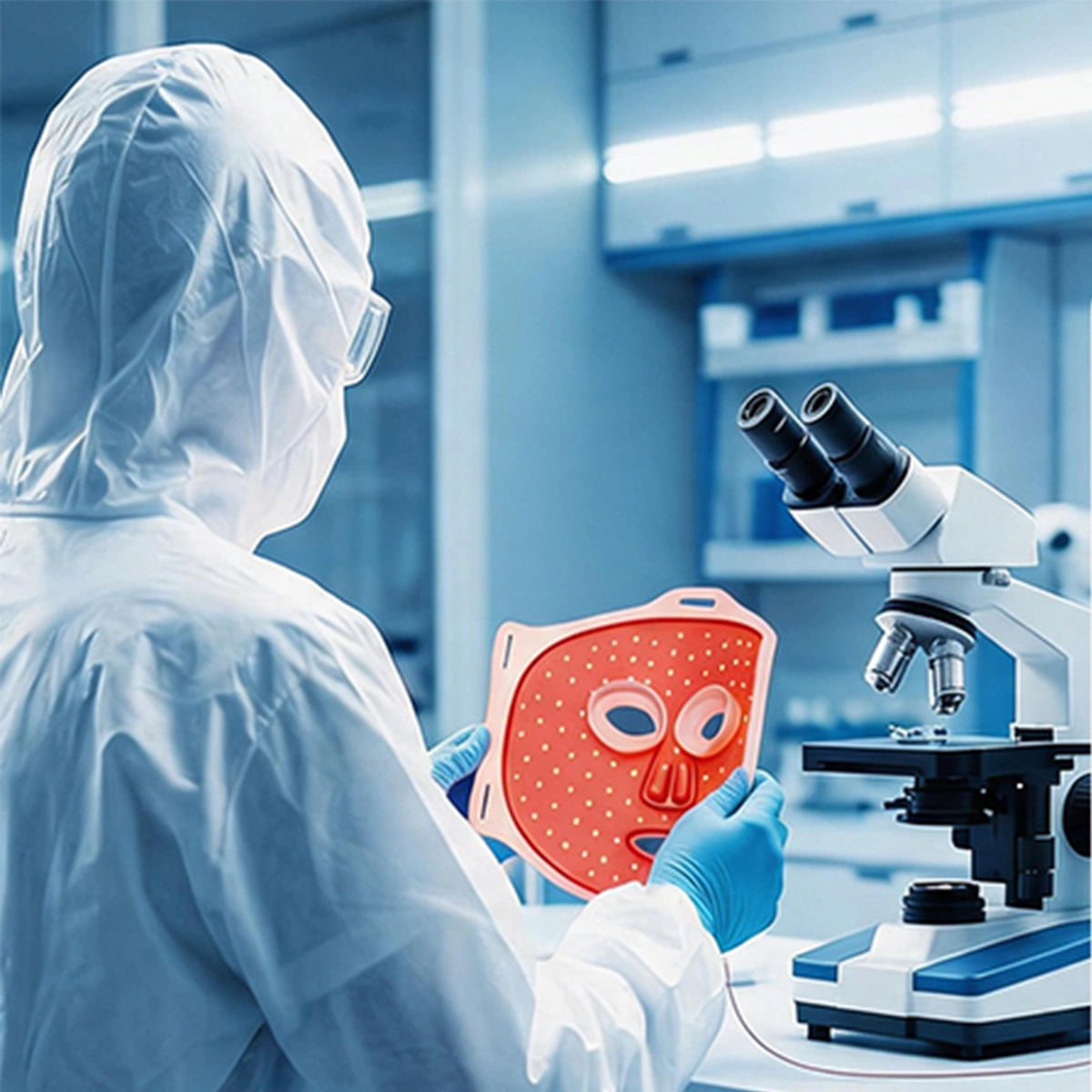
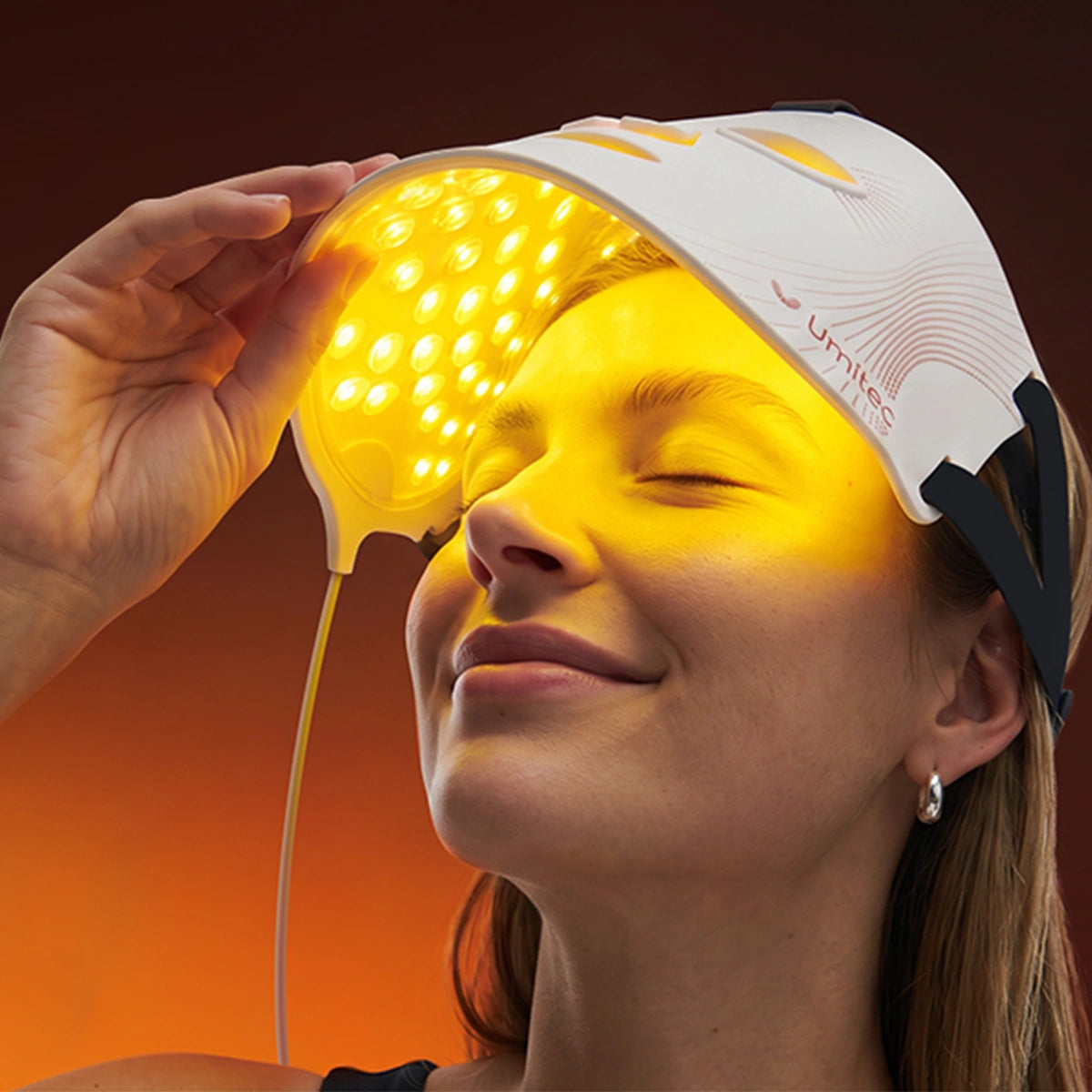
Unlike serums or sheet masks, LED light therapy doesn't sit on the surface of your skin — it works inside it. Specific wavelengths of red and near-infrared light penetrate the dermis, stimulating mitochondrial activity in skin cells, boosting local circulation, accelerating collagen synthesis, and triggering the skin's own repair mechanisms. The biological effect is real, measurable, and critically — it takes ten minutes.
There's no residue. Nothing to declare at customs. No cooling requirements, no spillage risk, no seven-step process. For a portable red light therapy device to fit into a travel routine, it needs to be genuinely frictionless — and that's exactly where LED therapy has an edge over almost every other skin treatment option.
How red light therapy works at a cellular level Lightweight: 2 lbs (like a water bottle)
No amount of hydrating mist addresses disrupted cell regeneration. LED therapy does. That distinction matters more when you're traveling than at any other time.
The Hotel Room Ritual: Your Umitec Series 2 Routine
Check-in. Drop your bags. Before you touch your phone or check your emails — wash your face. Properly. Travel grime, cabin air residue, and whatever the person next to you was wearing settle into your skin during a long flight, and no light therapy device works well on top of a layer of pollution and SPF from six hours ago. A clean face is the only non-negotiable.
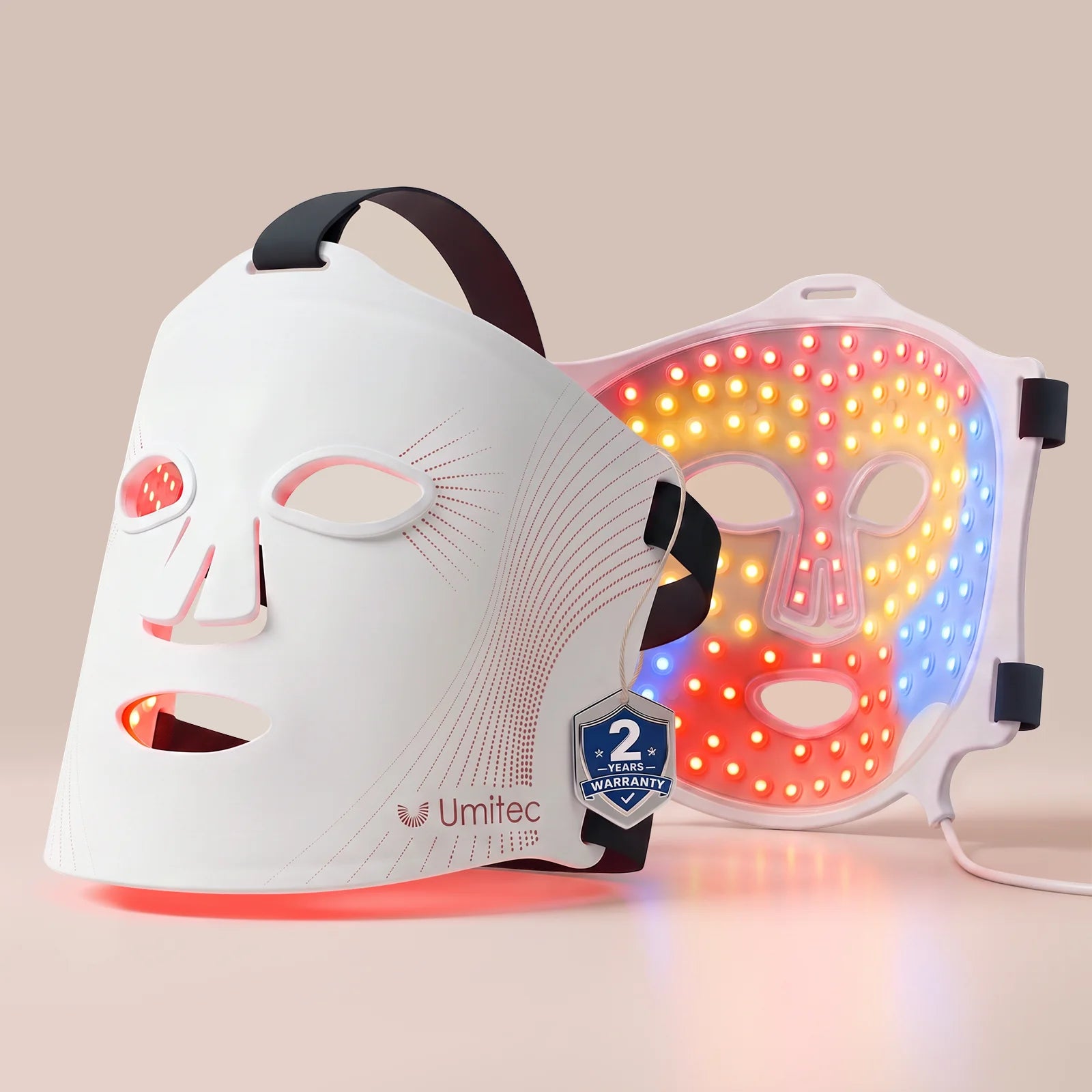
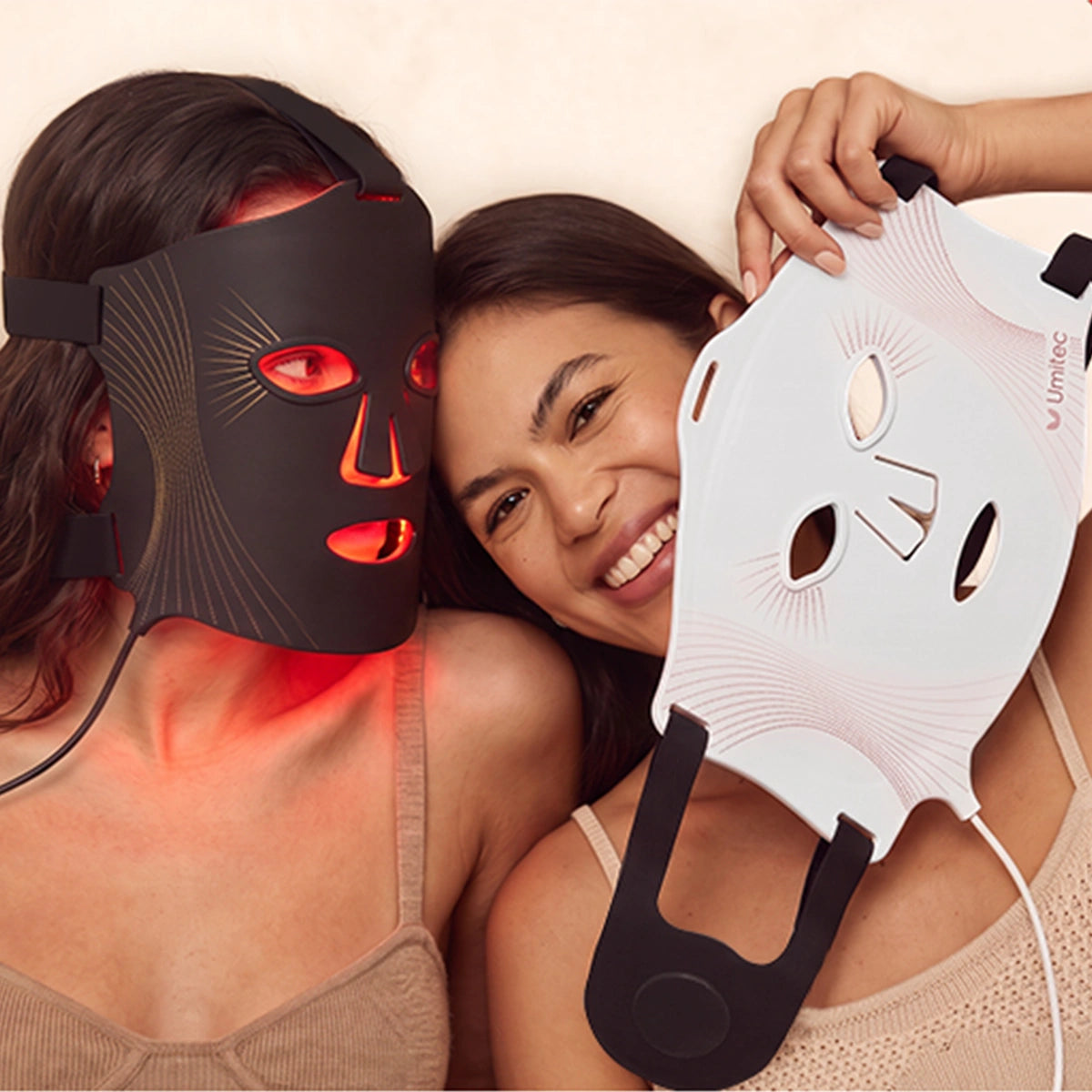
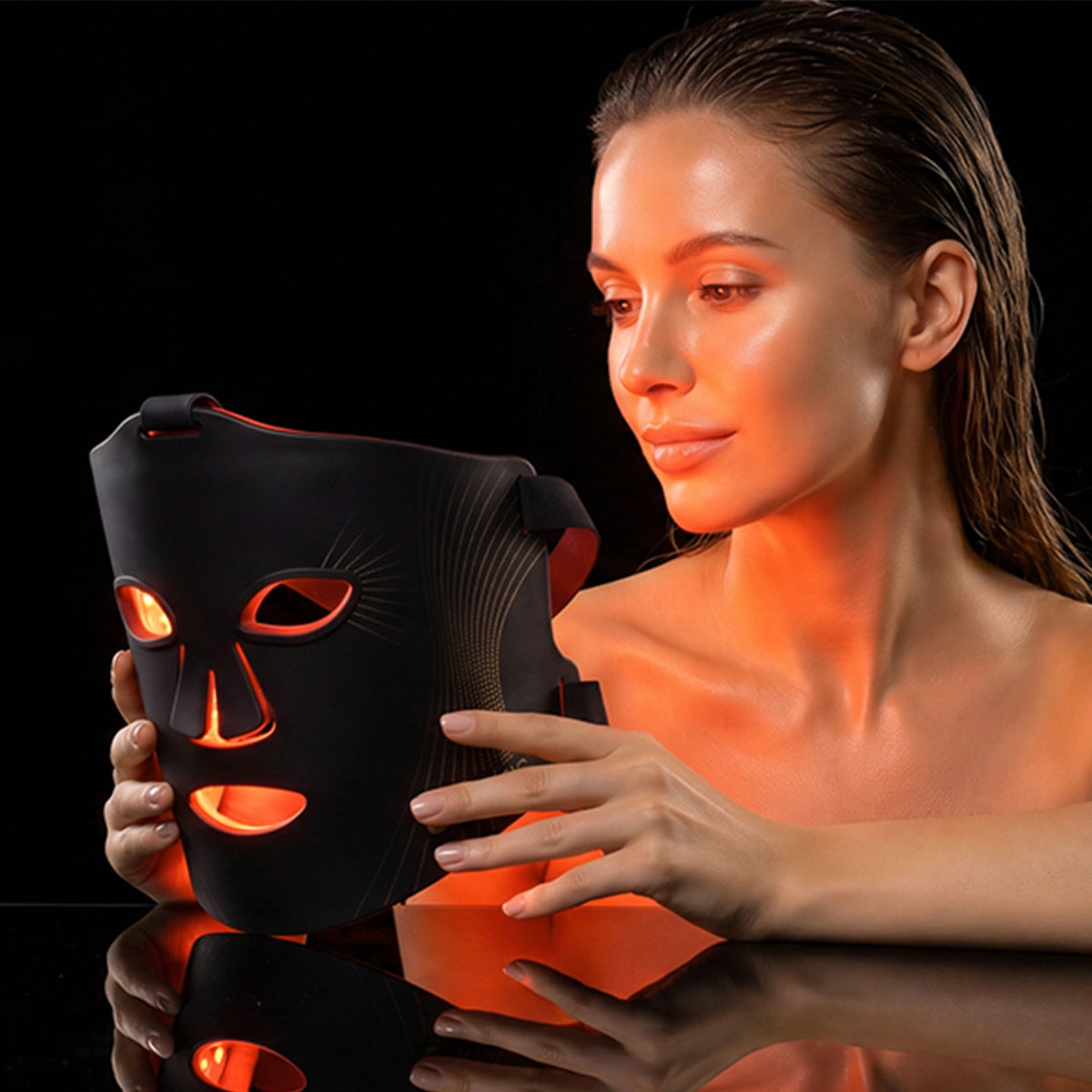
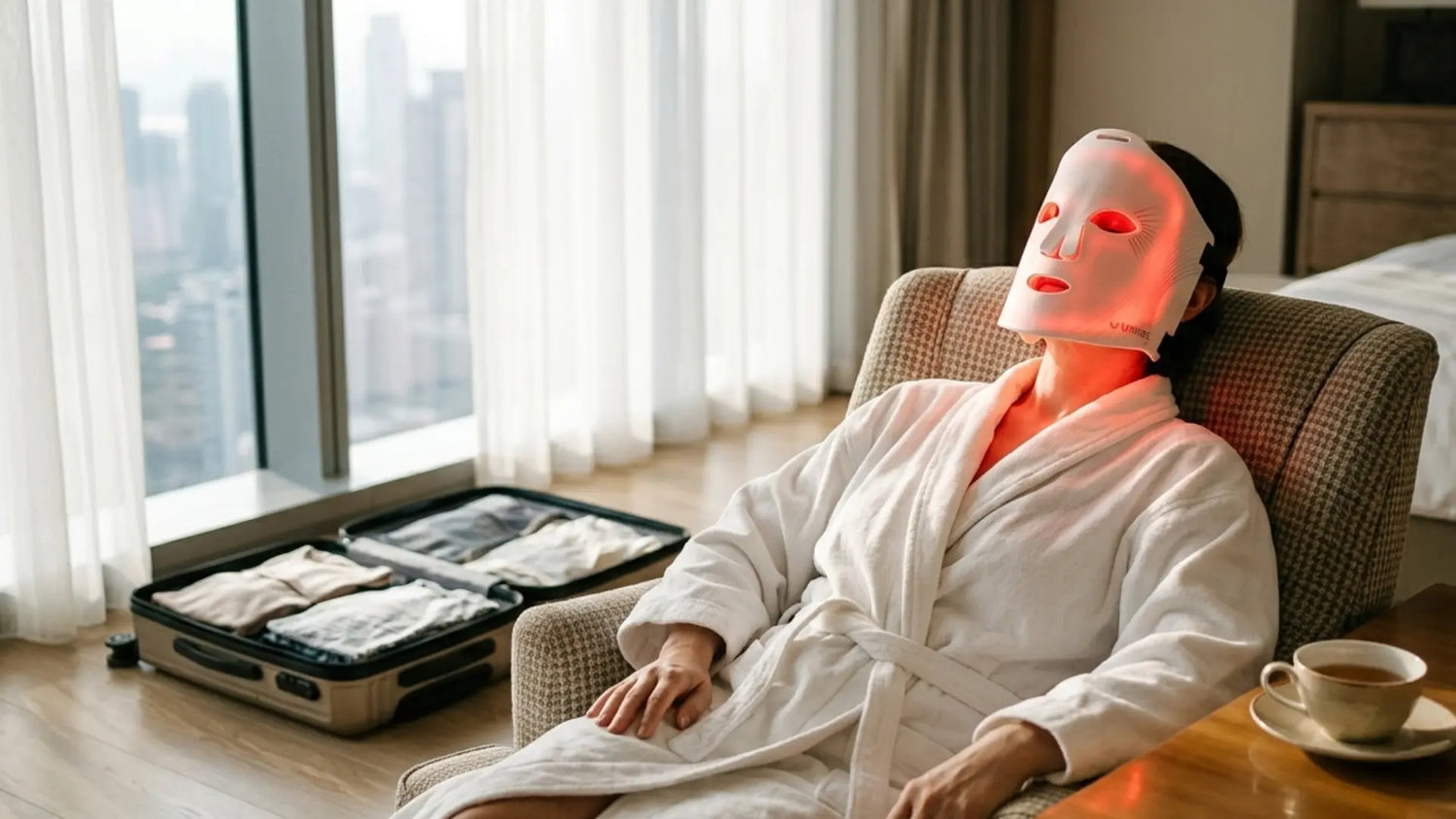
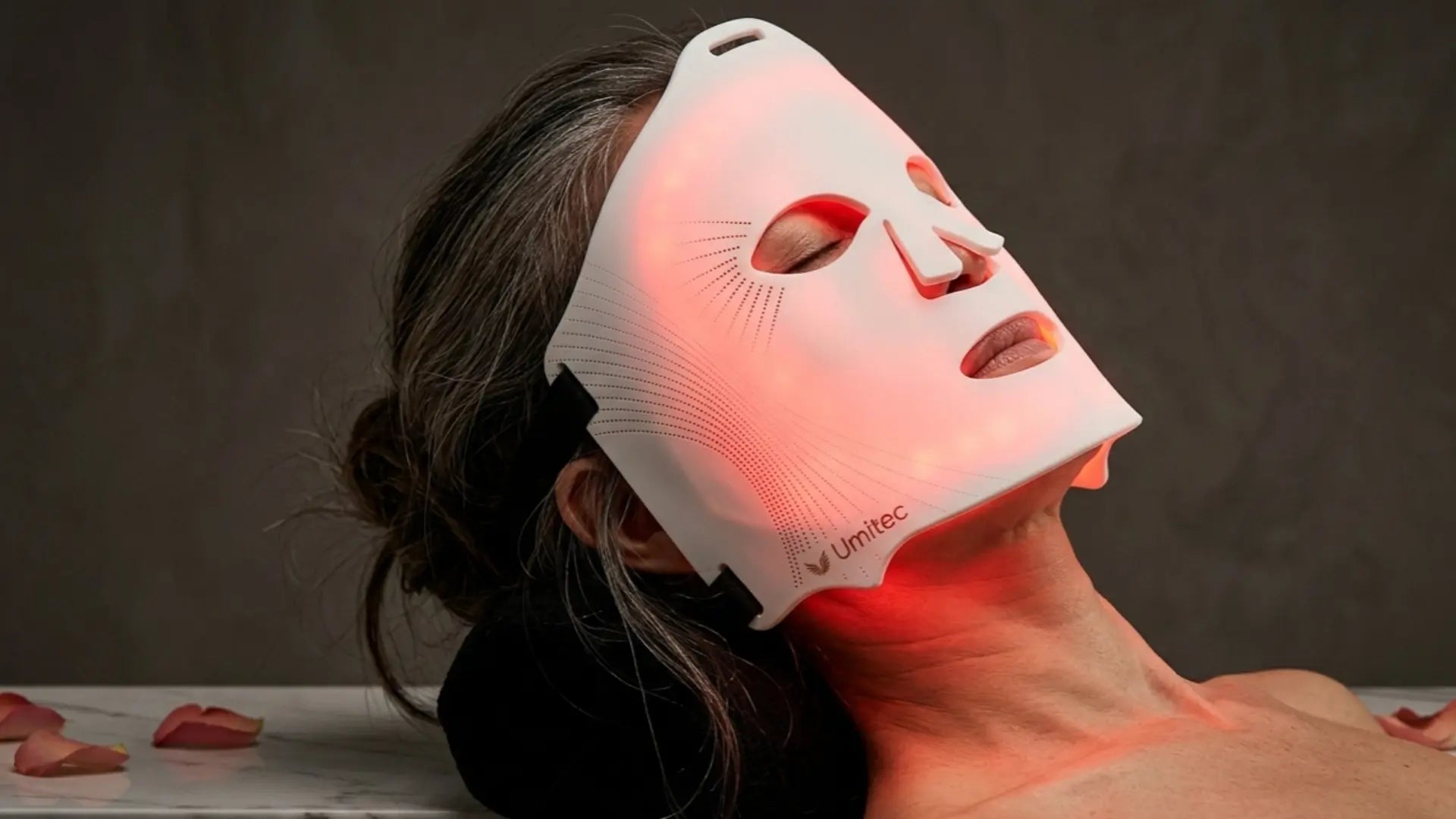
From there, the Umitec Series 2 takes over. It charges via USB-C, which means it runs off the same cable as your laptop or phone — no international adapter hunting required. Power on, select your mode: Red Light for post-flight recovery and an immediate boost in radiance, or Near-Infrared if you're arriving off a red-eye and your skin feels depleted rather than just dull. The mask fits snugly, the built-in eye protection means you don't need to think about light exposure, and the session runs itself.
Ten minutes. Read the brief you need to prep for tomorrow. Watch something mindless. Just breathe. The mask shuts off automatically when the session ends.
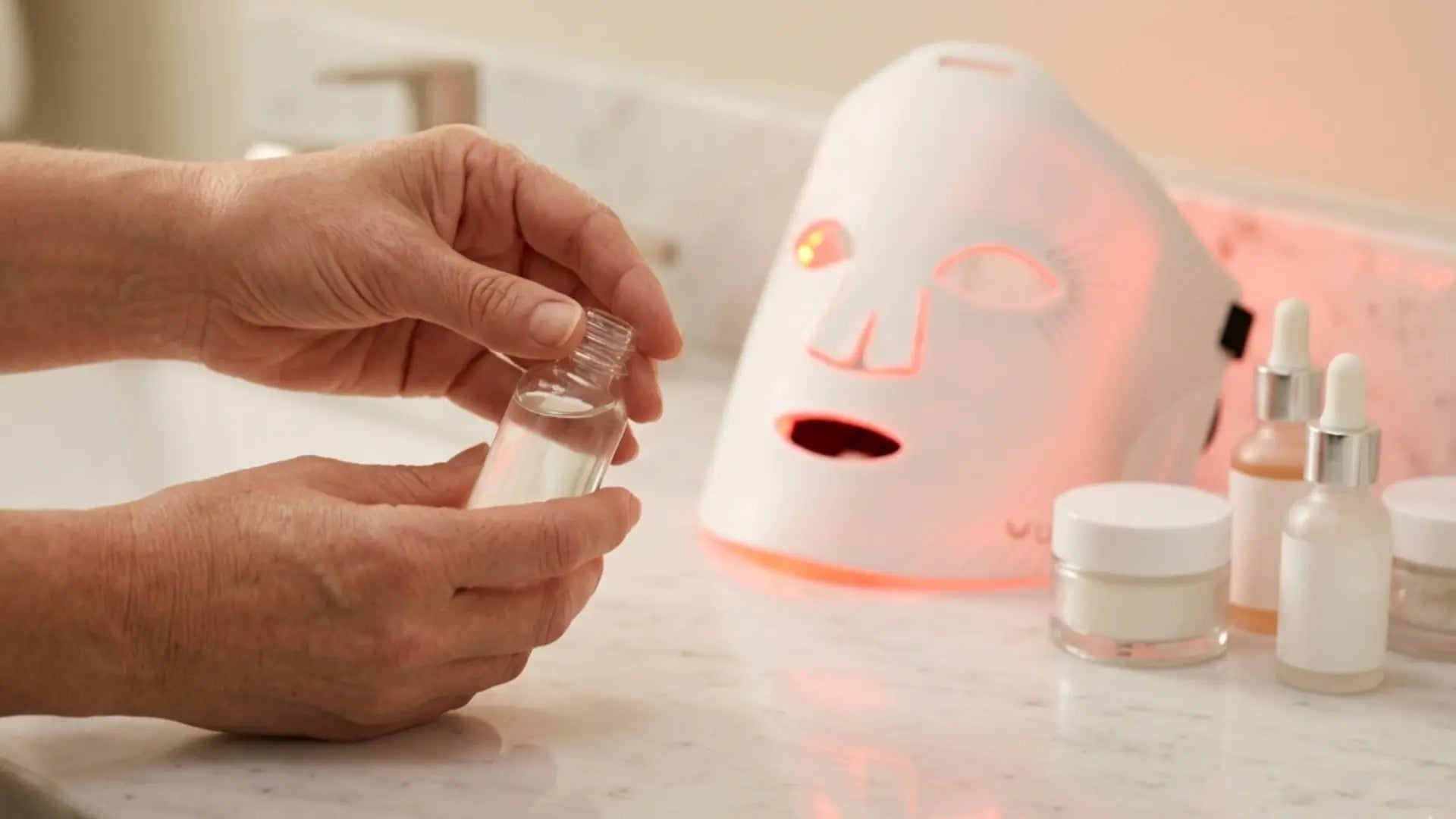
After you remove it, your skin is primed. Post-LED therapy, circulation is elevated and absorption is measurably improved — which means whatever serum or moisturizer you apply in the next few minutes penetrates more effectively than it would cold. [The best serums to layer after LED therapy →] The whole ritual, start to finish, takes under fifteen minutes and fits neatly between landing and dinner.
The mask itself packs into an included storage pouch — soft-sided, compact enough to sit in the top pocket of a carry-on without taking up meaningful space.
What Travelers Are Actually Noticing
The feedback that stands out most from people who've brought the Umitec Series 2 on the road comes down to three consistent themes. First: immediate glow. Not a dramatic transformation, but the kind of visible difference that means you don't dread the video call the morning after you land. Skin looks alive again rather than exhausted.
Second: reduced puffiness, particularly around the eyes and jaw — the areas that hold tension and fluid after long hours in a pressurized cabin. Several users describe their skin feeling "less inflamed" after even a single session, which tracks with what red light therapy does to local circulation.
Third, and perhaps most practically useful: the feeling that skin has been "reset." Not fixed, not transformed overnight — but recalibrated. Like the skincare you're doing is actually working again, rather than just sitting on top of a depleted surface. For travelers who use it consistently across a trip, the cumulative effect tends to be noticeably better skin by the time they get home than when they left.
5 Things Frequent Flyers Should Actually Pack for Their Skin
The carry-on skincare edit that works:
Umitec LED Therapy Face Mask Series 2 — the ten-minute treatment that handles what topicals can't.
A hydrating facial mist — use mid-flight and immediately after landing to counteract cabin dehydration.
Broad-spectrum SPF 30+ — new city, different UV index, same rules. Never skip it.
A rich lip balm — lips have no sebaceous glands and dehydrate faster than any other part of your face at altitude.
A silk pillowcase (packable) — hotel cotton pillowcases create friction and pull moisture from skin overnight. A compact silk alternative travels flat and makes a measurable difference across a week of hotel stays.
Your Skin Deserves a Routine That Travels With You
Good skincare shouldn't stop working when you cross a time zone. The Umitec LED Therapy Face Mask Series 2 is built for exactly the kind of life that doesn't sit still — portable, USB-C charged, ten minutes, and effective whether you're in your bathroom at home or a hotel room in a city you'll leave in 48 hours.
If you've never tried LED therapy on the road, the 30-day risk-free return policy means there's no real reason not to. And the 2-year warranty means once it's in your bag, it stays there.
[Explore the Umitec LED Therapy Face Mask Series 2 →]
Always patch test new skincare devices if you have a diagnosed skin condition. Consult your dermatologist before use if you are pregnant, taking photosensitizing medication, or have an active skin infection.

Leave a comment
All comments are moderated before being published.
This site is protected by hCaptcha and the hCaptcha Privacy Policy and Terms of Service apply.