
Why People Worry About Using Retinol and LED Light Therapy Together
Retinol is one of the most researched and widely recommended ingredients in modern skincare. LED light therapy, once limited to dermatology clinics, has become increasingly accessible through at-home devices. As both have gained popularity, a common question has emerged:
Can you use retinol with LED light therapy—safely and effectively?
The concern is understandable. Retinol is known to increase skin sensitivity, especially during the first weeks of use. LED light therapy involves exposing the skin to specific wavelengths of light, which naturally raises questions about irritation, over-stimulation, or reduced product effectiveness.
This article explores the science behind retinol and LED light therapy, how each works on the skin, and whether they can be incorporated into the same skincare routine. We’ll also cover safety considerations, best practices, and common mistakes—particularly for those with sensitive or acne-prone skin.
What Is Retinol and How Does It Affect the Skin?
Retinol is a vitamin A derivative that belongs to a broader category called retinoids. In skincare, retinol is valued for its ability to support skin renewal and improve the appearance of multiple skin concerns.
How retinol works

When applied topically, retinol penetrates the upper layers of the skin and is gradually converted into retinoic acid. This active form interacts with skin cells to encourage faster cell turnover, support collagen production over time, improve uneven skin texture and tone, reduce the appearance of fine lines, and help prevent clogged pores associated with acne. Because of this cellular activity, retinol is often described as a "skin training" ingredient—it teaches skin cells to behave more efficiently.
Common side effects of retinol
Despite its benefits, retinol is also known for potential side effects, especially during the adjustment period: redness or flushing, dryness or flaking, temporary sensitivity, and increased sun sensitivity. These reactions are not necessarily harmful, but they do mean that retinol must be introduced thoughtfully and used alongside barrier-supporting skincare.
These reactions are not necessarily harmful, but they do mean that retinol must be introduced thoughtfully and used alongside barrier-supporting skincare.
How LED light therapy works on the skin

LED (Light Emitting Diode) light therapy uses specific wavelengths of light to interact with the skin in targeted ways. Unlike UV light, LED light does not damage DNA or cause burns when used properly.
Common LED wavelengths in skincare
Different colors of LED light penetrate the skin at different depths: red light (630–660 nm) supports collagen activity and skin barrier function; blue light (415 nm) targets acne-associated bacteria on the skin's surface; and near-infrared light (830–880 nm) penetrates deeper layers to support circulation and tissue recovery.
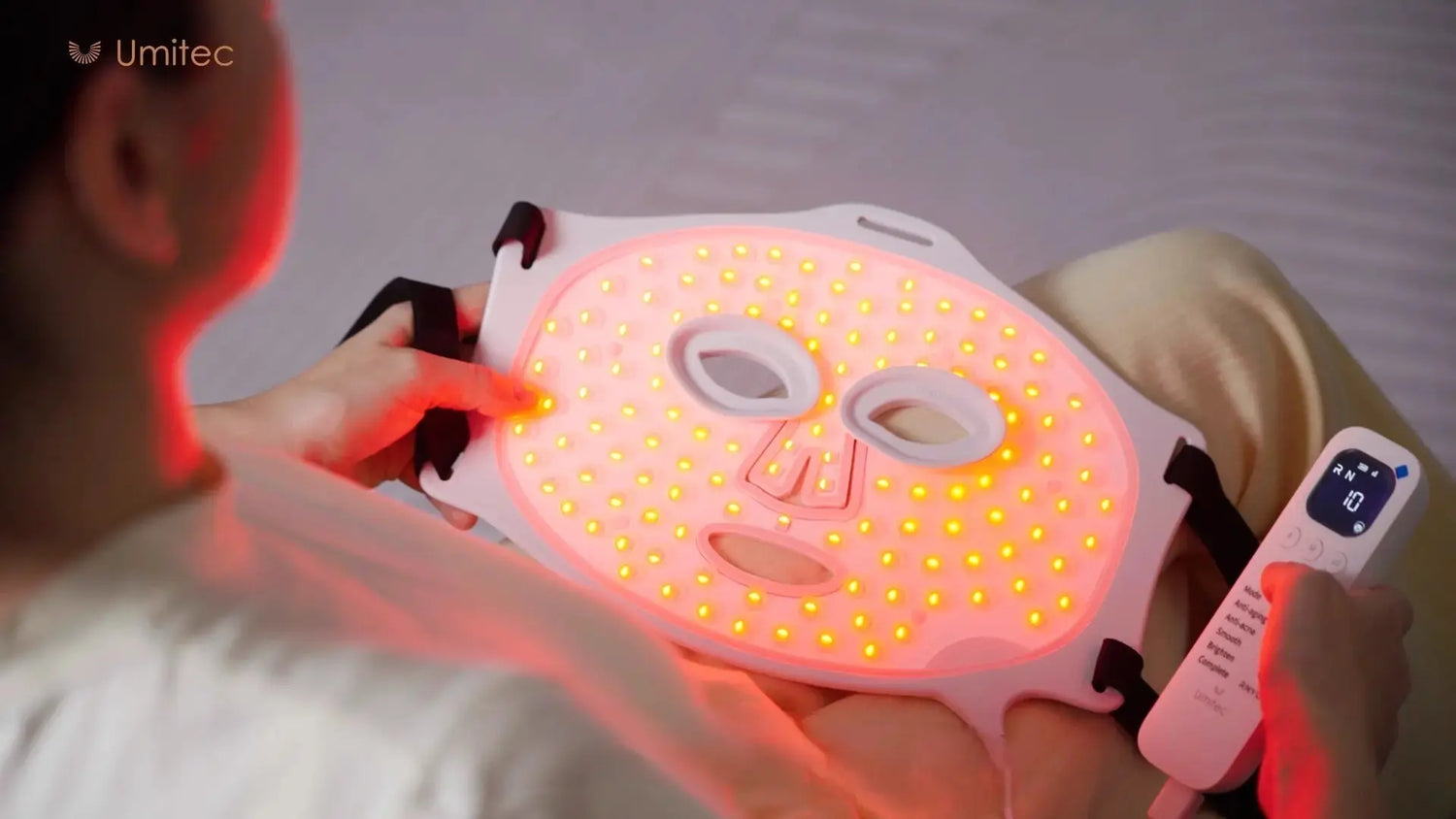
At-home LED therapy masks, such as the Umitec LED Therapy Face Mask, are designed to deliver controlled light exposure within safety parameters suitable for regular use.
What LED light therapy does—and does not do
LED light therapy supports natural skin processes. It does not exfoliate the skin, thin the skin, or replace topical skincare ingredients.
Instead, it works as a non-invasive supportive treatment that can complement a well-structured skincare routine.
Can you use retinol and LED light therapy together?
From a dermatological perspective, retinol and LED light therapy can be used together, but not always at the same moment in a routine. The key lies in timing, skin condition, and tolerance. LED light therapy does not deactivate retinol, nor does retinol block LED wavelengths. However, because retinol can increase sensitivity, using both incorrectly may lead to unnecessary irritation.
Retinol already challenges the skin barrier during its adjustment phase. LED therapy—while gentle—still stimulates skin activity. When combined improperly, the skin may feel overwhelmed. This does not mean the combination is unsafe; it simply means it should be approached strategically.
Is it safe for sensitive or acne-prone skin?
Sensitive skin
For sensitive skin types, the combination of retinol and LED light therapy should be introduced gradually. Sensitivity is often related to barrier disruption rather than the treatments themselves. Best practices include using low-strength retinol, limiting retinol to 1–2 times per week initially, and choosing LED modes appropriate for sensitivity (often red light rather than blue).
Acne-prone skin
Acne-prone skin may benefit from both ingredients, but timing is especially important. Retinol helps prevent clogged pores, while blue LED light helps manage acne-causing bacteria. For many acne-prone users, LED light therapy may be used more frequently while retinol should be introduced slowly to avoid purging confusion. Monitoring the skin's response is essential.
Best Way to Combine Retinol With LED Light Therapy
Step-by-Step Routine Guidance
- Cleanse the skin thoroughly
- Use LED light therapy on clean, dry skin
- Apply hydrating or calming serum
- Apply retinol (if skin tolerance allows)
- Finish with moisturizer
- Night 1: LED light therapy + hydration
- Night 2: Retinol + barrier support
- Repeat
Frequency Guidelines
-
Retinol: 1–3 times per week (depending on strength and tolerance)
-
LED light therapy: 3–5 times per week or as directed by the device
An at-home LED therapy mask designed for consistent use can integrate smoothly into long-term routines when used thoughtfully.
Common mistakes to avoid
Applying retinol immediately before LED therapy may increase irritation without added benefit. Overusing both treatments at once increases the risk of redness and dryness—more is not better. Skipping moisturizer is another common error; both treatments rely on a healthy skin barrier, making hydration non-negotiable. And because retinol increases sun sensitivity, daily sunscreen is essential regardless of LED use.
Who should be cautious or avoid combining them
Certain individuals should consult a professional before combining retinol and LED light therapy: those with active eczema or rosacea flares, individuals using prescription retinoids, those recovering from chemical peels or laser treatments, and pregnant or breastfeeding individuals (retinol is generally not recommended). When in doubt, simplifying the routine is always safer.
Final thoughts: a balanced, skin-first approach
Retinol and LED light therapy are not competing treatments—they address skin health through different mechanisms. When used with intention, they can coexist in a well-designed skincare routine.
At-home LED therapy masks, such as the Umitec LED Therapy Face Mask, are best viewed as supportive tools rather than quick fixes. Paired thoughtfully with active ingredients like retinol, they can help users maintain consistency without overwhelming the skin.
Ultimately, successful skincare is not about doing everything at once. It's about listening to your skin, respecting its limits, and building routines that support long-term skin health.


Leave a comment
This site is protected by hCaptcha and the hCaptcha Privacy Policy and Terms of Service apply.