



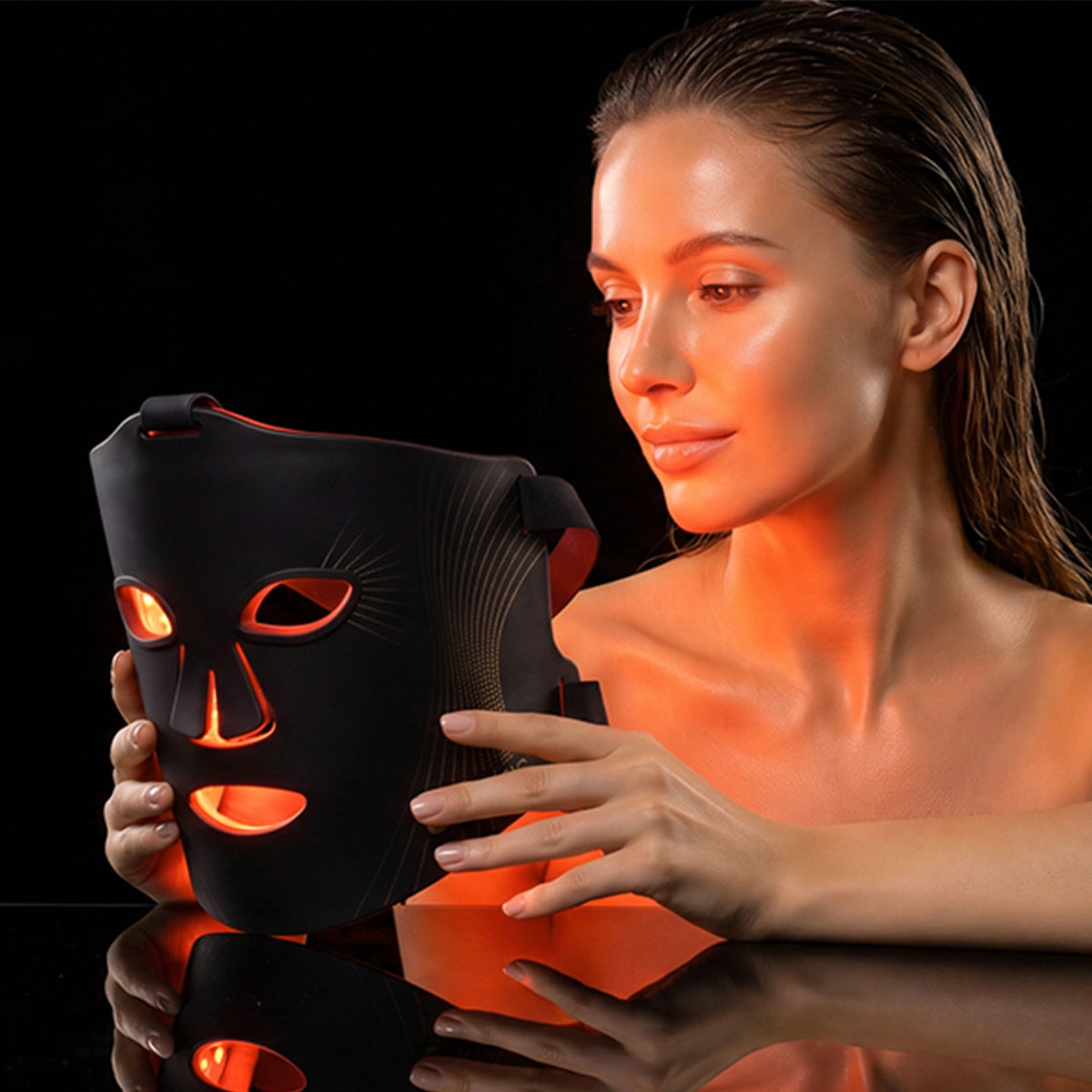

The eye area is the most searched skincare concern globally — and for good reason. It ages first, ages fastest, and responds differently to treatment than any other part of the face. Crow's feet appear before forehead lines. Dark circles deepen before cheeks lose volume. Under-eye puffiness shows up on the mornings that matter most. If you use a full-face LED mask, you may have wondered whether the eye area is actually being treated — and whether it should be. The honest answer is: yes, with important caveats about what LED light can and cannot do, and what to check before using any device near your eyes.
Why the eye area ages differently
The periorbital zone — the anatomical region surrounding the eye socket — has a fundamentally different structure from the rest of the face. The skin here is approximately 0.5mm thick, compared to around 2mm on the cheeks and forehead. That's roughly four times thinner, with minimal subcutaneous fat to provide cushioning or conceal vascular and structural changes beneath the surface. The orbicularis oculi muscle — responsible for blinking and squinting — contracts thousands of times every day, making crow's feet among the most mechanically driven wrinkles on the face. Lymphatic drainage in the under-eye area is also sluggish compared to other facial zones, which is why fluid accumulates there overnight and why puffiness is so reliably worse in the morning.
These structural factors mean that collagen loss in the periorbital zone becomes visible earlier and more dramatically than elsewhere, that vascular changes (the bluish tint of blood vessels seen through thin under-eye skin) are more pronounced here than anywhere else on the face, and that the eye area responds more slowly to topical and light-based treatments than thicker, more vascular facial skin. Understanding this is the starting point for setting accurate expectations about what LED therapy can deliver.
The three concerns — addressed separately
Crow's feet, dark circles, and puffiness are frequently grouped together as "eye area concerns," but they have distinct causes and respond differently to LED therapy. Treating them as one problem leads to unrealistic expectations. Here is what the evidence actually shows for each.
Fine lines around the eyes fall into two categories: dynamic wrinkles (caused by muscle movement — the creases that appear when you smile or squint) and static wrinkles (lines visible even when the face is at rest, caused by collagen loss and reduced skin elasticity). Red light at 630nm supports fibroblast activity in the periorbital dermis, increasing collagen and elastin synthesis in the surrounding tissue. This does not affect muscle movement — LED therapy does not paralyze the orbicularis oculi the way that botulinum toxin does — but it supports the collagen matrix that makes skin more resilient to repeated movement over time.
A 2024 study evaluating LED devices specifically for under-eye rejuvenation found that participants self-reported improvements in wrinkle texture and skin quality following consistent use. Objective photographic analysis showed skin texture improvements, though wrinkle depth reduction did not reach statistical significance in this small-sample study. The mechanism is sound; the evidence base is promising but still developing for this specific zone.
Dark circles are one of the most overclaimed areas in skincare because their causes are genuinely multiple — and LED therapy addresses only some of them. Vascular dark circles (the bluish-purple type) result from blood vessels being visible through thin under-eye skin; yellow light at 590nm supports microcirculation and may reduce the vascular visibility that causes this type. Pigmentary dark circles (brownish, caused by melanin deposits in the under-eye skin) may respond partially to red light's effect on skin cell activity over time. Structural dark circles — the shadows cast by fat herniation or volume loss that creates a hollow beneath the eye — are not addressable by LED therapy. They are a three-dimensional anatomical issue, and the appropriate conversation for those is with a dermatologist or aesthetic practitioner.
The honest position: if your dark circles are primarily vascular or pigmentary in origin, consistent LED use with yellow and red light modes may provide meaningful improvement over weeks of use. If they are primarily structural, no topical or light-based treatment will resolve them.
Like dark circles, under-eye puffiness has more than one cause. Inflammatory puffiness — the morning swelling caused by overnight fluid retention, poor lymphatic drainage, or allergic reactivity — is the type most likely to respond to LED therapy. Near-infrared light at 830nm penetrates to the tissue level and may support lymphatic circulation and reduce the inflammatory signaling that causes transient fluid retention. This is a genuine mechanism, and consistent near-infrared use has a reasonable evidence base for reducing inflammation in soft tissue. Structural under-eye bags — the permanent fullness caused by displaced orbital fat pushing forward through weakened septum tissue — are a different matter entirely. They are not caused by inflammation and do not respond to light therapy. Surgical lower blepharoplasty or injectable treatments are the appropriate interventions for structural fat herniation.
Eye safety — what to check before using any LED mask near the eye area
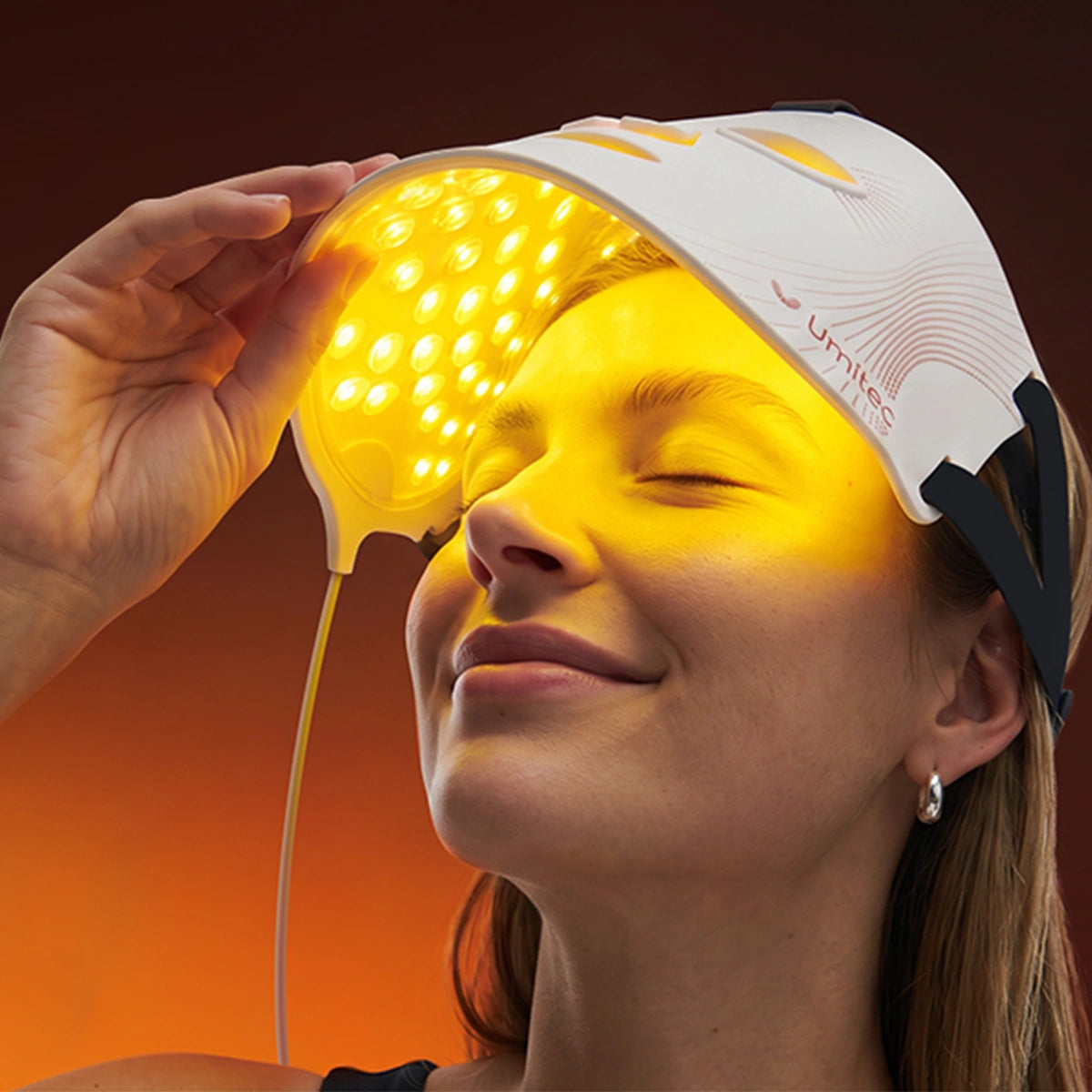
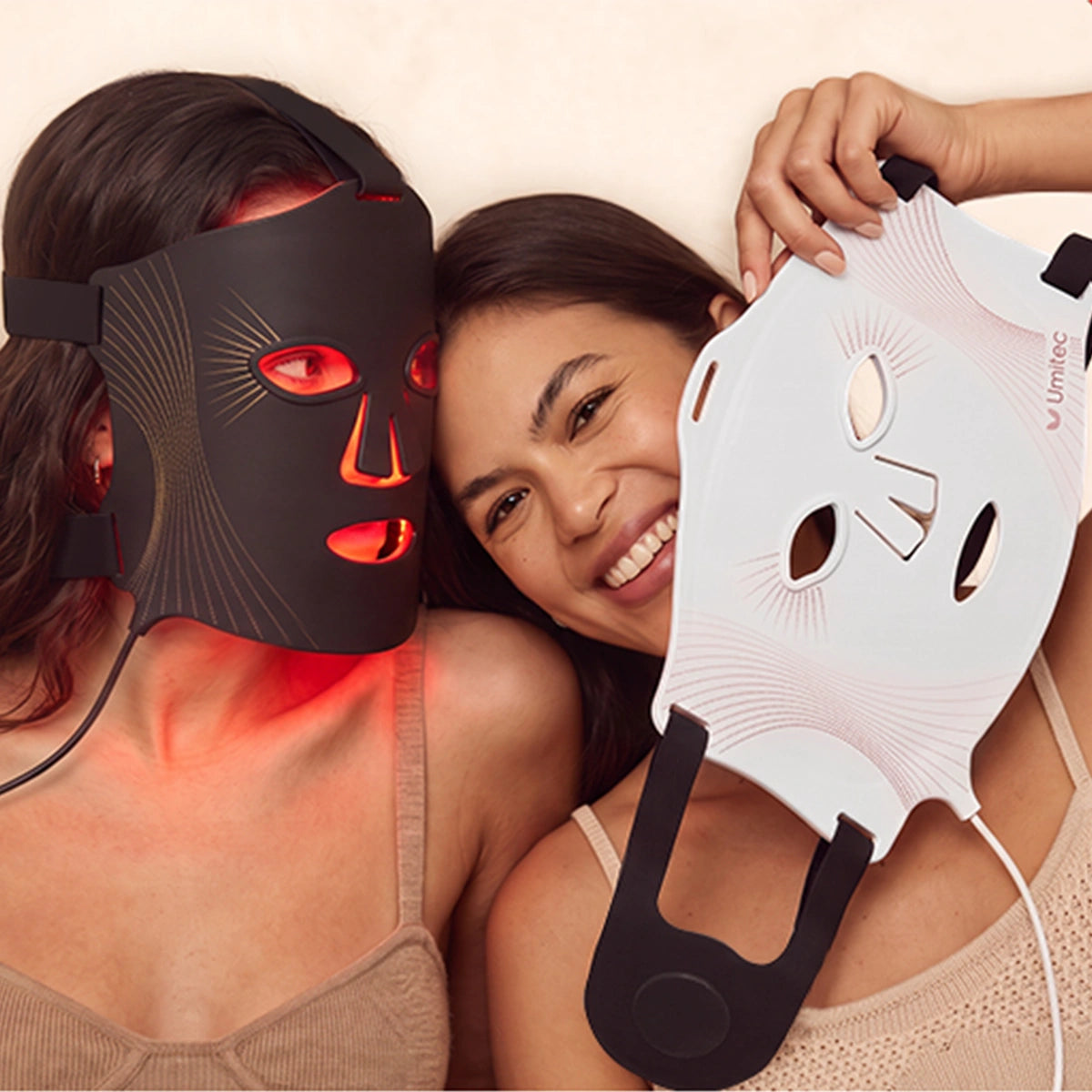
High-intensity light directed at the eyes poses genuine risks. Blue light (400–450nm) in particular may cause potential damage to photosensitive cells in the macula with prolonged or repeated direct exposure. Any LED mask used near the eye area should have appropriate eye protection built into its design — either opaque covers over the eye openings, or a design that prevents direct light from reaching the eyes themselves. Check your device's specifications and follow the manufacturer's eye safety guidelines before use. Do not assume all LED masks are designed equivalently for periorbital use.
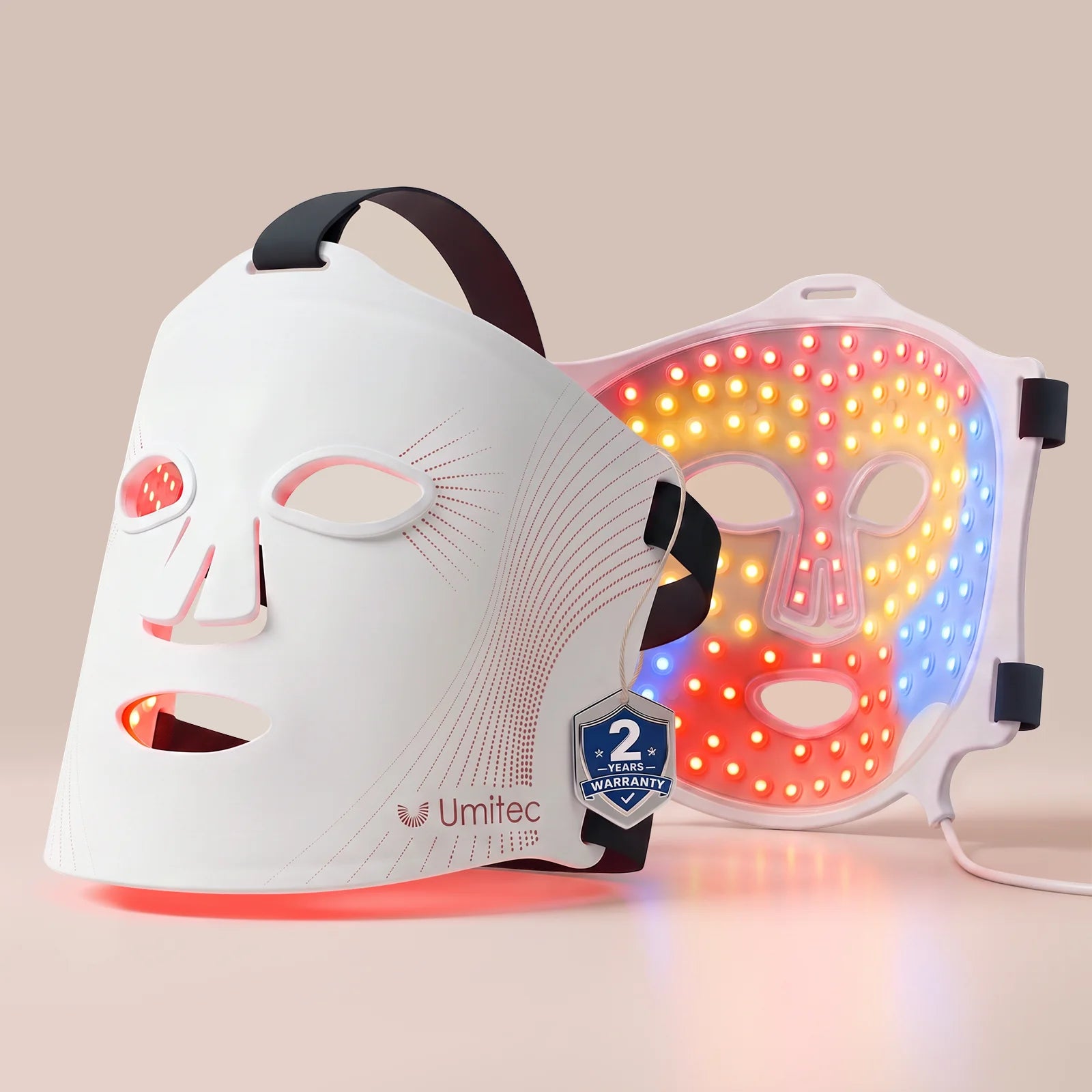
For users of the Umitec LED Therapy Face Mask Series 3, co-developed with Dr. Yao from Fudan University, follow the device guidelines for eye area use and use any recommended eye protection provided. For the eye-area concerns covered in this article — fine lines, vascular dark circles, inflammatory puffiness — the relevant wavelengths are yellow (590nm), red (630nm), and near-infrared (830nm). Blue light (415nm) is not recommended for direct periorbital application and should not be directed at the eyes.
What to realistically expect — and over what timeline
The periorbital zone responds more slowly than other facial areas due to its thinner tissue, different vascular architecture, and the constant mechanical stress of orbicularis oculi movement. Clinical studies on LED collagen support in thicker facial skin typically show measurable results at 8–12 weeks with consistent use. The eye area likely requires at least this long, possibly longer, before changes in fine line depth or dark circle intensity become visible. Session frequency matters: 2–3 sessions per week is the protocol supported by published research — daily use does not accelerate results and may increase irritation risk in this sensitive zone.
How to incorporate LED into an eye-area routine
- Gentle cleanse — remove all makeup and eye products thoroughly before the session
- LED session on clean, dry skin — 10 minutes, 2–3 times per week. Use red (630nm) and near-infrared (830nm) for collagen and inflammation support; yellow (590nm) for vascular dark circles. Ensure eye protection is in place per device guidelines.
- Peptide eye cream — applied immediately post-session; peptides complement red light's collagen support goals
- Caffeine-based eye serum (if puffiness is a primary concern) — caffeine constricts blood vessels and supports lymphatic drainage, working alongside near-infrared's circulation benefits
- Niacinamide (if pigmentary dark circles are a concern) — apply post-LED on the under-eye area
- Moisturizer to seal
LED therapy has a genuine mechanism for supporting the eye area — collagen synthesis via red light, microcirculation and vascular tone via yellow light, inflammation and lymphatic support via near-infrared. What it does not have is the ability to reposition displaced fat, replace lost volume, or relax overactive muscles. For the concerns it addresses — fine lines, vascular dark circles, inflammatory puffiness — consistent use of a well-specified device like the Umitec LED Therapy Face Mask Series 3 over eight to twelve weeks is a reasonable, evidence-supported addition to an eye-area routine. For concerns it cannot address, a dermatologist's consultation is the more useful next step. The eye area deserves both the honesty and the attention.


Leave a comment
All comments are moderated before being published.
This site is protected by hCaptcha and the hCaptcha Privacy Policy and Terms of Service apply.