SGS Verified
Clinical Testing
Umitec Zonecraft™ LED Face Mask was evaluated in an independent, SGS-supervised clinical study using instrument-based skin imaging — not self-reported questionnaires. Below is the full result set and the method behind it.
Measured Endpoints
Every Number, Independently Measured
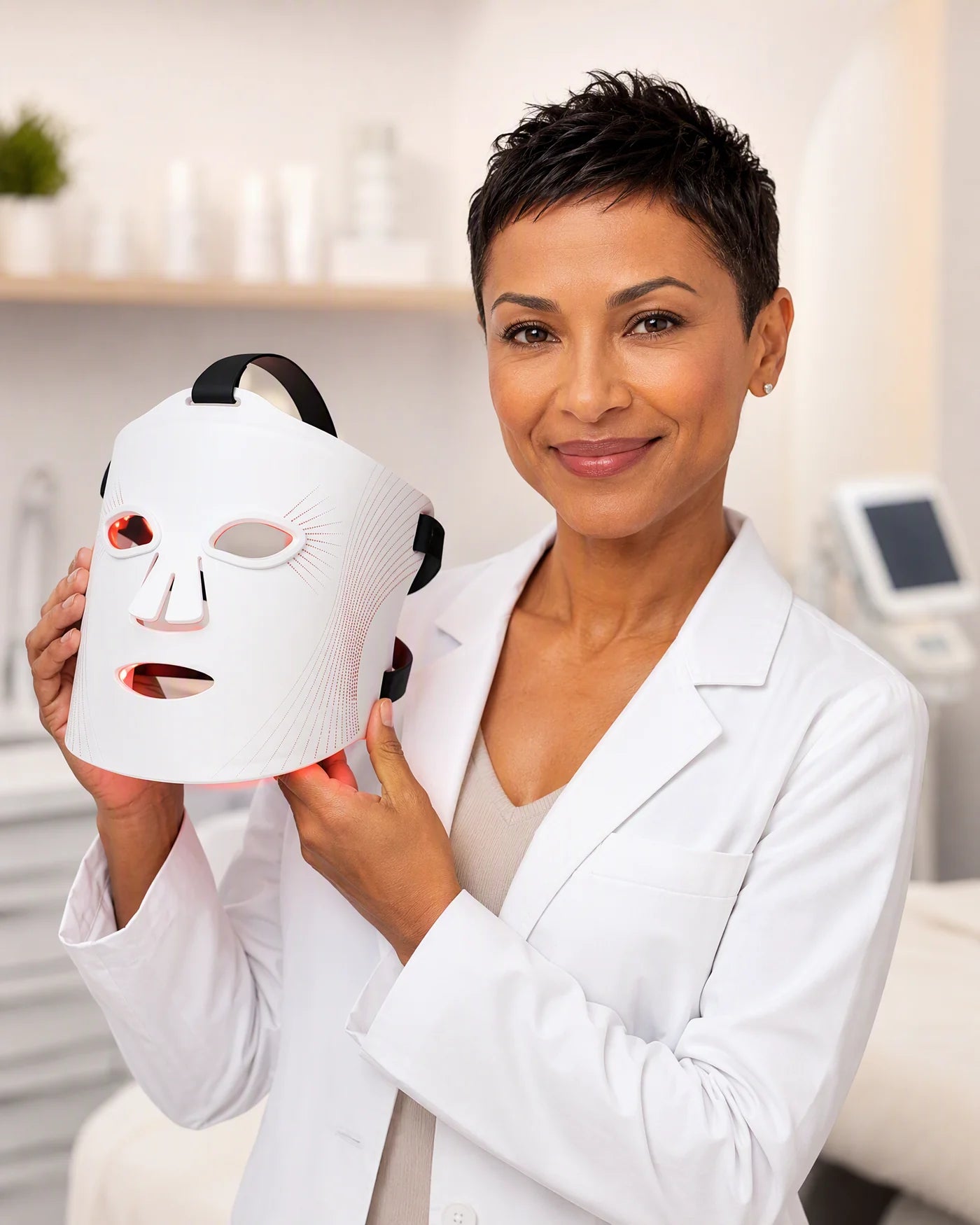
Results measured after a 28-day protocol of one 10-minute daily session. Skin density verified by ultrasound; wrinkle depth, lesion count, elasticity and redness measured with standardised imaging equipment under SGS supervision.
Methodology
How the study was run
Full transparency on how every figure above was produced.
Umitec Zonecraft™ LED Face Mask (492 medical-grade LEDs)
415nm Blue · 590nm Yellow · 630nm Red · 830nm Near-Infrared
28 consecutive days
One 10-minute session per day, full-face mode
Instrument-based imaging and ultrasound — no self-assessment
SGS
0% · safe for sensitive skin
Raw Imaging
The scans behind the numbers
Forehead Wrinkle Depth
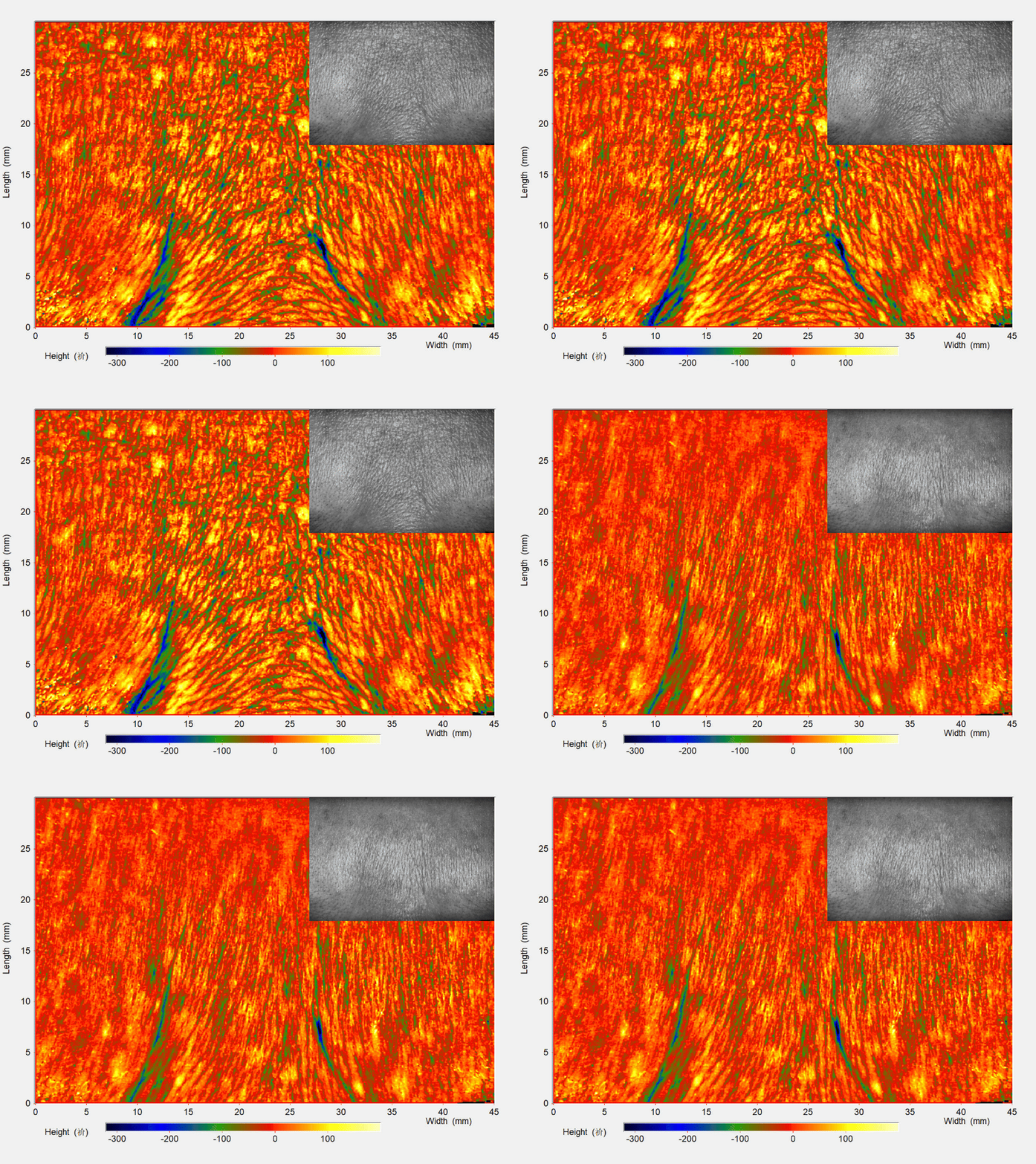
3D skin-surface topography of the forehead, captured before and after the 28-day course. Cooler (blue) zones indicate deeper folds.
Smile Line & Nasolabial Folds
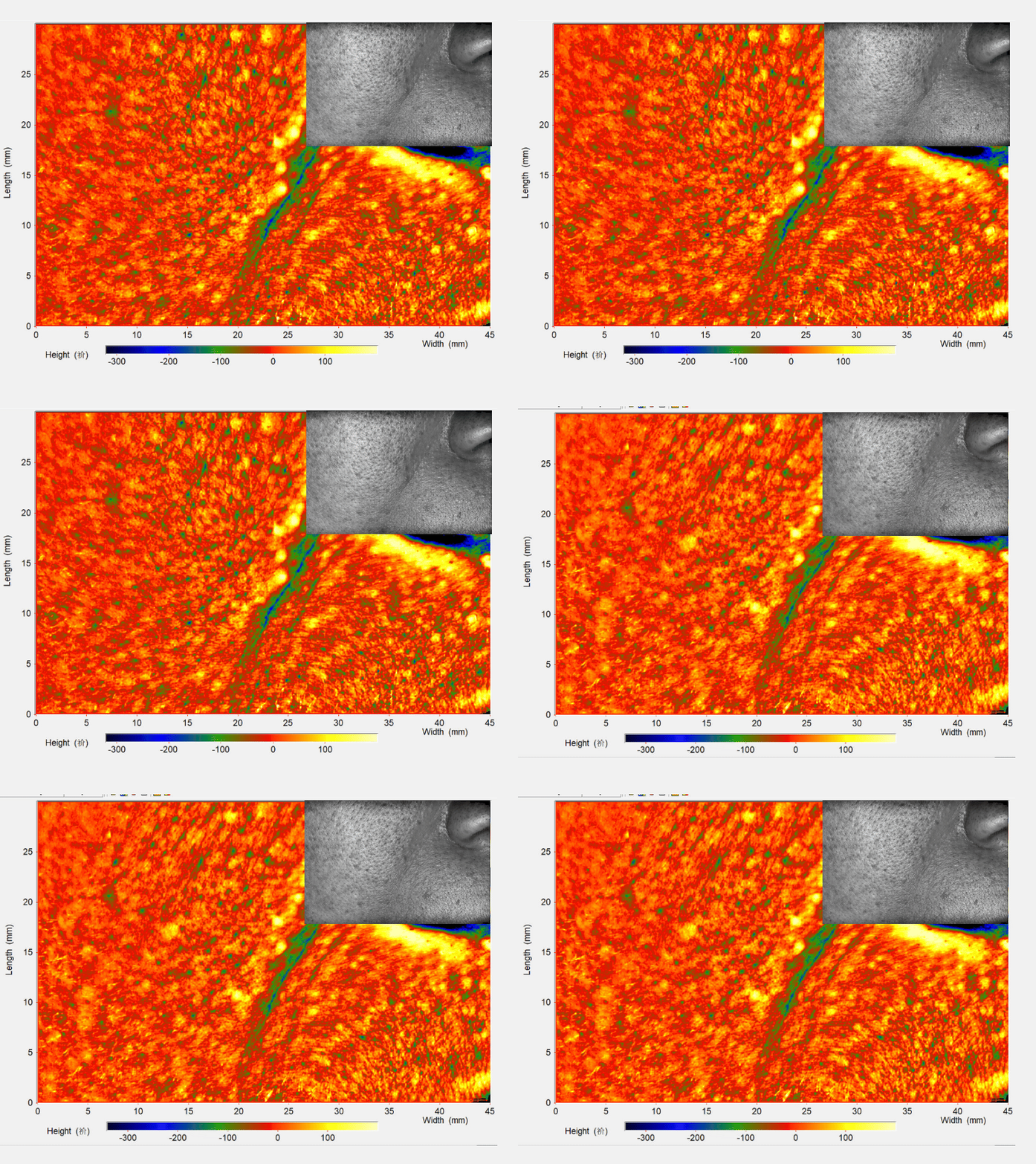
Surface-relief imaging across the mid-face, showing reduced fold depth and a more even skin texture.
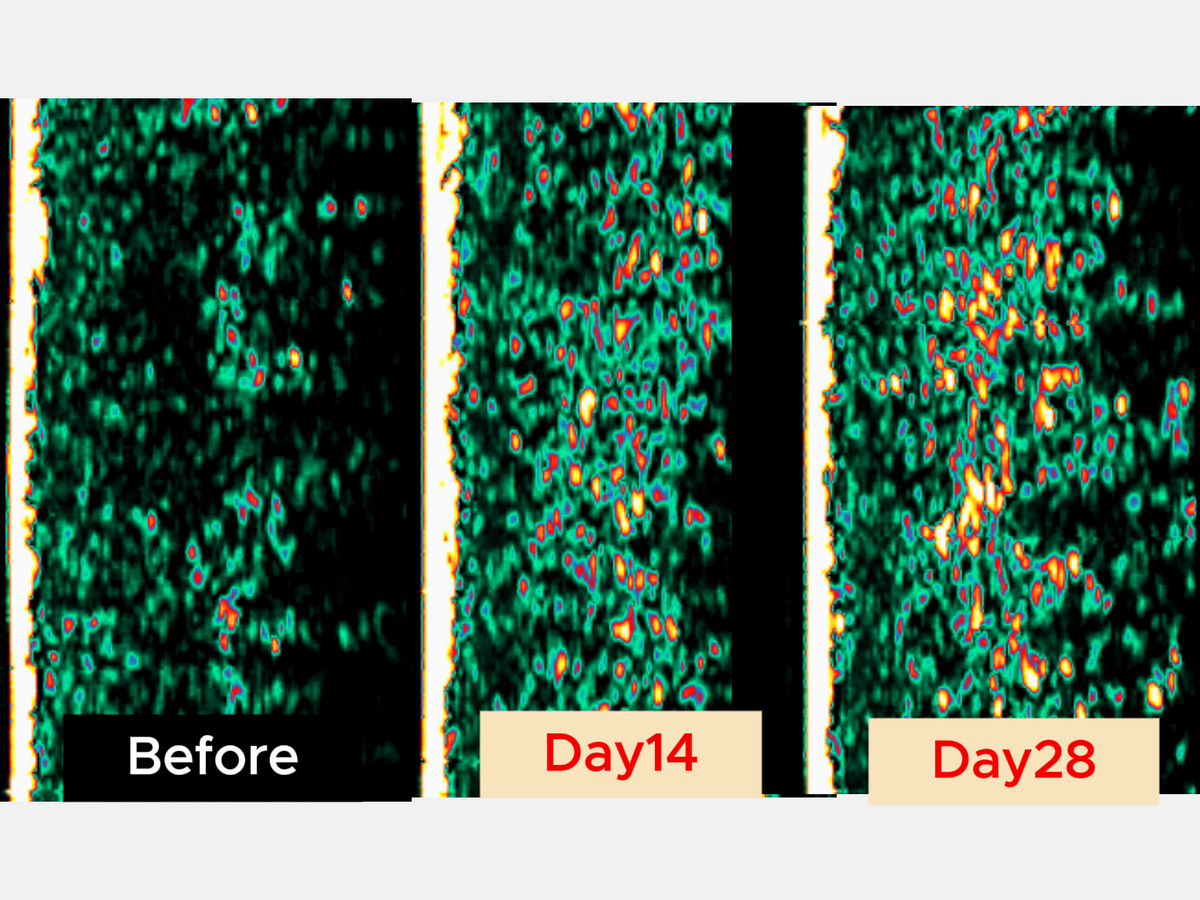
Collagen Density Progress
Ultrasound-derived dermal density tracked across the full 28-day protocol.
Questions
About the testing
Instead of asking participants to rate their own skin, the study used calibrated imaging devices and ultrasound to measure physical change — wrinkle depth in millimetres, dermal density, lesion counts. The measurements are repeatable and independent of how someone feels about their skin.
The protocol ran for 28 consecutive days. Most measured endpoints were recorded at the 28-day mark against a baseline taken before the first session.
The study recorded 0% adverse reactions across the full participant group, and the mask is designed for use on sensitive skin. If you have a diagnosed skin condition or are taking photosensitising medication, speak to a clinician first.
Each wavelength targets a different depth and concern: 415nm blue for acne-causing bacteria, 590nm yellow for redness and tone, 630nm red for surface rejuvenation, and 830nm near-infrared for deeper collagen support.
Proven results, 10 minutes a day
492 medical-grade LEDs. Four clinical wavelengths. Five targeted treatment zones.