
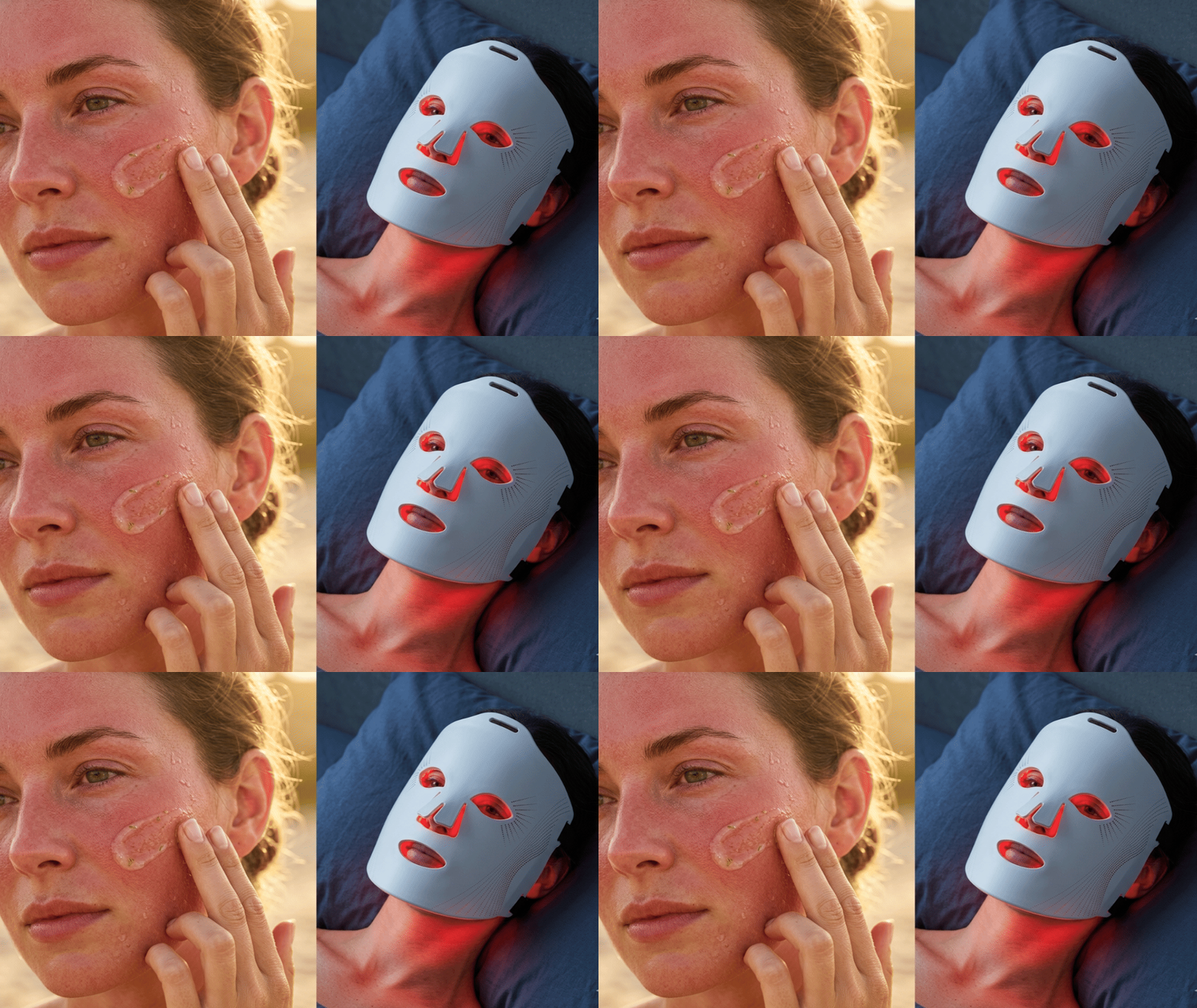
Most after-sun routines are built around comfort: cooling the skin, replacing lost moisture, calming the redness. These steps matter — but they address the surface of a problem that runs considerably deeper. UV exposure does not just burn the top layer of skin. It triggers a cascade of cellular damage that unfolds over hours and days: collagen-degrading enzymes activate, the skin barrier breaks down, oxidative stress accumulates, and melanocytes — the cells responsible for pigmentation — shift into overdrive. Aloe vera soothes none of that.
Red light therapy offers something that standard after-sun care does not: a mechanism for addressing UV-induced cellular damage directly, at the level where it actually occurs. It is not yet a fixture of the after-sun routine — but the science suggests it should be.
What UV exposure actually does to skin
When UV radiation penetrates the skin, the immediate response is well known: vasodilation causes redness, the inflammatory cascade triggers swelling and heat, and transepidermal water loss increases as the barrier breaks down. This is the acute sunburn response — uncomfortable, but the body's normal mechanism for initiating repair.
The deeper damage is less visible and more consequential. UV radiation activates matrix metalloproteinases (MMPs) — enzymes that break down collagen and elastin in the dermis. A single significant UV exposure measurably increases MMP activity and reduces the skin's collagen content in the days that follow. Repeated exposure compounds this: over time, UV-driven collagen degradation outpaces production, manifesting as the fine lines, loss of firmness, uneven tone, and thickened texture of photoaged skin. Melanocytes also respond to UV by increasing melanin production — the mechanism behind both protective tanning and the hyperpigmentation that often follows sunburn. Understanding this cascade is the starting point for understanding why red light therapy has a role in recovery.
Why aloe and moisturizer only go halfway
Cooling gels, aloe vera, and ceramide-rich moisturizers are genuinely useful in the acute phase of sunburn. They address surface discomfort, help restore the skin's moisture barrier, and reduce transepidermal water loss. What they do not do is modulate the deeper inflammatory cascade, support the fibroblast activity needed to repair UV-degraded collagen, or address the oxidative stress that UV radiation generates in skin cells. They treat the symptom visible at the surface — redness, tightness, peeling — while the structural repair work below continues without support. This is the gap that red light therapy can fill.
How red light therapy addresses post-UV damage at the cellular level
Photobiomodulation — the mechanism underlying LED light therapy — involves specific wavelengths of light being absorbed by chromophores in skin cells, triggering biological responses that support repair and reduce inflammation. For post-UV skin, three wavelengths are particularly relevant.
The clinical evidence for these mechanisms in the context of UV damage and wound repair is substantive. A 2017 study in Photodermatology, Photoimmunology & Photomedicine found that red light directly reduced UV-induced redness and accelerated barrier repair in treated subjects compared to controls. A comprehensive 2024 meta-analysis of 18 randomized controlled trials (Taha et al.) concluded that low-level laser and LED therapy significantly accelerates skin wound healing — treated wounds closed faster and showed higher rates of complete healing than untreated controls, with participants also reporting reduced pain during recovery. A controlled German clinical trial with 136 volunteers using red and near-infrared light twice weekly over 30 sessions found statistically significant improvements in skin complexion, wrinkle depth, and ultrasound-measured collagen density — outcomes directly relevant to the collagen repair deficit that UV exposure creates.
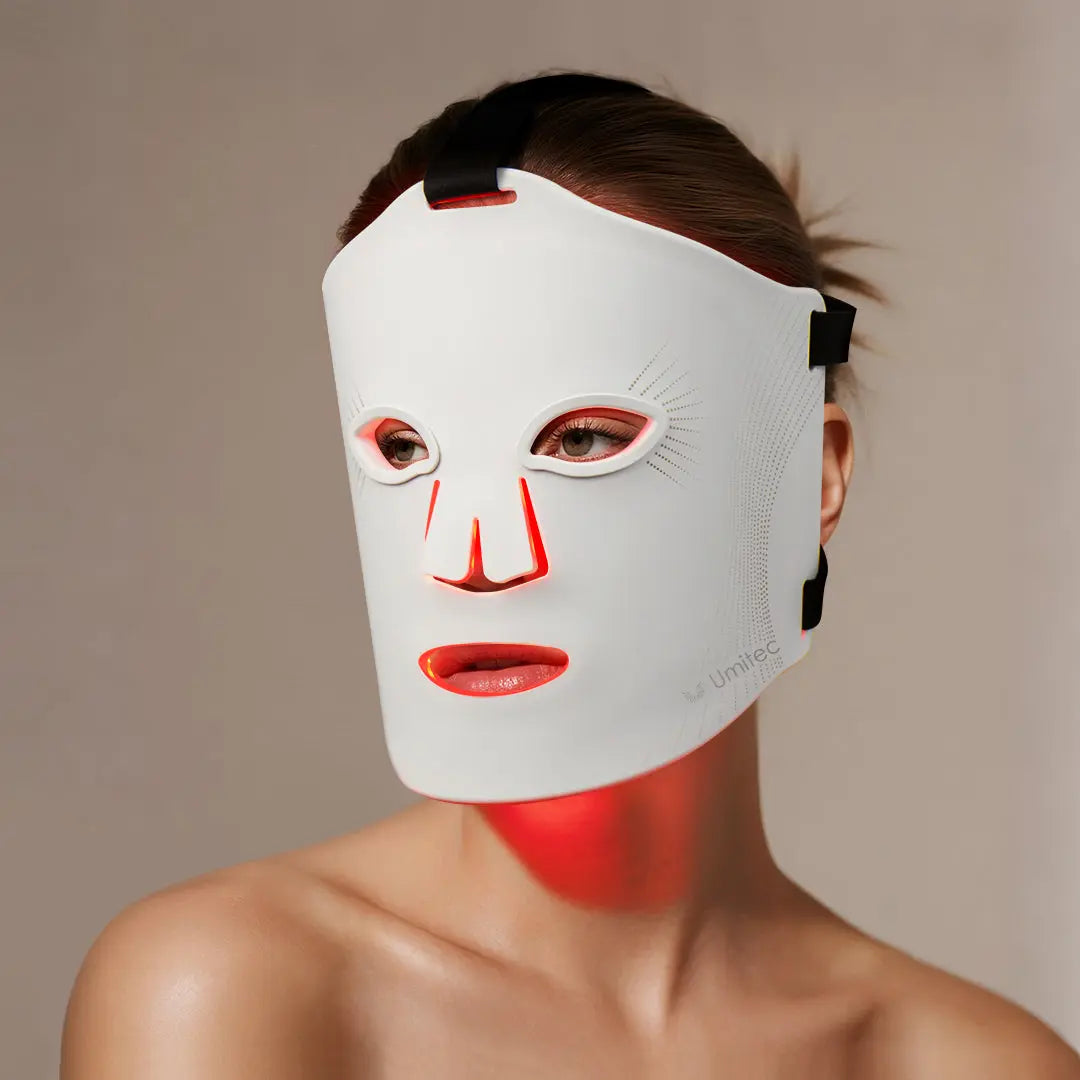
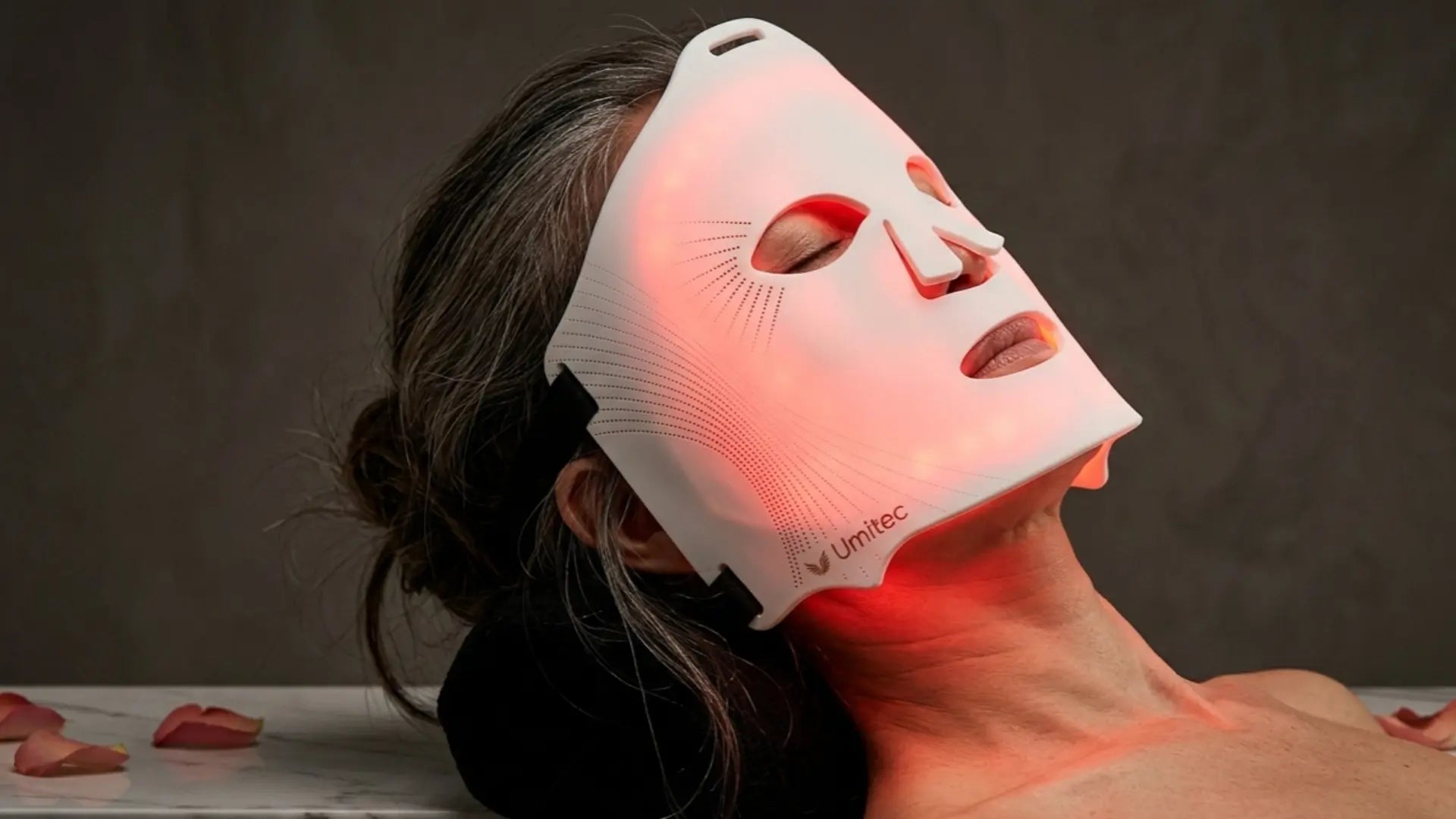
The Umitec LED Therapy Face Mask Series 3, co-developed with Dr. Yao from Fudan University, delivers all three relevant wavelengths — red (630nm), near-infrared (830nm), and yellow (590nm) — via 4-channel zone control in a single 10-minute at-home session, making it a practical tool for integrating LED therapy into a post-sun recovery routine.
When to start — and what to avoid
Do not use LED therapy on actively sunburned skin. Wait until the acute inflammatory phase has subsided — typically 48–72 hours after exposure, once the skin is no longer hot to the touch and active peeling has not yet begun. Applying additional light stimulation to acutely inflamed skin may increase rather than reduce irritation. LED therapy is a repair-phase tool, not an acute treatment.
Once the acute phase has passed, begin LED sessions to support the skin's ongoing repair process: 2–3 sessions per week, 10 minutes per session, on clean, product-free skin. This frequency aligns with the protocols used in published clinical studies and allows sufficient recovery time between sessions.
A complete after-sun recovery routine
- Gentle, fragrance-free cleanser — avoid exfoliants or actives
- Cooling layer: aloe vera gel or centella asiatica-based serum
- Ceramide-rich moisturizer to support barrier recovery
- Broad-spectrum SPF if going outdoors — non-negotiable
- No LED therapy during this phase
- Gentle cleanse — skin should be clean and dry before LED
- Umitec LED session: red + near-infrared for collagen repair, yellow for redness — 10 minutes, 2–3× per week
- Hyaluronic acid serum immediately post-session
- Ceramide moisturizer to lock in hydration
- SPF 30+ — UV protection is essential during repair phase
Beyond sunburn: chronic UV damage
The after-sun framework above is designed for acute recovery — a single significant UV event and the days that follow. But the same cellular mechanisms apply to cumulative UV photoaging: the uneven tone, loss of firmness, fine lines, and textural changes that build up over years of sun exposure. For this kind of damage, consistent red and near-infrared LED use over weeks and months addresses the same collagen repair deficit — activating the fibroblast activity that UV-driven MMP degradation has suppressed, and supporting the collagen density that repeated exposure has gradually reduced. The difference is that chronic photoaging requires a longer-term commitment: clinical studies showing meaningful improvements in collagen density and skin firmness have typically involved two to three sessions per week sustained over eight to twelve weeks, not a single recovery period.
After-sun skincare has long focused on what you can see and feel — the redness, the tightness, the peeling. Red light therapy offers a way to address what you cannot: the collagen degradation, inflammatory cascade, and cellular repair deficit that UV exposure creates below the surface. Used at the right time, with the right wavelengths, it represents the logical next step in a complete after-sun recovery routine — one that most people are not yet taking, but the science has long supported.


发表评论
所有评论在发布前都会经过审核。
此站点受 hCaptcha 保护,并且 hCaptcha 隐私政策和服务条款适用。