



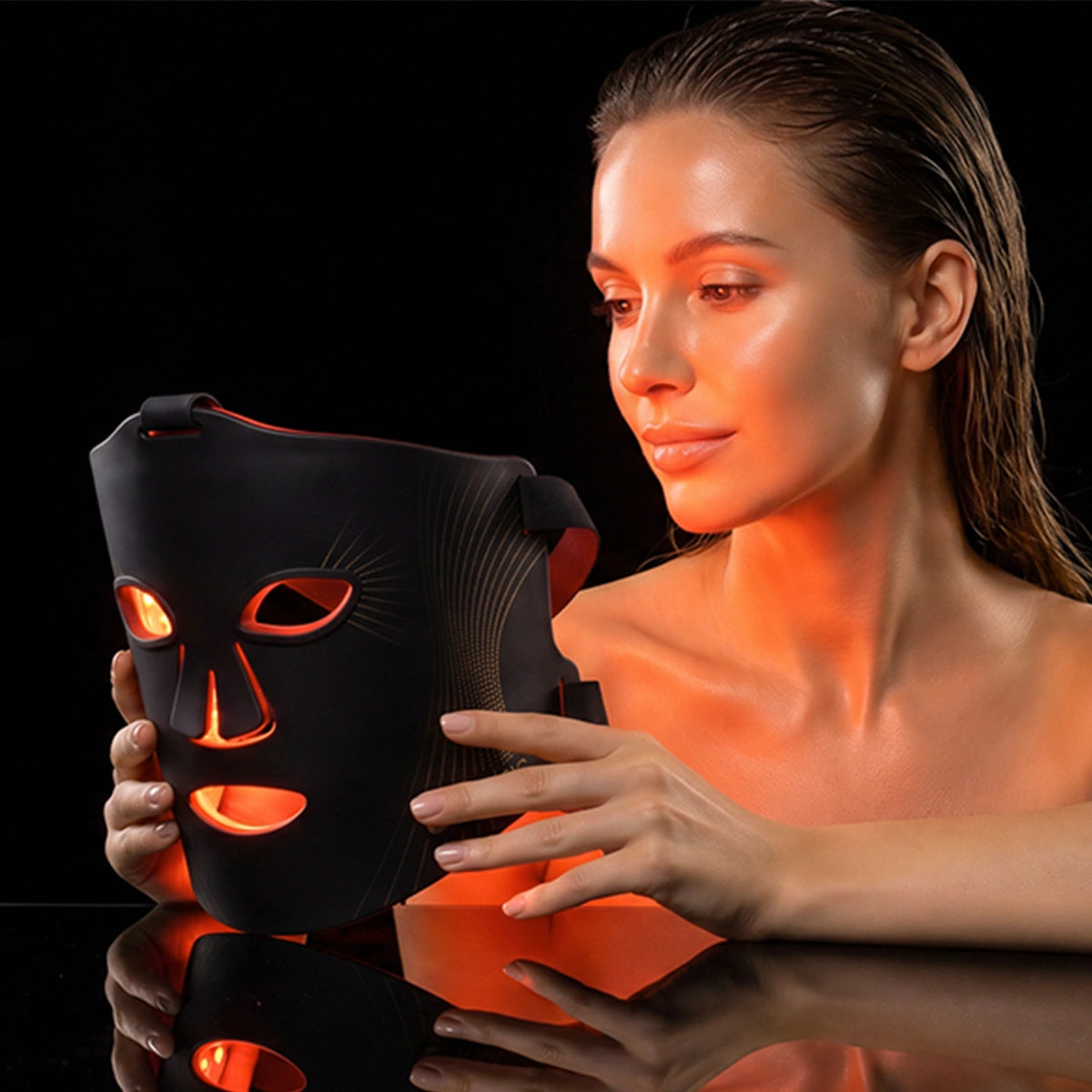
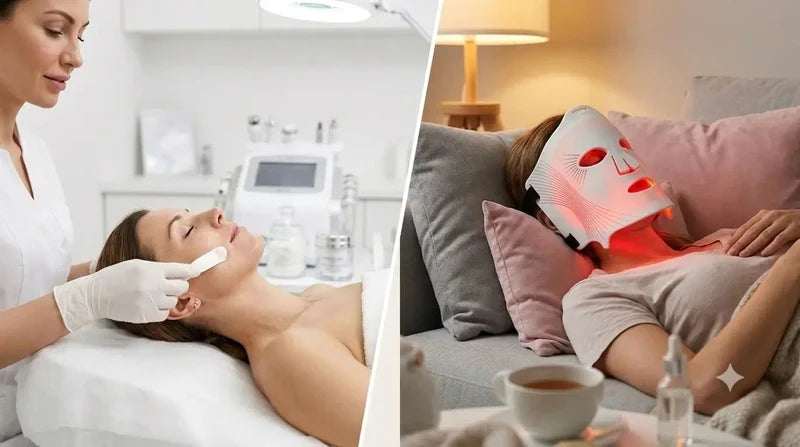
Professional LED light therapy can be a convenient way to incorporate light-based skincare into a treatment plan. But there is one practical consideration: every clinic session comes with a recurring cost.
An at-home LED face mask works differently. Instead of paying for each appointment, you make a one-time purchase and incorporate treatments into your own skincare routine.
So which option offers better value over time?
The answer depends on more than the initial price. Let's compare professional LED treatments with at-home LED face masks, looking at cost, convenience, consistency, and the situations where each option makes sense.
The Cost of Professional LED Light Therapy
Professional LED light therapy is typically offered as a standalone facial treatment or as part of a broader skincare service.
The price can vary significantly depending on several factors:
-
Location: Treatment prices differ between cities, countries, and neighborhoods.
-
Clinic positioning: Dermatology clinics, medical spas, and beauty salons may charge different rates.
-
Equipment: The type of LED device, its specifications, and the treatment area can influence pricing.
-
Treatment format: Standalone LED sessions may cost differently from LED treatments included in a facial or other service.
-
Packages: Some clinics offer discounted rates when multiple sessions are purchased together.
The important point is that professional treatment is generally a recurring expense. If you want to maintain a regular schedule, you need to account for the cost of each additional appointment.
A single session may feel affordable, but the total can add up over several months or years.
The Cost of an At-Home LED Face Mask
An at-home LED face mask requires a higher initial investment than a single clinic appointment, but the cost structure is different.
Once you purchase the device, you can incorporate treatments into your routine without paying a separate fee for every session.
When comparing devices, however, price should not be the only consideration. Look at:
-
Wavelength specifications: Check whether the manufacturer clearly identifies the light wavelengths used.
-
Device testing and documentation: Look for transparent product information and relevant safety or performance documentation.
-
Treatment instructions: A clearly defined treatment duration and recommended frequency make it easier to use the device consistently.
-
Comfort and fit: A comfortable design can make it easier to maintain a regular routine.
-
Warranty and expected lifespan: Consider how long the device is designed to last and what support is available if something goes wrong.
A lower-priced device is not automatically a better value, just as a more expensive device is not automatically more effective. Product specifications, testing, build quality, and manufacturer support all matter.
After the initial purchase, the additional cost per session is generally low. You also avoid appointment fees, travel, and the need to schedule every treatment around clinic availability.
Where Does the Break-Even Point Fall?
Let's use a simple example to understand the difference.
Assume an at-home LED face mask costs $209 and a professional LED session costs $100.
These are illustrative figures for comparison, not a statement of current UMITEC pricing or a universal clinic average.
| Sessions | Cumulative Clinic Cost | At-Home Device Cost |
|---|---|---|
| 1 | $100 | $209 |
| 2 | $200 | $209 |
| 3 | $300 | $209 |
| 8 | $800 | $209 |
| 12 | $1,200 | $209 |
Under these assumptions, the at-home device becomes less expensive than paying for individual clinic sessions after the third session.
By the twelfth session, the difference is:
-
Professional treatments: $1,200
-
At-home device: $209
-
Difference: $991
This is a simple cost comparison, not a claim that the two treatment options deliver identical results. Professional equipment, treatment parameters, and clinical supervision can differ considerably from those of an at-home device.
The calculation simply shows how recurring appointment costs can add up compared with a one-time purchase.
Cost Per Session Over Time
The longer you use an at-home LED mask, the lower its average purchase cost per session becomes.
Let's compare two hypothetical routines:
-
Clinic route: Two sessions per month at $100 per session.
-
At-home route: Three sessions per week using a $209 device.
For simplicity, the calculation assumes 52 weeks per year and does not include maintenance, repairs, replacement, electricity, or additional skincare products.
| Timeline | Clinic Route | At-Home Route |
|---|---|---|
| Annual sessions | 24 | 156 |
| Annual treatment cost | $2,400 | $209 initial purchase |
| Year 1 cost per session | $100 | $1.34 |
| Year 2 cumulative cost per session | $100 | $0.67 |
| Year 5 cumulative cost per session | $100 | $0.27 |
| Five-year total cost | $12,000 | $209* |
The at-home calculation assumes the device remains functional throughout the five-year period. Actual device lifespan varies, and replacement or repair costs may apply.
What does this tell us?
The clinic route involves paying for every appointment, while the at-home route spreads the initial purchase cost across multiple uses.
However, this comparison assumes that the device remains usable throughout the period and that you actually maintain the suggested routine. The real value of an at-home device depends on how consistently you use it and how long it lasts.
Consistency and Convenience: Beyond the Price
Cost is only one part of the decision. Convenience can also influence whether a skincare routine becomes a lasting habit.
Professional treatments require you to arrange appointments, travel to a clinic, and fit sessions into your schedule. Depending on your location and routine, this can make frequent treatments difficult to maintain.
An at-home LED mask offers a different experience.
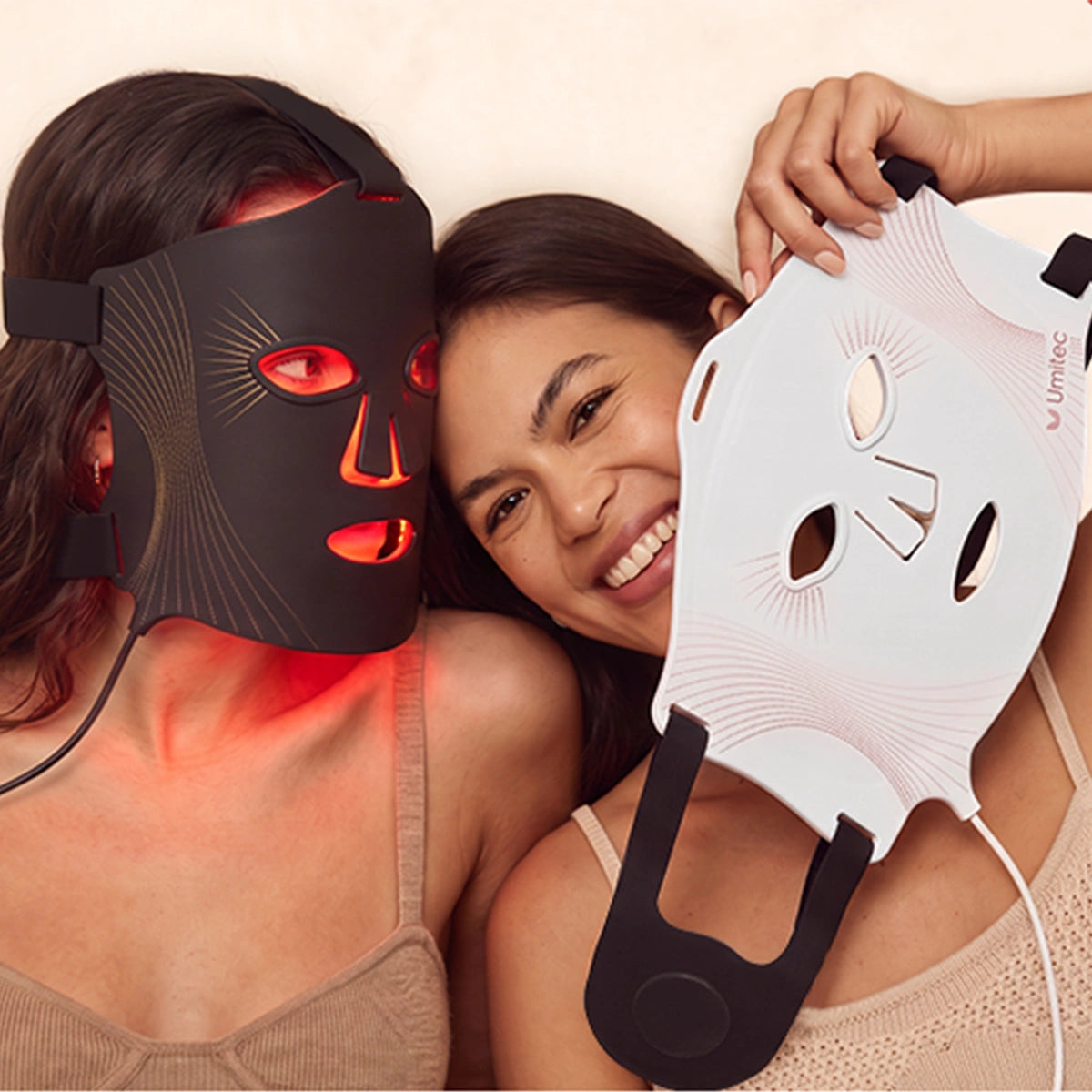
You can use it at a time that works for you, whether that's in the evening, while relaxing, or as part of your existing skincare routine.
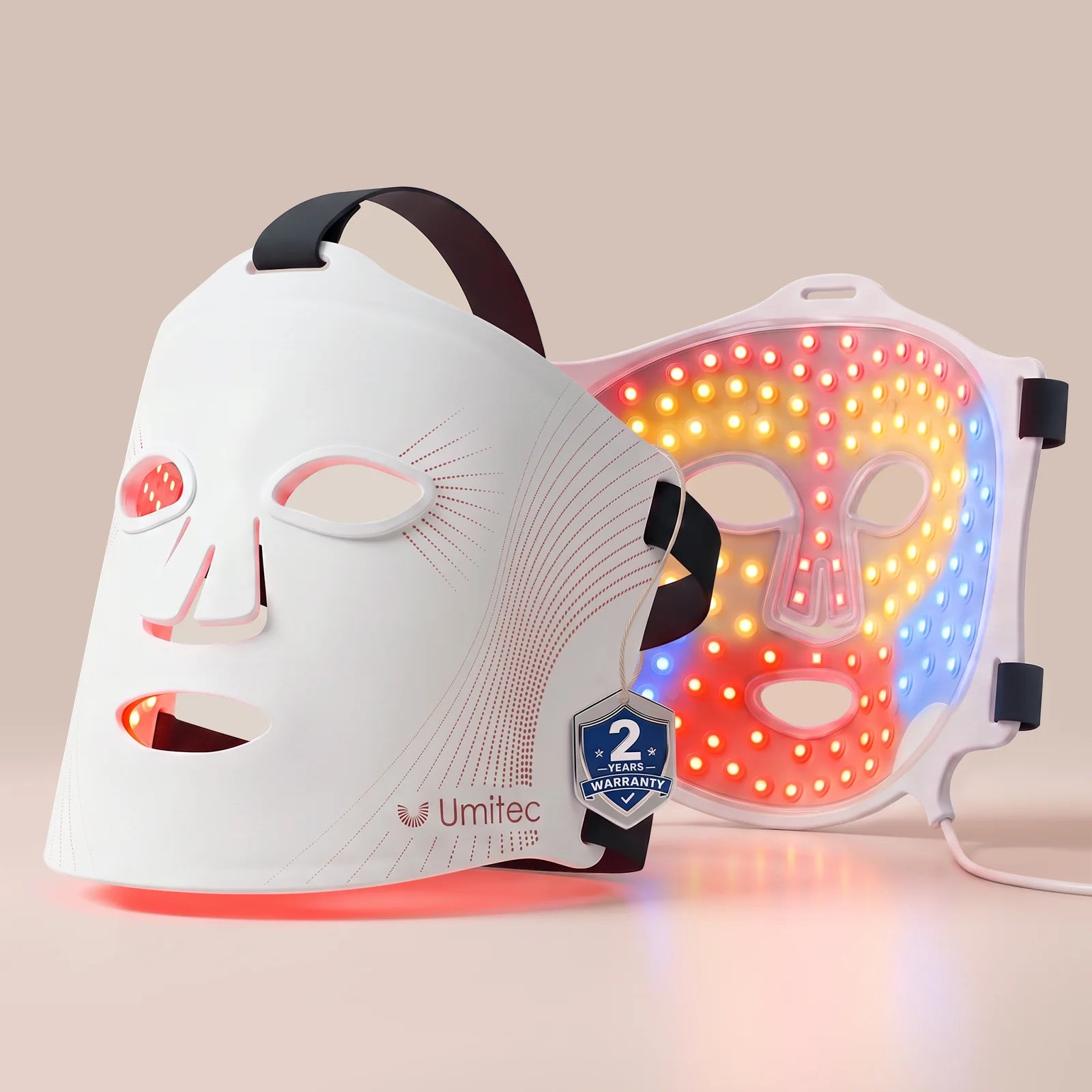
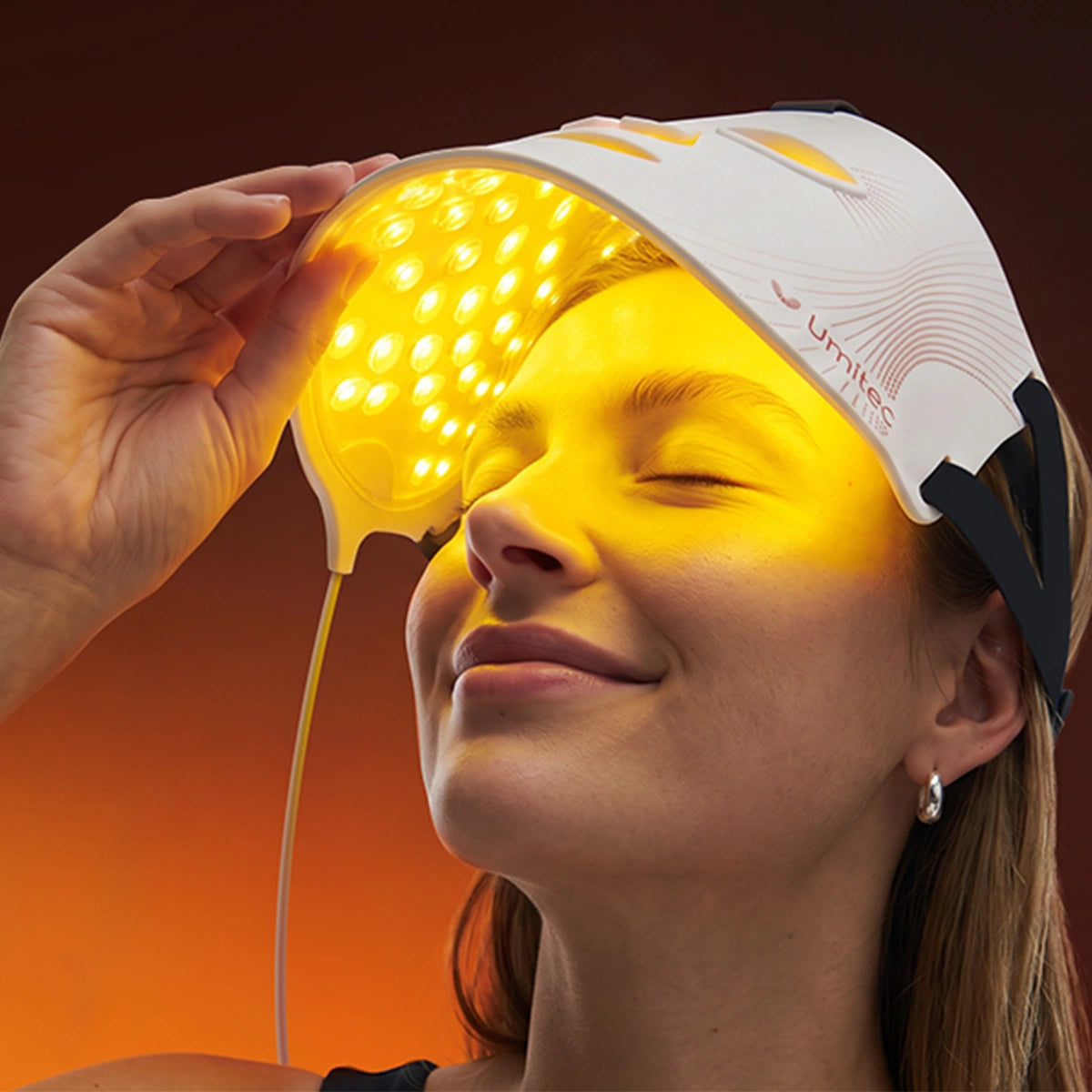
For example, UMITEC ZoneCraft™ LED Face Mask Series 3 is designed around 10-minute treatment sessions. Its targeted treatment zones and full-face mode offer flexibility when incorporating LED skincare into your routine.
The advantage is not that at-home treatment is automatically more effective than professional treatment. Rather, it can make regular use more convenient for people who prefer to manage their skincare at home.
It is also important to follow the manufacturer's recommended treatment frequency. Using a device more often than instructed does not necessarily produce better results.
When Does Professional LED Treatment Make More Sense?
An at-home LED mask is not the right choice for everyone. Professional treatment can be a better option in several situations.
1. You want professional guidance
If you're new to LED light therapy or unsure which treatment is appropriate for your skin, a qualified professional can help assess your concerns and discuss suitable options.
2. You want to try LED treatment first
A clinic session can be a practical way to experience LED light therapy before deciding whether to invest in an at-home device.
3. Your skin concerns need medical attention
Persistent acne, significant inflammation, and other skin conditions may require assessment and treatment by a dermatologist. A professional can help determine whether LED therapy is appropriate as part of a broader treatment plan.
4. You prefer occasional treatments
If you only want an LED session occasionally, rather than maintaining a regular routine, purchasing an at-home device may not offer enough additional value to justify the upfront cost.
The best option depends on your skincare goals, budget, and preferences.
When Is an At-Home LED Face Mask Worth It?
An at-home LED face mask may offer better long-term value if you:
-
Prefer incorporating skincare treatments into your daily routine.
-
Want the flexibility to use a device at home.
-
Expect to use LED light therapy consistently over an extended period.
-
Want to avoid recurring appointment and travel costs.
-
Prefer a one-time purchase over paying for individual sessions.
The key is choosing a device with clear specifications, appropriate safety information, comfortable design, and realistic treatment instructions.
Final Thoughts: Think Beyond the Initial Price
Professional LED treatments and at-home LED face masks serve different needs.
Clinic treatments offer access to professional equipment and guidance, while at-home devices offer flexibility and a different cost structure.
If you only plan to have a few occasional sessions, professional treatment may be the more practical choice. But if you want to make LED light therapy a regular part of your skincare routine, an at-home device may become a more economical option over time.
Ultimately, the best investment is not simply the device with the lowest price or the treatment with the highest session cost. It's the option that fits your skincare needs, budget, and lifestyle — and that you can realistically maintain.



Leave a comment
This site is protected by hCaptcha and the hCaptcha Privacy Policy and Terms of Service apply.