


Wenn Sie schon einmal einen Akneausbruch hinter sich hatten und dann sechs Monate darauf gewartet haben, dass die zurückbleibende Spur verschwindet, wissen Sie bereits, wie frustrierend die Folgen von Akne sein können. Was die meisten Menschen nicht wissen – und was die meisten Hautpflegeinhalte nicht klarstellen – ist, dass „Aknenarben“ und „dunkle Flecken“ zwei völlig unterschiedliche Hautveränderungen beschreiben. Sie sehen bei bestimmten Lichtverhältnissen ähnlich aus, treten an den gleichen Stellen auf und werden häufig als dasselbe Problem behandelt. Aber das sind sie nicht. Und sie auf dieselbe Weise zu behandeln, ist einer der Hauptgründe, warum Menschen das Gefühl haben, dass nichts wirkt.
Die LED-Lichttherapie verfügt über einen echten, dokumentierten Mechanismus zur Behandlung beider Probleme – aber der Mechanismus ist für jedes Problem anders, der Zeitplan ist anders, und die Erwartungen müssen zur Biologie passen. Dieser Artikel klärt den Unterschied und erklärt, was eine konsequente LED-Anwendung für jede Art von Post-Akne-Mal erreichen kann und was nicht.
Der Unterschied, der alles verändert
Bevor Sie einen Behandlungsansatz wählen, lohnt es sich, genau zu untersuchen, womit Sie es tatsächlich zu tun haben. Fahren Sie mit der Fingerspitze bei gutem Licht sanft über die betroffene Stelle. Wenn die Haut völlig glatt ist und sich nur die Farbe von der umgebenden Haut unterscheidet – dunkler, bräunlich oder rötlich –, handelt es sich höchstwahrscheinlich um eine postinflammatorische Hyperpigmentierung (PIH). Wenn die Oberfläche uneben, eingesunken oder von einer anderen Textur als die umgebende Haut ist, handelt es sich um atrophische Narben. Beides kann gleichzeitig auftreten, was häufig vorkommt und die Verwirrung verstärkt.
Flache Verfärbung – braun, rötlich oder gräulich – nach einer abgeheilten Akneläsion. Die Hauttextur ist glatt. Verursacht durch Überaktivierung von Melanozyten während der Entzündung, die eine übermäßige Melaninproduktion in der Dermis und Epidermis hervorruft.
Verblasst im Laufe der Zeit von selbst (3–24 Monate unbehandelt). Behandelbar durch Behandlungen, die Entzündungen reduzieren, Melanozyten stabilisieren und den Zellumsatz unterstützen.
Texturelle Vertiefungen – Eispickelnarben, Boxcar-Narben oder rollende Narben – verursacht durch Kollagenzerstörung während schwerer entzündlicher Akne. Die Hautoberfläche ist physisch uneben.
Verblasst nicht von selbst. Erfordert aktives Kollagen-Remodelling zur Verbesserung. Spricht langsamer auf die Behandlung an als PIH.
Wie die LED-Therapie PIH behandelt
PIH ist kein isoliertes Pigmentproblem – es ist das Ergebnis eines anhaltenden Entzündungssignals, das die Melanozyten in einem Zustand der Überproduktion hält. Nur das Oberflächenpigment zu behandeln, ohne die zugrunde liegende Entzündungsaktivität anzugehen, ist der Grund, warum viele aufhellende Seren nur begrenzte oder vorübergehende Ergebnisse erzielen. Die LED-Therapie behandelt PIH auf einer tieferen Ebene.
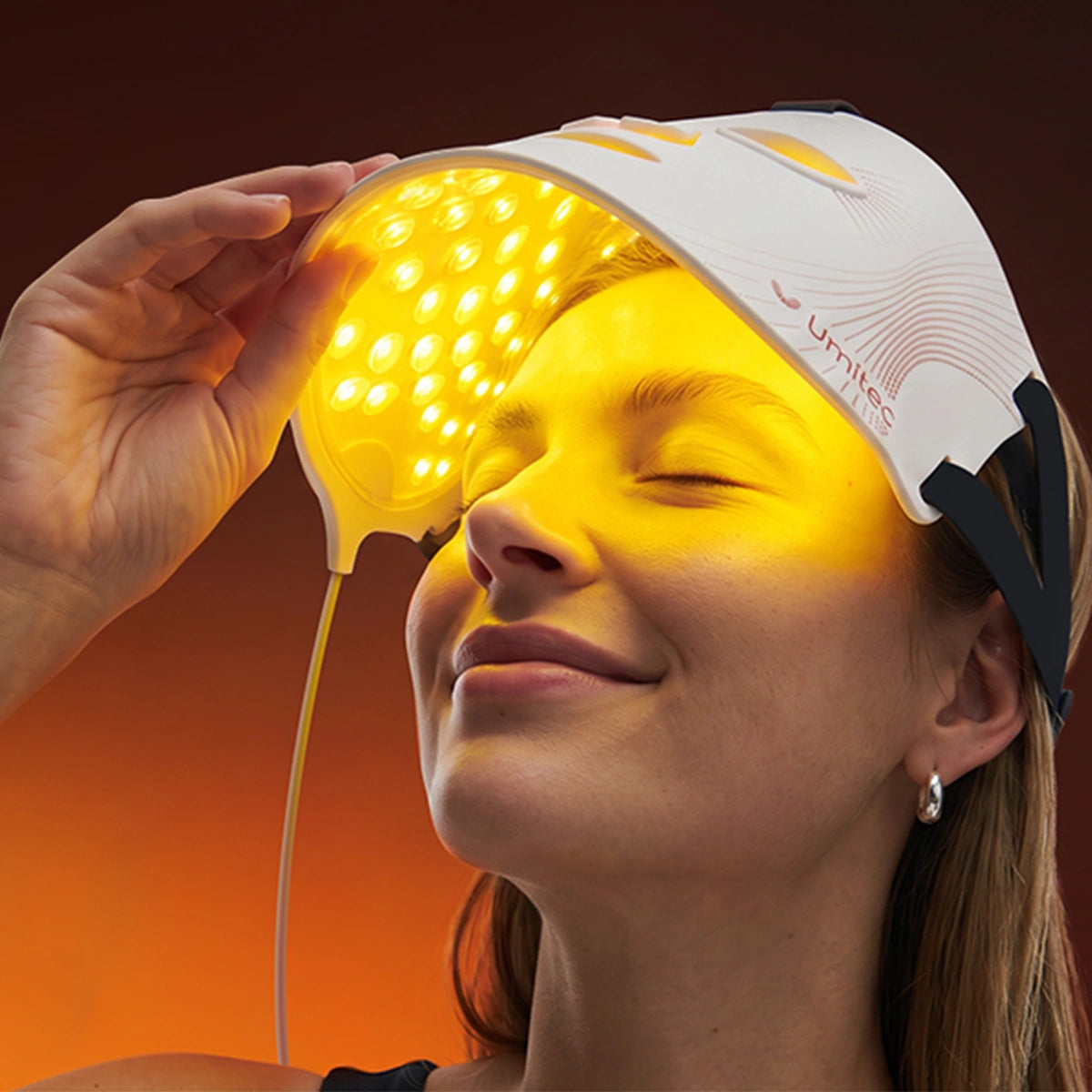
Rotes Licht bei 630 nm reduziert die Restentzündung, die die fortgesetzte Melaninüberproduktion antreibt – es beruhigt das zelluläre Signal, das das Pigment bestehen lässt, anstatt es von außen zu bleichen. Nahinfrarotlicht bei 830 nm unterstützt die Gewebereparatur und hilft, die postentzündliche Reaktion zu normalisieren, die Melanozyten hyperaktiv hält. Gelbes Licht bei 590 nm zielt auf das postentzündliche Erythem ab – die rötliche Verfärbung, die durch erweiterte Kapillaren verursacht wird – das häufig neben PIH vorhanden ist und oft mit ihr verwechselt wird. Forschung zur LED-Behandlung bei Melasma-Patienten, einer Erkrankung mit einem ähnlichen Mechanismus der Melanozyten-Überaktivierung, hat nach 12 Wochen konsequenter wöchentlicher Sitzungen eine signifikante Reduzierung der Pigmentierung gezeigt.
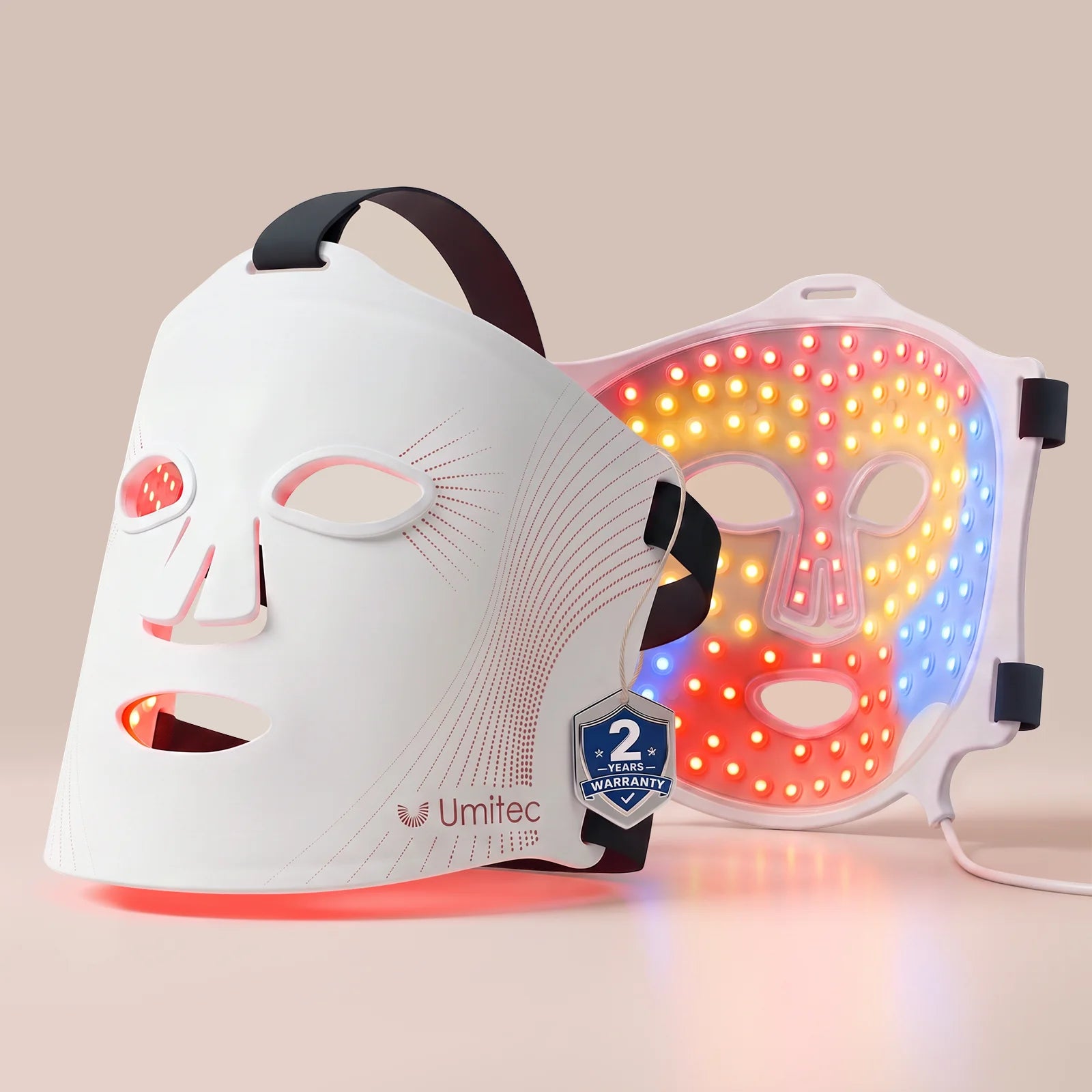
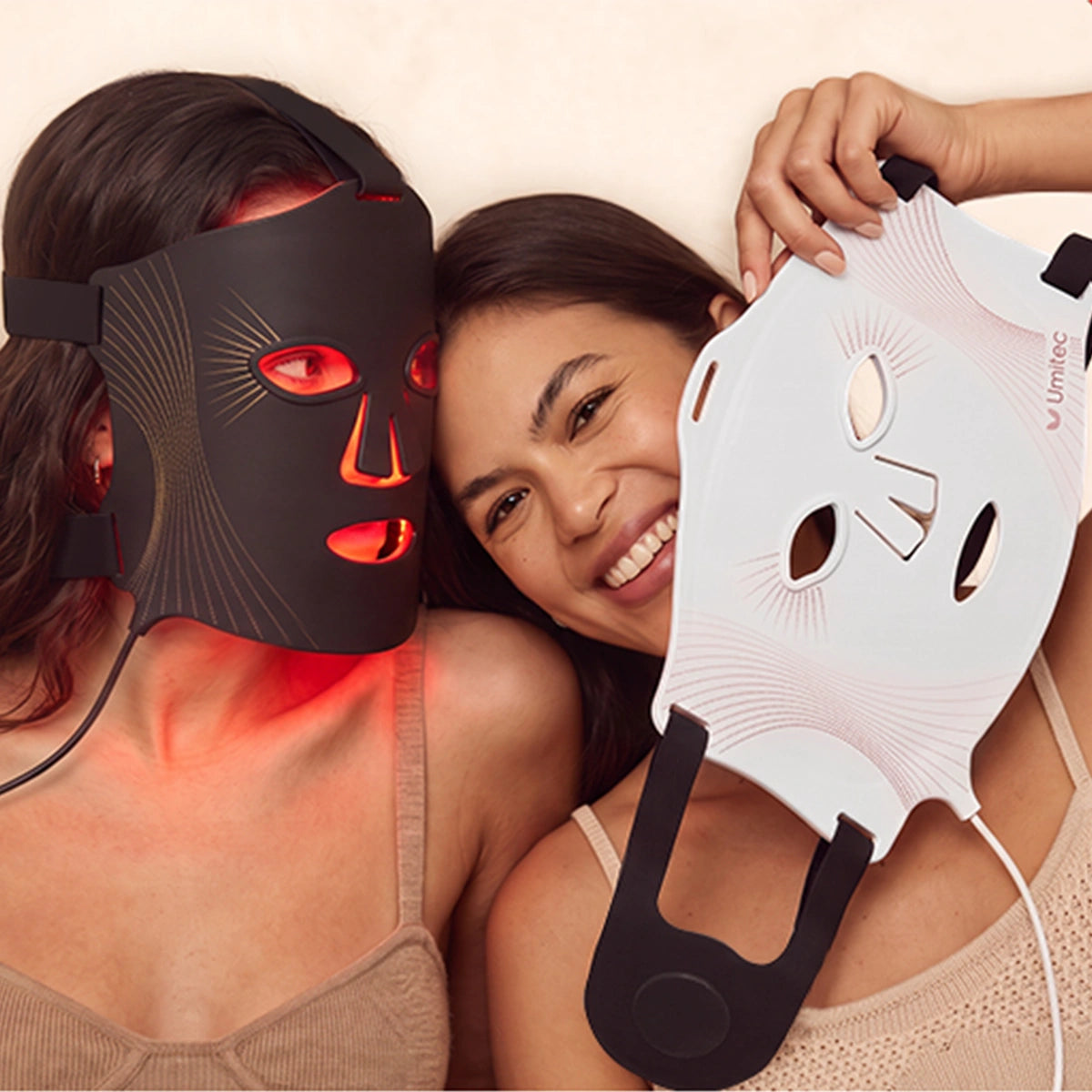
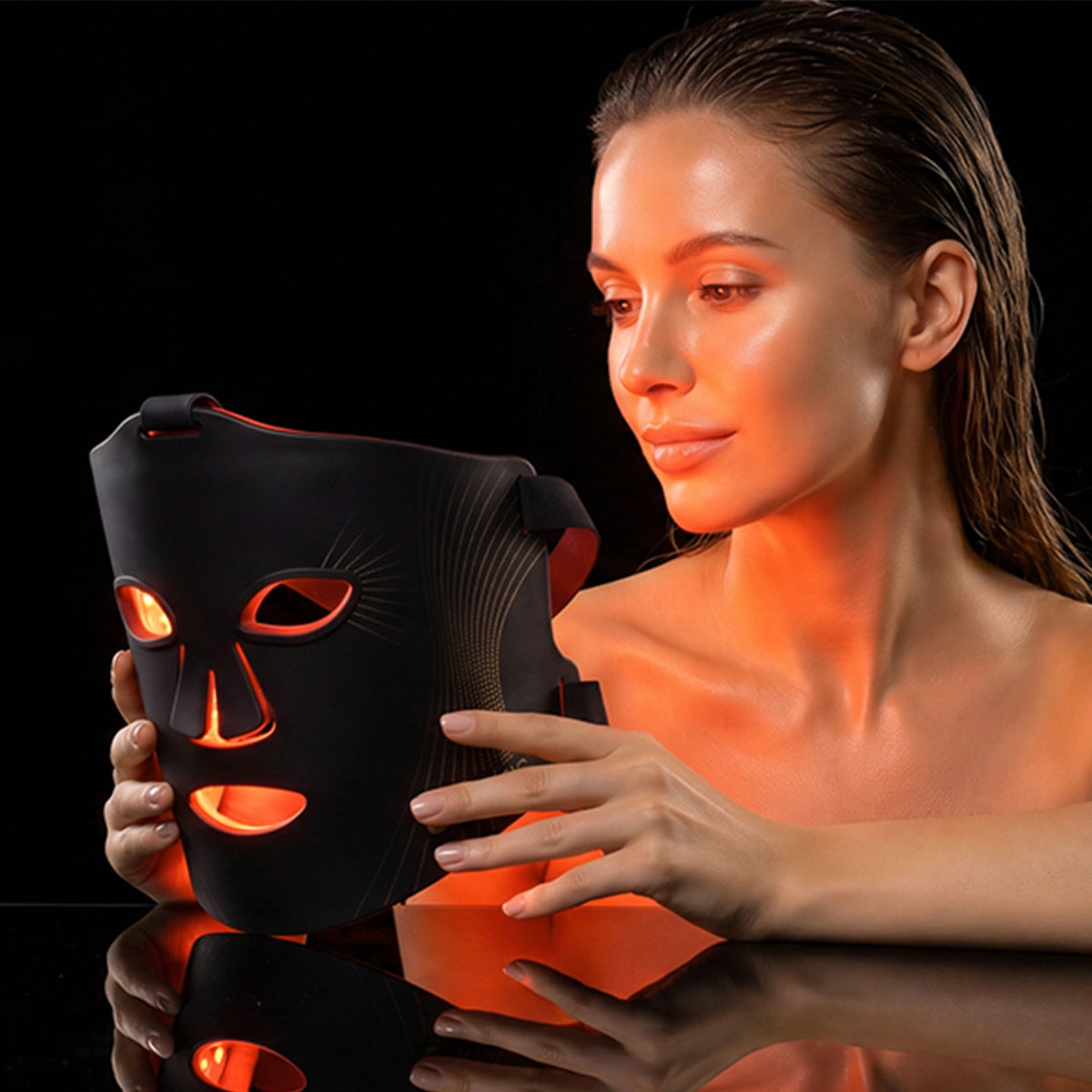
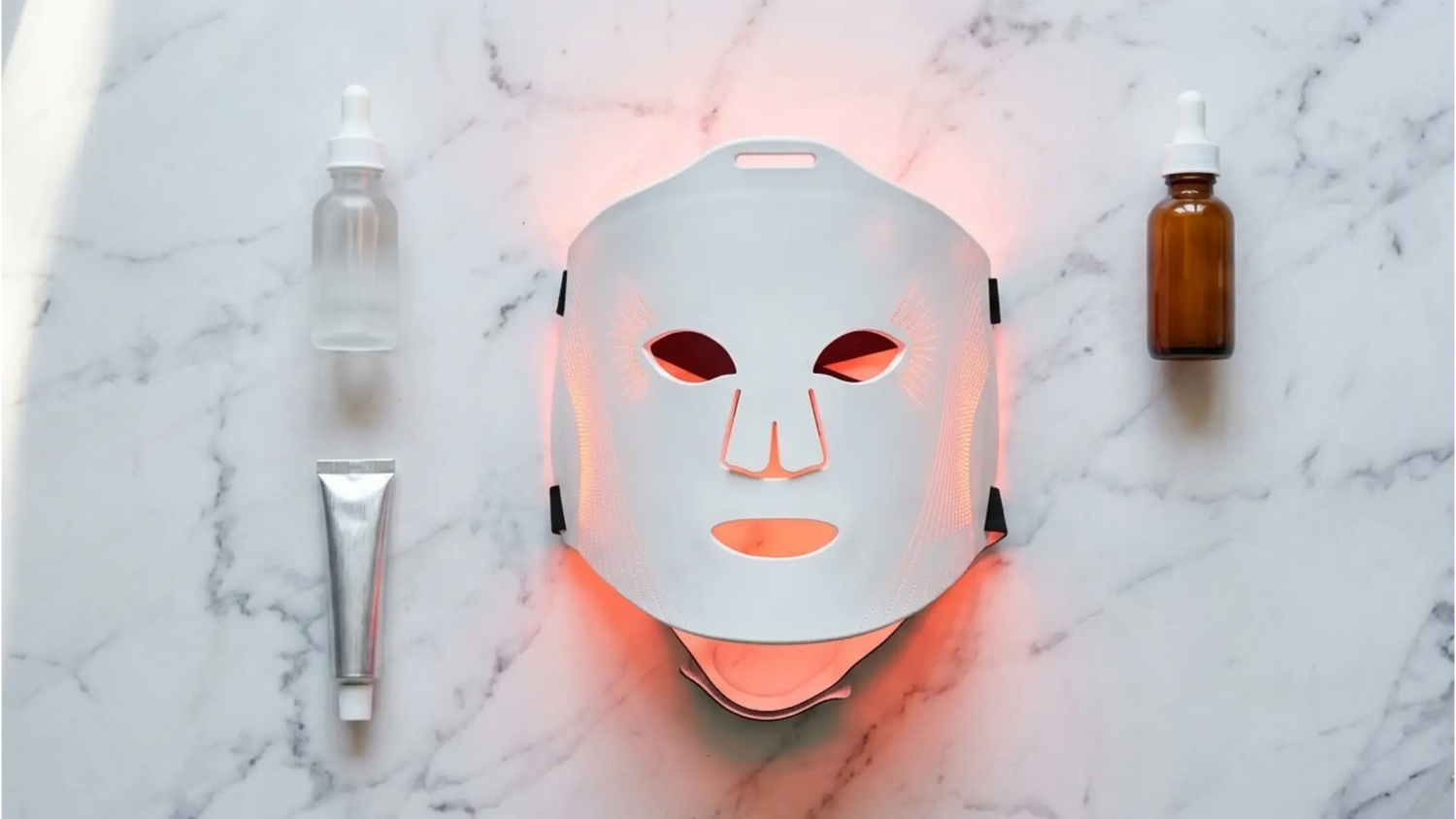
Speziell für PIH behandeln die Rot (630nm), Gelb (590nm) und Nahinfrarot (830nm) Modi der Umitec LED-Therapie Gesichtsmaske Serie 3 die drei Hauptursachen für post-Akne-Verfärbungen – Entzündung, vaskuläre Rötung und Melanozytenstabilisierung – in einer einzigen Sitzung über eine unabhängige Zonensteuerung, die eine gezielte Anwendung auf spezifische betroffene Bereiche ermöglicht.
Wie die LED-Therapie atrophische Narben behandelt
Atrophische Narben stellen ein strukturelles Defizit dar – Kollagen, das während einer aktiven Entzündung zerstört und nie ausreichend ersetzt wurde. Um sie zu verbessern, muss die Produktion von neuem Kollagen in der Dermis angeregt werden, nicht die Oberfläche behandelt werden. Hier hat die Rotlichttherapie ihren klarsten dokumentierten Mechanismus zur Narbenverbesserung.
Rotes Licht bei 630 nm wird von den Mitochondrien in Fibroblasten – den Zellen, die für die Kollagensynthese verantwortlich sind – absorbiert, wodurch deren ATP-Produktion erhöht und die Ablagerung neuen Kollagens im eingesunkenen Narbengewebe unterstützt wird. Nahinfrarot bei 830 nm dringt tiefer in die Dermis ein, um die Gewebereparatur dort zu unterstützen, wo Narbengewebe die gesunde Kollagenarchitektur ersetzt hat. Eine begutachtete Studie, die kombiniertes blaues (465 nm), rotes (640 nm) und nahinfrarotes (880 nm) LED über sechs wöchentliche Behandlungen anwendete, zeigte eine statistisch signifikante Reduktion des Volumens atrophischer Narben zusammen mit Verbesserungen der Hautfeuchtigkeit und der Talgregulation. Eine Meta-Analyse aus dem Jahr 2025, veröffentlicht in JAMA Dermatology, bestätigte, dass LED-Geräte für den Heimgebrauch entzündliche Aknemarker über 4–8 Wochen um etwa 45 % reduzierten – relevant, da die Reduzierung aktiver Entzündungen während der Aknephase das Risiko der Bildung schwerer Narben von vornherein direkt senkt.
Die ehrliche Einschränkung: Die LED-Therapie erzielt die bedeutsamsten Ergebnisse bei flachen, rollenden Narben und atrophischen Veränderungen im Frühstadium. Tiefe Eispickelnarben umfassen einen schmalen, steilen Kanal aus Fibrose, den LED-Wellenlängen nicht vollständig umgestalten können – diese erfordern in der Regel intensivere Interventionen wie fraktionierte Laser oder Radiofrequenz-Microneedling. Die LED-Therapie kann diese Behandlungen ergänzen und die kontinuierliche Kollagenpflege unterstützen, wird aber tiefe strukturelle Narben wahrscheinlich nicht eigenständig beheben.
Realistische Zeitpläne – vor Beginn festgelegt, nicht nach Enttäuschung
Diese Zeitpläne sind nicht willkürlich – sie spiegeln die veröffentlichten Protokolle in klinischen Studien wider, die messbare Ergebnisse erzielten. Konsistenz ist wichtiger als die Dauer der Sitzung: 10 Minuten zwei- bis dreimal pro Woche über Wochen hinweg ist das, was die Evidenz unterstützt. Sporadische Anwendung führt nicht zu den gleichen Ergebnissen.
Ergänzende Inhaltsstoffe, die die LED-Ergebnisse verbessern
Die LED-Therapie funktioniert am besten als Teil eines umfassenderen Ansatzes. Bei PIH unterstützt Niacinamid, das nach den Sitzungen aufgetragen wird, die Melaninregulierung und ergänzt die entzündungshemmende Wirkung des Rotlichts – beide wirken auf überlappenden Wegen. Vitamin-C-Serum, das nach der Sitzung aufgetragen wird, bietet antioxidative Unterstützung, die hilft, den oxidativen Stress zu neutralisieren, der das Fortbestehen von PIH antreibt. Retinol, das nach LED am selben Abend oder an wechselnden Nächten aufgetragen wird, beschleunigt den Zellumsatz, der nach und nach frischere, gleichmäßiger pigmentierte Haut an die Oberfläche bringt. Bei atrophischen Narben unterstützen Peptidseren die Kollagensynthese, die das Rotlicht initiiert – das Auftragen unmittelbar nach einer Sitzung, wenn die Reparaturmechanismen der Haut am aktivsten sind, kann die Absorption und Wirkung verbessern.
- Sanfter, nicht austrocknender Reiniger – vor LED alle Produkte entfernen
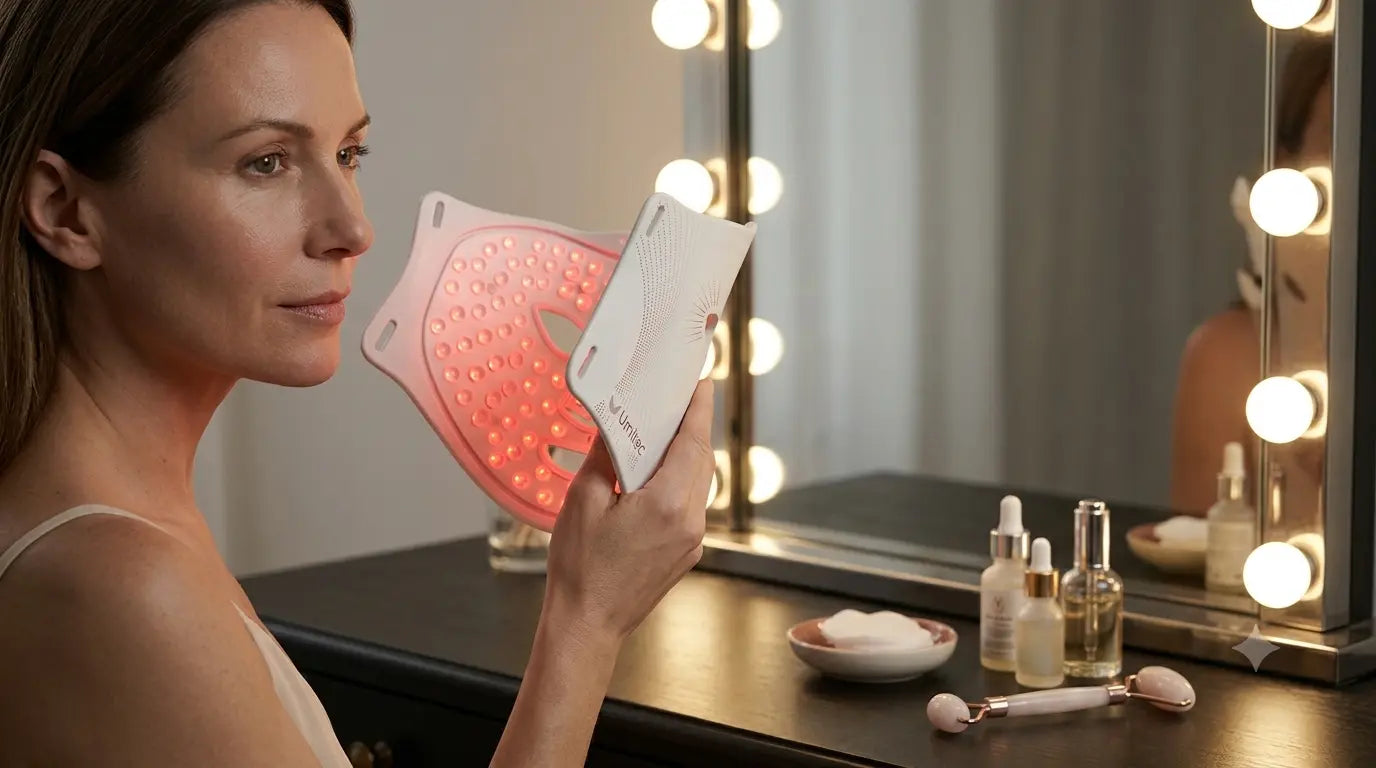
- LED-Sitzung auf sauberer, trockener Haut – 10 Minuten, 2–3× pro Woche. Verwenden Sie Rot und Nahinfrarot für Kollagen und Entzündungen; Gelb für vaskuläre Rötung und PIH. Verwenden Sie die Zonensteuerung, um sich mit der Umitec Serie 2 auf bestimmte betroffene Bereiche zu konzentrieren.
- Niacinamid-Serum sofort nach der Sitzung – Melaninregulierung und Barriereschutz
- Vitamin-C-Serum – antioxidative Unterstützung für PIH; nach Niacinamid auftragen
- Feuchtigkeitscreme mit Ceramiden zum Versiegeln und Schützen
- Retinol 2–3 Nächte pro Woche – zuletzt auftragen, nach der Feuchtigkeitscreme, wenn die Haut empfindlich ist; unterstützt den Zellumsatz zum Verblassen von PIH
PIH und frühe atrophische Narben gehören zu den Post-Akne-Problemen, bei denen die LED-Therapie den klarsten zellulären Mechanismus und die zugänglichste Evidenzbasis hat. Die Ergebnisse sind nicht sofort sichtbar und nach einer einzigen Woche nicht dramatisch – aber sie sind real, sie sind kumulativ und sie verstärken sich bei konsequenter Anwendung über die von der veröffentlichten Forschung unterstützten Zeiträume. Für jeden, der monatelang darauf gewartet hat, dass dunkle Flecken von selbst verblassen, oder sich mit unebener Textur abgefunden hat, ist ein Werkzeug, das die hauteigenen Reparatursysteme aktiv unterstützt – anstatt einfach das zu kaschieren, was die Akne hinterlassen hat – die Konsequenz wert, die es erfordert.


Hinterlasse einen Kommentar
Alle Kommentare werden vor der Veröffentlichung geprüft.
Diese Website ist durch hCaptcha geschützt und es gelten die allgemeinen Geschäftsbedingungen und Datenschutzbestimmungen von hCaptcha.