



Wenn sich Ihre Haut in den letzten zwei oder drei Jahren stärker verändert hat als im vorherigen Jahrzehnt, dann bilden Sie sich das nicht ein – und Sie sind nicht allein. Die Hautveränderungen, die Perimenopause und Menopause begleiten, gehören zu den schnellsten und am besten dokumentierten Formen der Hautalterung in der Dermatologie. Sie sind nicht schleichend. Sie sind keine unvermeidlichen Folgen des Älterwerdens im üblichen Sinne. Sie sind das direkte Ergebnis einer spezifischen hormonellen Verschiebung, und die Geschwindigkeit, mit der sie sich entfalten, überrascht viele Frauen völlig.
Zu verstehen, was tatsächlich passiert – und welche Mittel einen glaubwürdigen Wirkmechanismus zur Bewältigung dessen haben – ist nützlicher als Beruhigung. Dieser Artikel behandelt beides.
Was die Menopause mit dem Kollagen Ihrer Haut macht
Kollagen ist das strukturelle Gerüst der Dermis – der tieferen Hautschicht unter der Oberfläche. Es macht bis zu 75 % des Trockengewichts der Haut aus und ist verantwortlich für ihre Festigkeit, Fülle und Fähigkeit, sich zu regenerieren. Die Kollagenproduktion wird von vielen Faktoren beeinflusst, aber einer der wichtigsten ist Östrogen. Östrogen bindet an Rezeptoren auf Fibroblasten – den Zellen in der Dermis, die Kollagen produzieren – und stimuliert direkt deren Aktivität. Wenn der Östrogenspiegel in den Wechseljahren stark abfällt, nimmt die Fibroblastensignalisierung ab, und der Kollagenabbau beginnt die Produktion zu übertreffen.
Die Daten darüber, wie schnell dies geschieht, sind wirklich beeindruckend.
Diese Zahlen stammen aus der grundlegenden Forschung von Brincat et al. (1987), die anschließend durch mehrere unabhängige Studien bestätigt wurden und in der aktuellen dermatologischen Literatur, einschließlich eines narrativen Reviews aus dem Jahr 2025, der im Journal of Cosmetic Dermatology veröffentlicht wurde, häufig zitiert werden. Die entscheidende Implikation – wie Forscher von North Biomedical in einem klinischen Review aus dem Jahr 2026 feststellten – ist, dass der Kollagenverlust der Haut vom hormonellen Alter und nicht vom chronologischen Alter abhängt. Zwei Frauen gleichen Alters können dramatisch unterschiedliche Hautkollagenspiegel aufweisen, je nachdem, wann sie in den Wechseljahren waren.
Kollagenverlust ist nicht die einzige Veränderung. Der Östrogenabfall reduziert auch die natürliche Hyaluronsäureproduktion der Haut, beeinträchtigt die Ceramid-Synthese und erhöht den transepidermalen Wasserverlust – was bedeutet, dass die Hautbarriere poröser wird und Feuchtigkeit leichter entweichen und Reizstoffe leichter eindringen können. Das Ergebnis für viele Frauen ist das, was Dermatologen als Trockenheit-Reaktivitäts-Zyklus beschreiben: Haut, die gleichzeitig trockener, dünner, empfindlicher und anfälliger für Rötungen ist, als sie es vor dem Übergang war.
Wie die Rotlichttherapie den Kollagendefizit bekämpft
Die Hormonersatztherapie (HRT) bleibt eine der wirksamsten Interventionen bei menopausalen Hautveränderungen, gerade weil sie die hormonelle Ursache direkt angeht – die Wiederherstellung des Östrogenspiegels stellt die Fibroblastensignalisierung teilweise wieder her und verlangsamt den Kollagenverlust. Für Frauen, die Kandidaten für HRT sind und sich dafür entscheiden, diese zu nutzen, sind die Hautvorteile gut dokumentiert und sollten nicht unterschätzt werden.
Die Rotlichttherapie wirkt anders – nicht durch die Wiederherstellung von Hormonen, sondern indem sie nachgelagert zum hormonellen Problem, direkt auf zellulärer Ebene, ansetzt. Rotes Licht bei 630 nm wird von Mitochondrien – den energieproduzierenden Strukturen in Hautzellen, einschließlich Fibroblasten – absorbiert. Diese Absorption erhöht die ATP-Produktion (Adenosintriphosphat, die primäre Energiewährung der Zelle), was wiederum die Fähigkeit der Fibroblasten unterstützt, Kollagen und Elastin unabhängig von der Östrogensignalisierung zu synthetisieren. Nahinfrarotlicht bei 830 nm dringt tiefer in die Dermis und das Unterhautgewebe ein, unterstützt die Gewebereparatur und reduziert entzündliche Signale, die den Kollagenabbau weiter beschleunigen können.
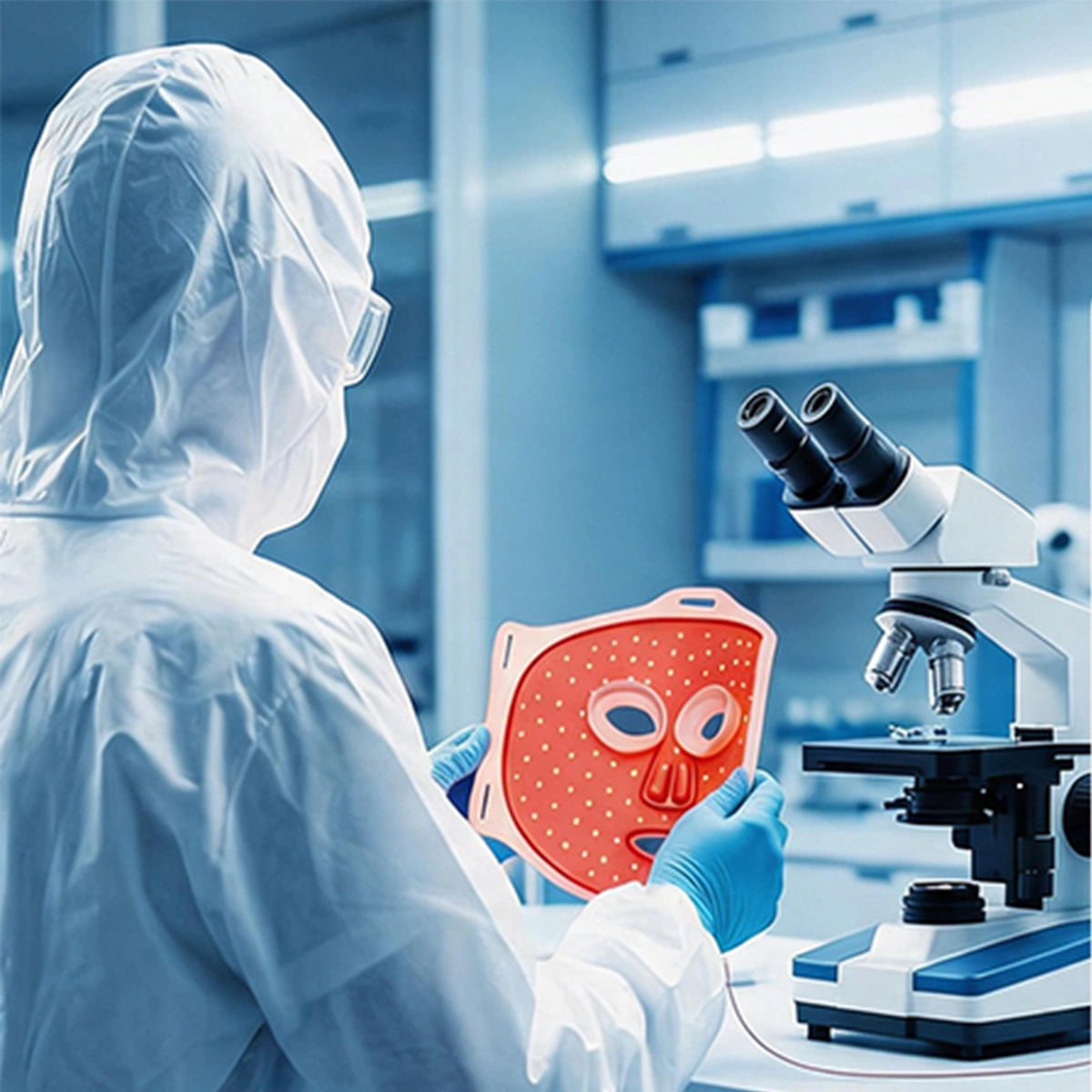
Die klinische Evidenz für diese Mechanismen im Kontext der Hautalterung ist substanziell. Eine Studie aus dem Jahr 2019, veröffentlicht im Journal of the American Academy of Dermatology, zeigte, dass LED-Rot- und Infrarotlicht die Expression von Kollagen, Elastin und Hyaluronsäure in der Haut direkt erhöht. Eine randomisierte kontrollierte Studie von Wunsch et al. aus dem Jahr 2014 und ein systematischer Review von Mota et al. aus dem Jahr 2023 bestätigten beide messbare Verbesserungen der Hauttextur, feiner Linien und der Kollagendichte nach konsequenter Rotlichttherapie. Eine Studie von Lee et al. aus dem Jahr 2007 ergab, dass Fibroblastenzellen nach zweimal wöchentlichen LED-Behandlungen über vier Wochen „hochaktiviert“ waren, mit einer Fülle von Kollagen- und Elastinfasern.
Für menopausale Haut ist der Mechanismus besonders relevant: Da rotes Licht auf Fibroblasten über den mitochondrialen Weg und nicht über den hormonellen Weg wirkt, kann es die Kollagensynthese auch bei niedrigem Östrogenspiegel unterstützen. Es ersetzt das hormonelle Signal nicht – aber es bietet einen alternativen Aktivierungsweg für dieselben Zellen.
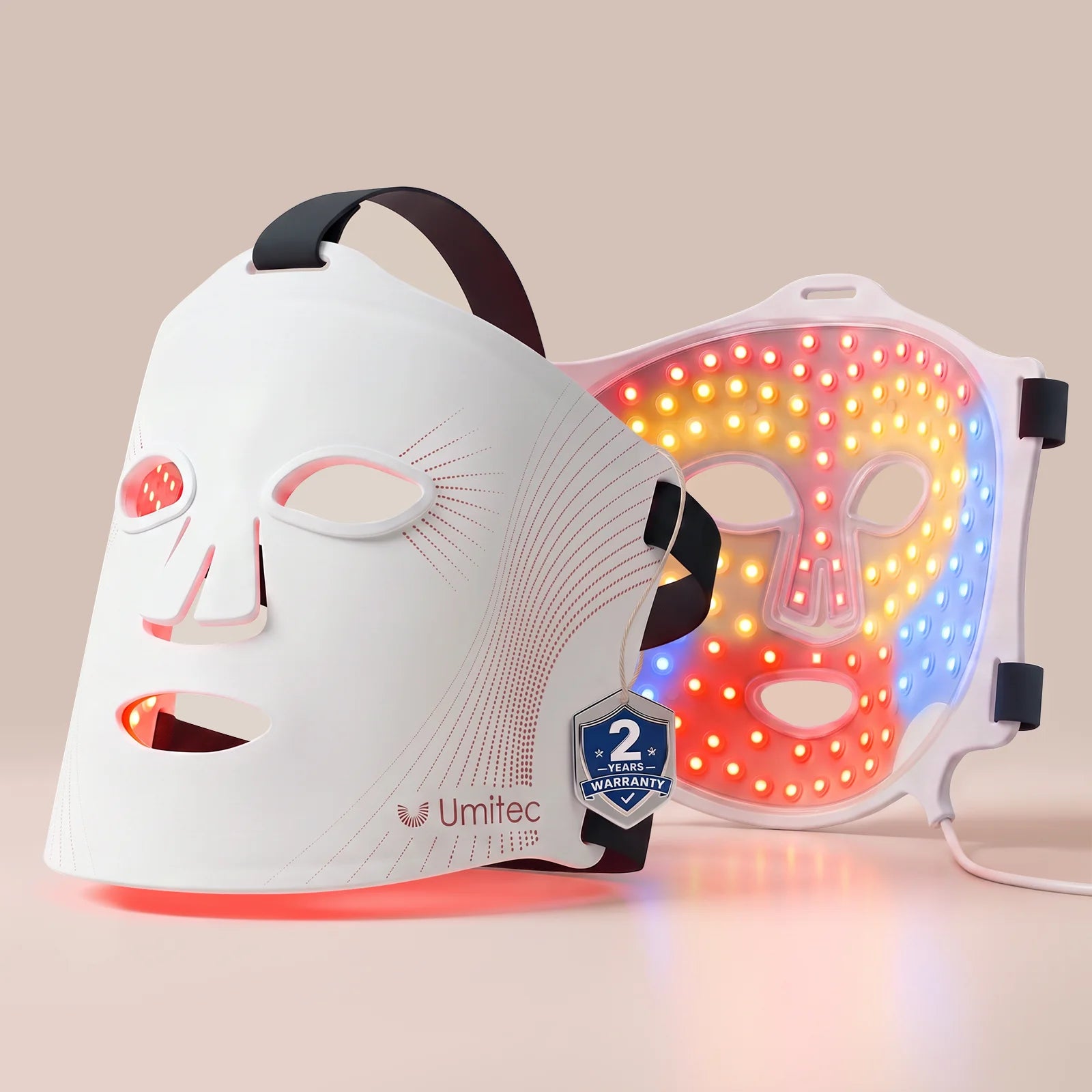
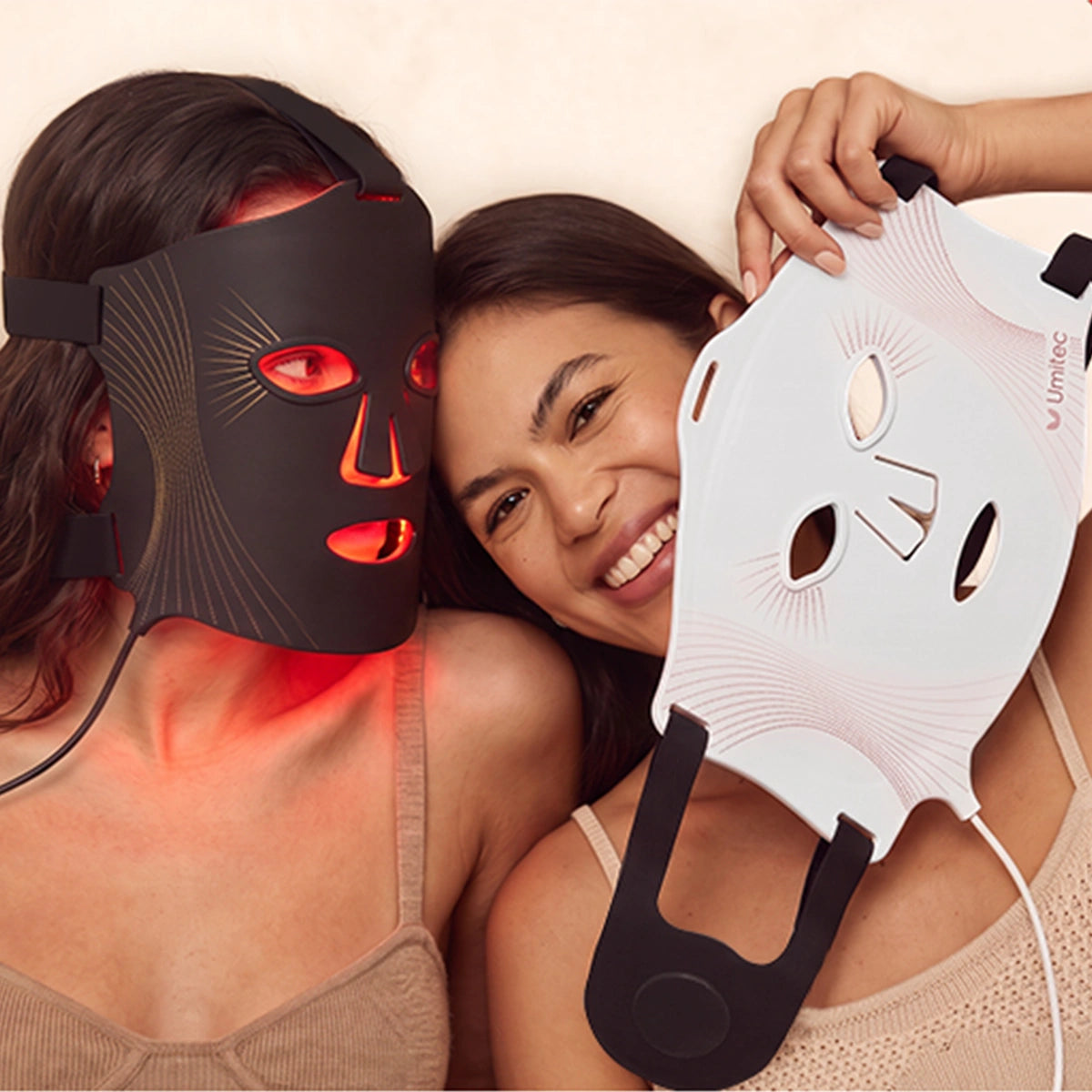
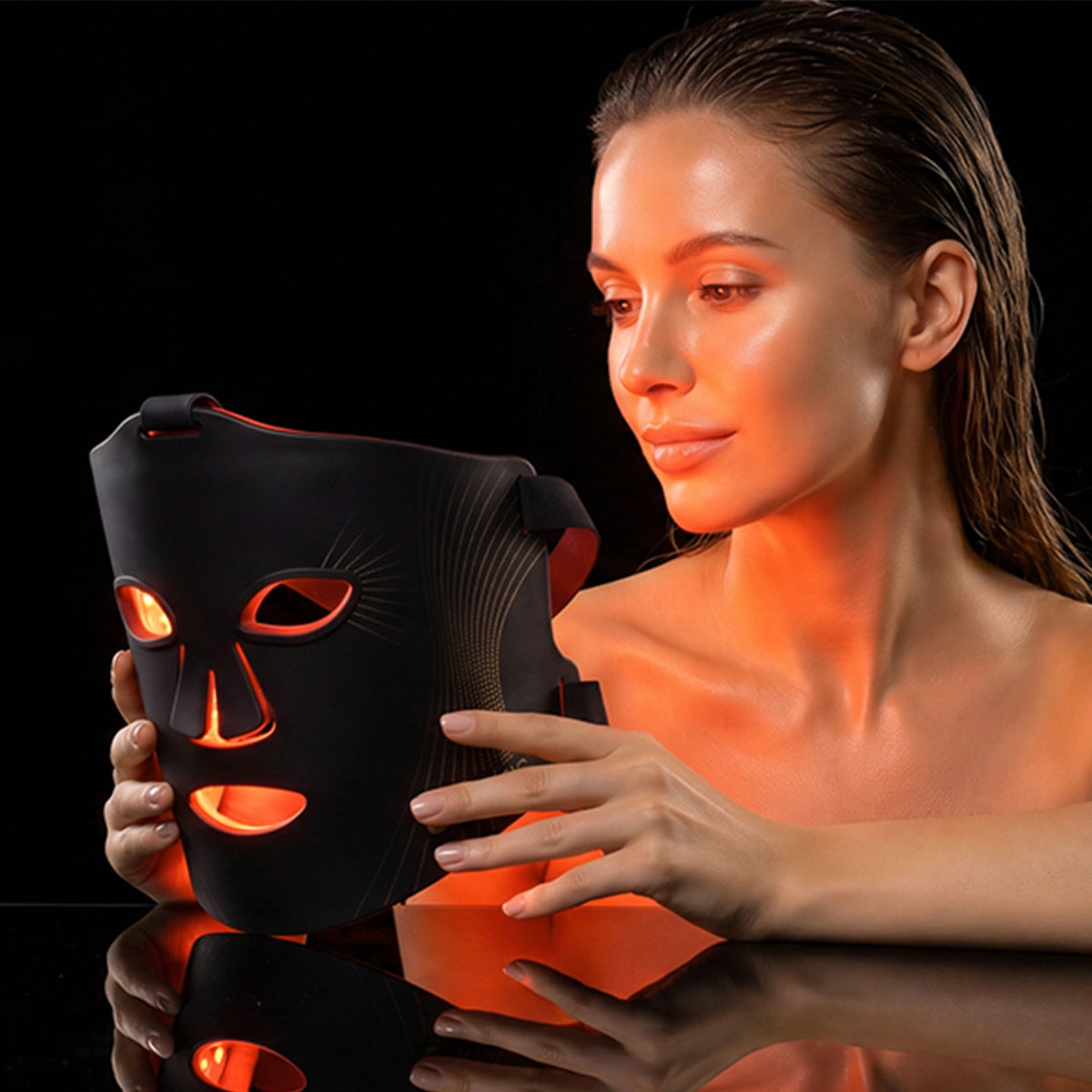
Heimgeräte, die klinisch relevante Wellenlängen liefern, machen diese Art der konsequenten Anwendung praktisch. Die Umitec LED-Therapie-Gesichtsmaske der Serie 3, die in Zusammenarbeit mit Dr. Yao von der Fudan-Universität entwickelt wurde, umfasst spezielle Rot-(630nm) und Nahinfrarot-(830nm)-Modi – die beiden Wellenlängen, die in der veröffentlichten Literatur am direktesten mit der Fibroblastenaktivierung und Kollagenunterstützung in Verbindung gebracht werden.
Was die LED-Therapie kann und was nicht
Ehrlichkeit ist hier wichtig. Die Rotlichttherapie unterstützt die Kollagensynthese, stellt aber den Östrogenspiegel nicht wieder her, stoppt den menopausalen Übergang nicht und erzielt keine Ergebnisse nach einer einzigen Sitzung oder einer einzigen Woche. Die klinischen Studien, die signifikante Verbesserungen der Kollagendichte zeigten, umfassten konsistente Behandlungspläne – typischerweise zwei bis drei Sitzungen pro Woche über vier bis acht Wochen, mit anschließender fortgesetzter Erhaltungspflege. Die Technologie belohnt Konsistenz, nicht Intensität.
LED-Therapie in die Routine für menopausale Haut integrieren
Menopausale Haut neigt dazu, reaktiver zu sein als vor dem Übergang, was bedeutet, dass die Reihenfolge und Wahl der ergänzenden Inhaltsstoffe wichtiger ist als zuvor. Die folgende Routine berücksichtigt sowohl die Evidenz zur Wirksamkeit der LED-Therapie als auch die besonderen Empfindlichkeiten der perimenopausalen und postmenopausalen Haut.
- Sanfte, nicht-strippende Reinigung – vermeiden Sie Tenside, die die bereits anfällige Barriere beeinträchtigen
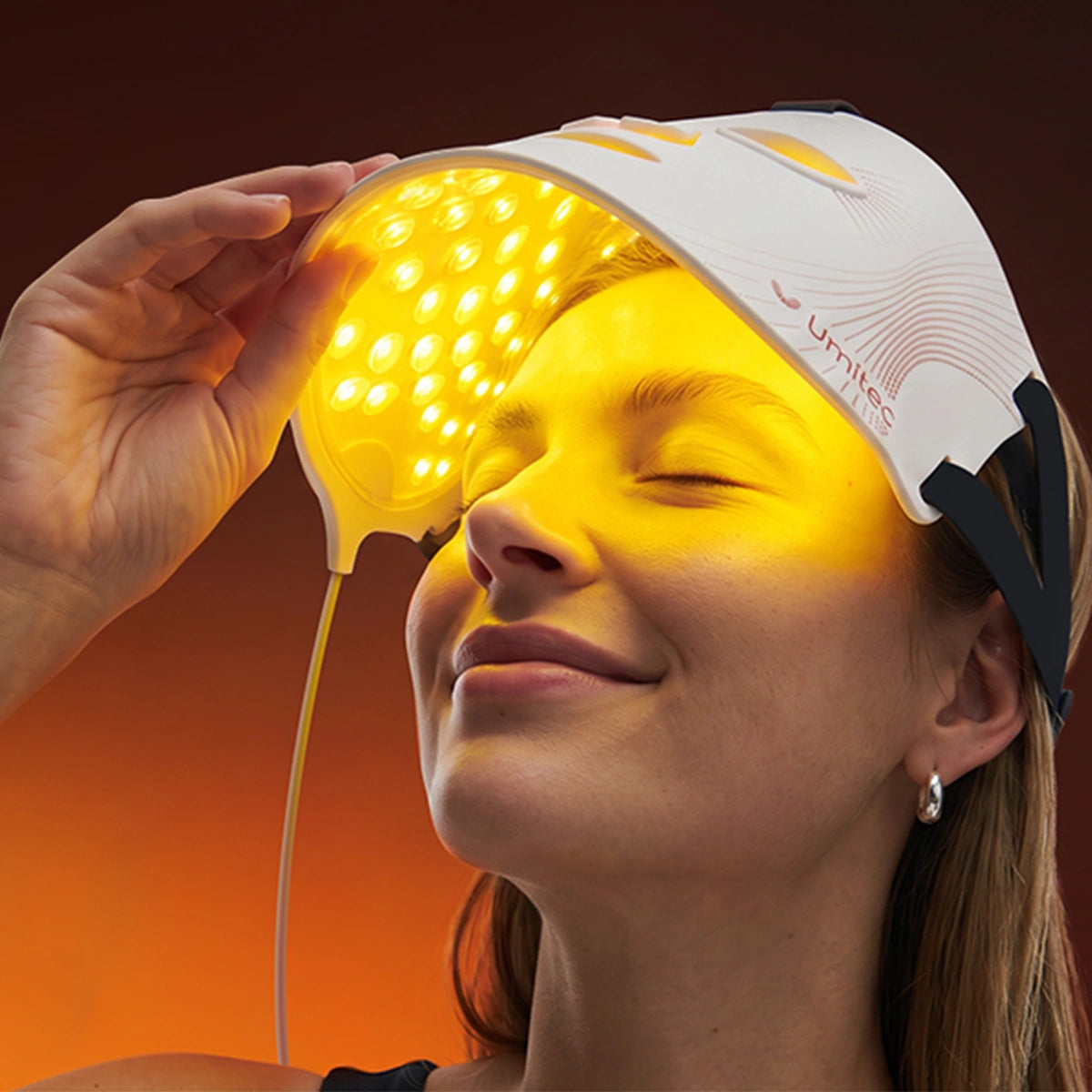
- LED-Therapie-Sitzung auf sauberer, trockener Haut – 10 Minuten, 2–3 Mal pro Woche. Verwenden Sie die Rot- und Nahinfrarot-Modi zur Kollagenunterstützung; wechseln Sie zu Gelb (590 nm) an Tagen, an denen sich die Haut besonders reaktiv oder gerötet anfühlt, da gelbes Licht die Mikrozirkulation und Sensibilitätsreduzierung unterstützt
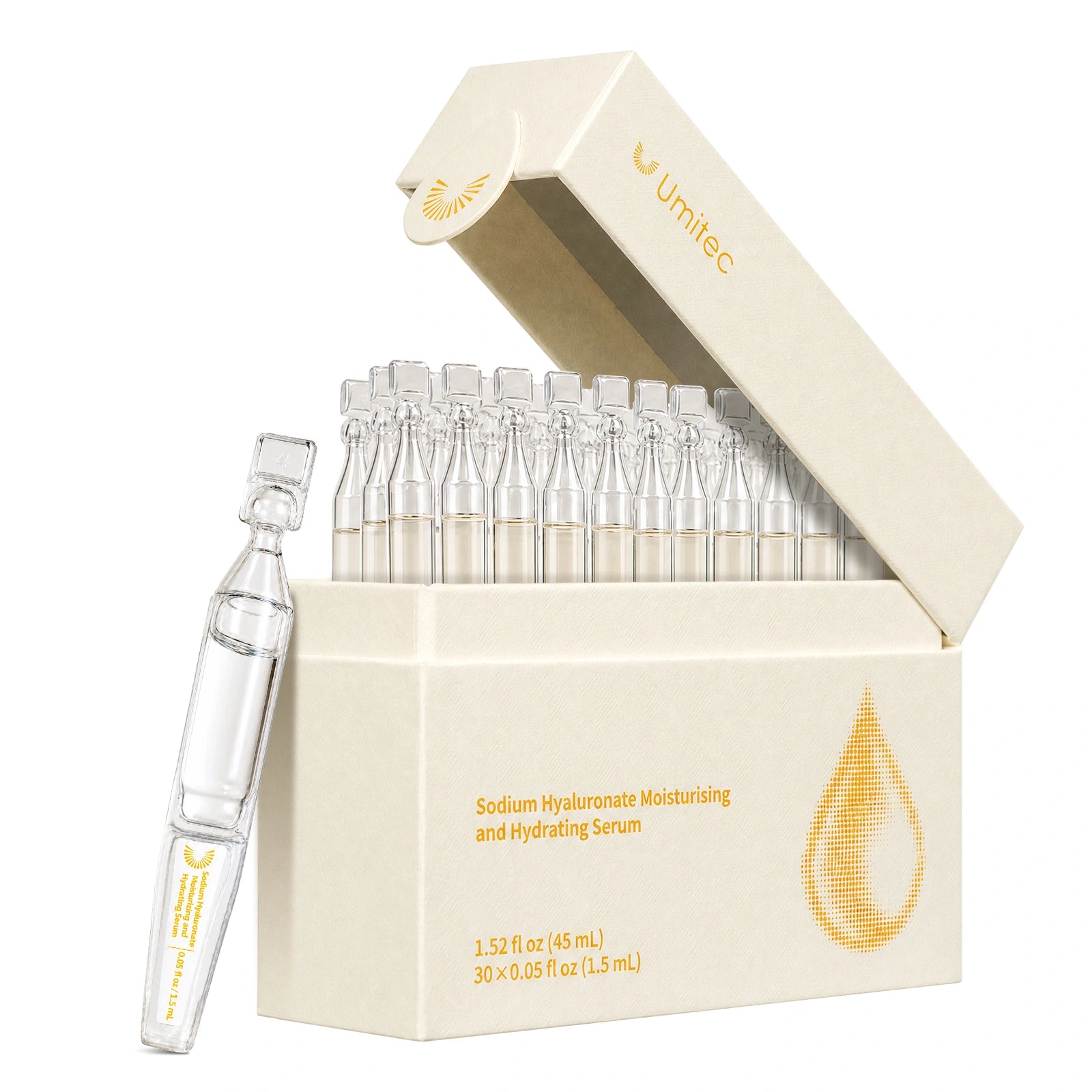
- Hyaluronsäure-Serum – sofort nach der Sitzung auftragen, während die Haut warm und aufnahmefähig ist
- Peptid-Serum oder Niacinamid – beide ergänzen die Kollagen- und Barrierezielsetzungen der Rotlichttherapie ohne Irritationsrisiko
- Ceramidreiche Feuchtigkeitscreme – essenziell für die Barriere-Reparatur bei östrogenarmer Haut
- Retinol (falls vertragen) – zuletzt auftragen, 2–3 Nächte pro Woche, nicht gleichzeitig mit LED, wenn die Haut empfindlich ist
Menopausale Hautveränderungen sind signifikant, schnell und biologisch spezifisch – sie verdienen Werkzeuge mit Mechanismen, die zum Problem passen. Die Rotlichttherapie ist eine der wenigen nicht-invasiven Optionen mit einem echten, veröffentlichten Weg zur Unterstützung der Kollagensynthese auf Fibroblastenebene, unabhängig vom Hormonstatus. Sie wird den menopausalen Übergang nicht rückgängig machen. Aber konsequent als Teil eines durchdachten Hautpflegeansatzes angewendet, bietet sie etwas, das die meisten topischen Produkte nicht bieten: ein direktes zelluläres Signal, das der Haut sagt, weiterhin das zu produzieren, was der Östrogenentzug verlangsamt hat. Für Frauen, die diesen Übergang durchmachen und nach evidenzbasierten Ergänzungen zu ihrer Routine suchen, stellt ein gut spezifiziertes Heimgerät wie die Umitec LED-Therapie-Gesichtsmaske der Serie 3 eine praktische, konsistente Möglichkeit dar, diesen Mechanismus zu nutzen – Sitzung für Sitzung, über die Zeit.


Hinterlasse einen Kommentar
Alle Kommentare werden vor der Veröffentlichung geprüft.
Diese Website ist durch hCaptcha geschützt und es gelten die allgemeinen Geschäftsbedingungen und Datenschutzbestimmungen von hCaptcha.