



Si vous utilisez déjà du rétinol, de la vitamine C ou des acides exfoliants et que vous envisagez d'ajouter la luminothérapie à votre routine, la même question se pose presque immédiatement : est-il sûr de les utiliser ensemble ? La réponse courte est oui, mais avec une mise en garde qui est plus importante que la plupart des gens ne le réalisent. Le problème n'est pas les ingrédients que vous utilisez avec la luminothérapie, mais le moment où vous les appliquez.
La luminothérapie fonctionne par photobiomodulation — des longueurs d'onde spécifiques de lumière absorbées par les cellules cutanées pour déclencher des réponses biologiques, notamment la synthèse de collagène, la gestion bactérienne et la récupération de la barrière cutanée. Aucun de ces processus n'est perturbé par la plupart des ingrédients de soin. Ce qui peut causer des problèmes, c'est l'application de certains actifs juste avant une séance, soit parce qu'ils augmentent la sensibilité de la peau à la stimulation, soit parce que certaines formules instables peuvent se dégrader sous l'exposition à la lumière. La solution, dans presque tous les cas, est un simple ajustement de la séquence plutôt que l'abandon de l'ingrédient.
Voici une ventilation complète par catégorie d'ingrédients.
Catégorie 1 : Sûr à utiliser librement — avant ou après votre séance
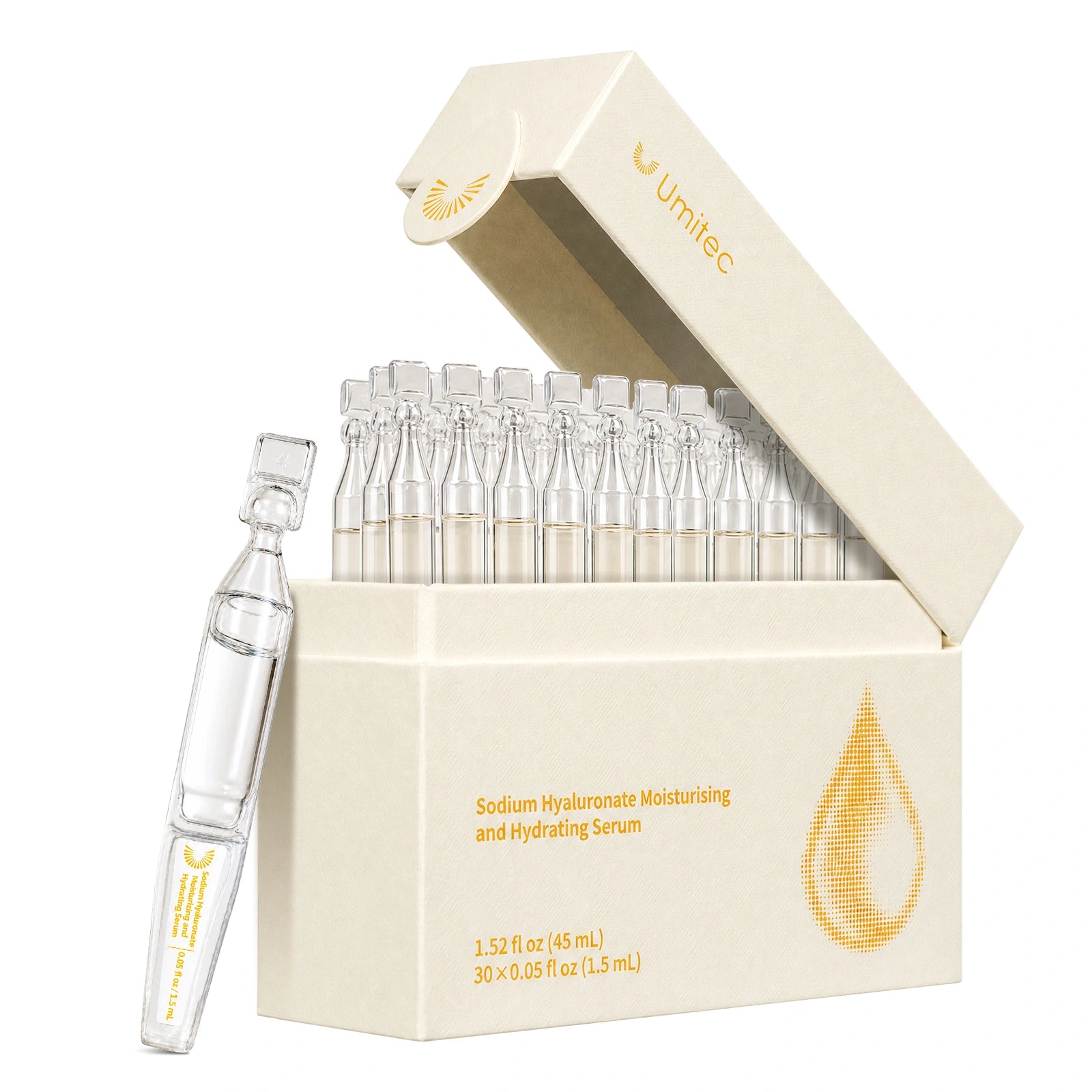
Plusieurs des ingrédients de soin les plus largement utilisés n'ont pas d'interaction significative avec les longueurs d'onde LED et ne sont pas photosensibilisants. L'acide hyaluronique en est l'exemple le plus clair : en tant qu'humectant, il attire l'humidité dans la peau et n'a pas de propriétés absorbant la lumière ou sensibilisantes. L'appliquer avant une séance est tout à fait acceptable — certains utilisateurs constatent que la légère chaleur d'une séance LED favorise en fait l'absorption. La niacinamide est également compatible : elle soutient la fonction barrière et peut compléter les objectifs de la thérapie par lumière rouge de stimulation du collagène, ce qui en fait un jumelage naturel. Les peptides, les céramides et le squalane entrent tous dans la même catégorie — aucun n'est photosensibilisant, aucun n'interfère avec les longueurs d'onde LED, et aucun ne se dégrade de manière significative sous le spectre de lumière visible utilisé dans les appareils domestiques.
Si vous construisez une routine autour d'une utilisation régulière des LED, ce sont les ingrédients sur lesquels vous pouvez vous appuyer comme couche adjacente à votre séance — appliqués soit immédiatement avant sur une peau propre, soit superposés directement après.
Catégorie 2 : Sûr — mais à appliquer après votre séance, pas avant
Le rétinol, les rétinoïdes sur ordonnance, les AHA (acide glycolique et lactique) et les BHA (acide salicylique) sont tous compatibles avec la luminothérapie LED — mais le timing est important. Ces ingrédients partagent une propriété commune : ils augmentent le renouvellement des cellules cutanées et, ce faisant, rendent temporairement la barrière cutanée plus perméable et plus réceptive à la stimulation. Les appliquer avant l'exposition LED ne cause pas le type de dommages que la lumière UV provoquerait, mais cela peut amplifier la réponse de la peau à la séance de manière à entraîner des rougeurs ou une sécheresse inutiles, en particulier chez les peaux sensibles.
Le mécanisme pour les rétinoïdes en particulier mérite d'être bien compris. Les rétinoïdes augmentent efficacement le renouvellement cellulaire mais peuvent initialement amincir le stratum corneum, rendant la peau plus susceptible aux irritations. Bien que la lumière rouge elle-même n'active pas les rétinoïdes de manière dommageable (contrairement à la lumière UV), l'application de rétinoïdes puissants immédiatement avant une séance LED de haute intensité peut entraîner une sécheresse excessive chez les personnes sensibles. Le protocole recommandé est cohérent à travers les sources dermatologiques : faites votre séance LED d'abord sur une peau propre et sans produit, puis appliquez le rétinol ou votre acide après. La séquence préserve les avantages des deux sans risque d'irritation.
La vitamine C mérite une note spécifique. L'acide ascorbique (vitamine C pure) est très sensible à la lumière et à l'air et peut se dégrader par oxydation photochimique lorsqu'il est exposé à la lumière visible, accélérant potentiellement la dégradation s'il est présent sur la peau pendant une séance. Les dérivés stables de vitamine C — le phosphate d'ascorbyle de sodium, par exemple — sont moins sensibles à cela, mais l'approche la plus sûre et la plus efficace pour toute formulation de vitamine C est de l'appliquer après votre séance LED plutôt qu'avant.
Catégorie 3 : À éviter avant les séances LED
Une catégorie plus petite d'ingrédients et de médicaments justifie une plus grande prudence. Certains topiques sur ordonnance — y compris la trétinoïne à des concentrations plus élevées et certaines formulations antibiotiques — augmentent suffisamment la photosensibilité pour que l'utilisation des LED nécessite une considération du timing et, idéalement, un avis dermatologique. Le millepertuis, une plante parfois présente dans les compléments de bien-être et les topiques, est un photosensibilisant bien documenté et ne doit pas être appliqué avant tout traitement à base de lumière. Les acides exfoliants à haute concentration appliqués immédiatement avant une séance — surtout si la peau est déjà compromise — entrent dans la même catégorie.
Tableau de compatibilité de référence rapide
Deux exemples de routines
- Nettoyer soigneusement
- Séance de luminothérapie LED (10 min sur peau propre et sèche)
- Sérum à l'acide hyaluronique ou aux peptides
- Rétinol (attendre 20 à 30 min après le nettoyage si la peau est sensible)
- Hydratant pour sceller
- Nettoyer soigneusement
- Séance de luminothérapie LED (10 min sur peau propre et sèche)
- Sérum de vitamine C (appliqué après la séance)
- Niacinamide ou sérum hydratant
- Hydratant + FPS (si le matin)
Le principe sous-jacent
La règle qui s'applique à presque toutes les catégories d'ingrédients est la même : la luminothérapie LED fonctionne mieux sur une peau propre, et les ingrédients actifs fonctionnent mieux lorsque la barrière cutanée est intacte et réceptive. Effectuer la séance en premier, puis appliquer les actifs par la suite, satisfait simultanément ces deux conditions. Il ne s'agit pas d'un ajustement de protocole compliqué — c'est une décision de séquençage qui prend environ 30 secondes à mettre en œuvre et élimine la plupart des problèmes de compatibilité abordés dans cet article.
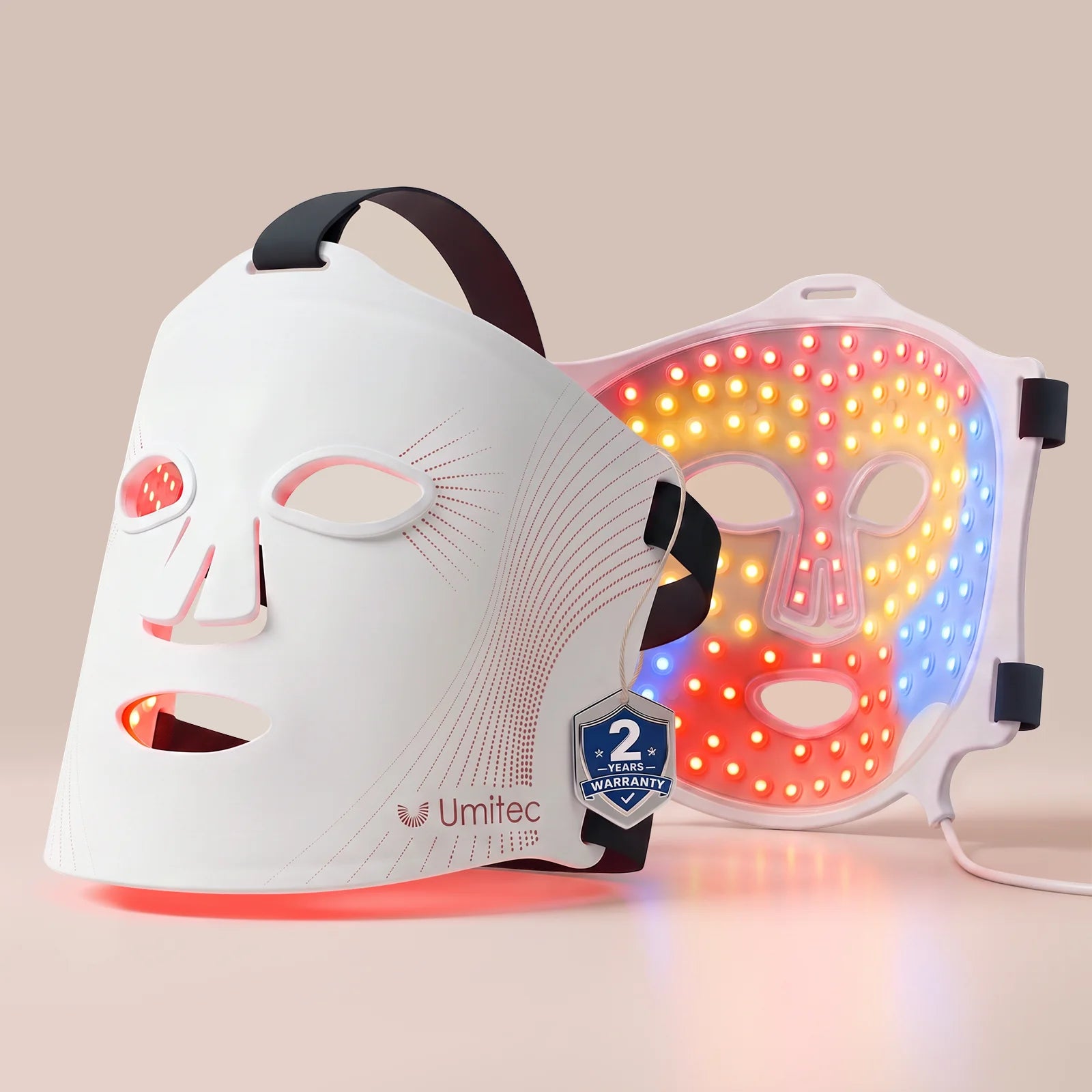
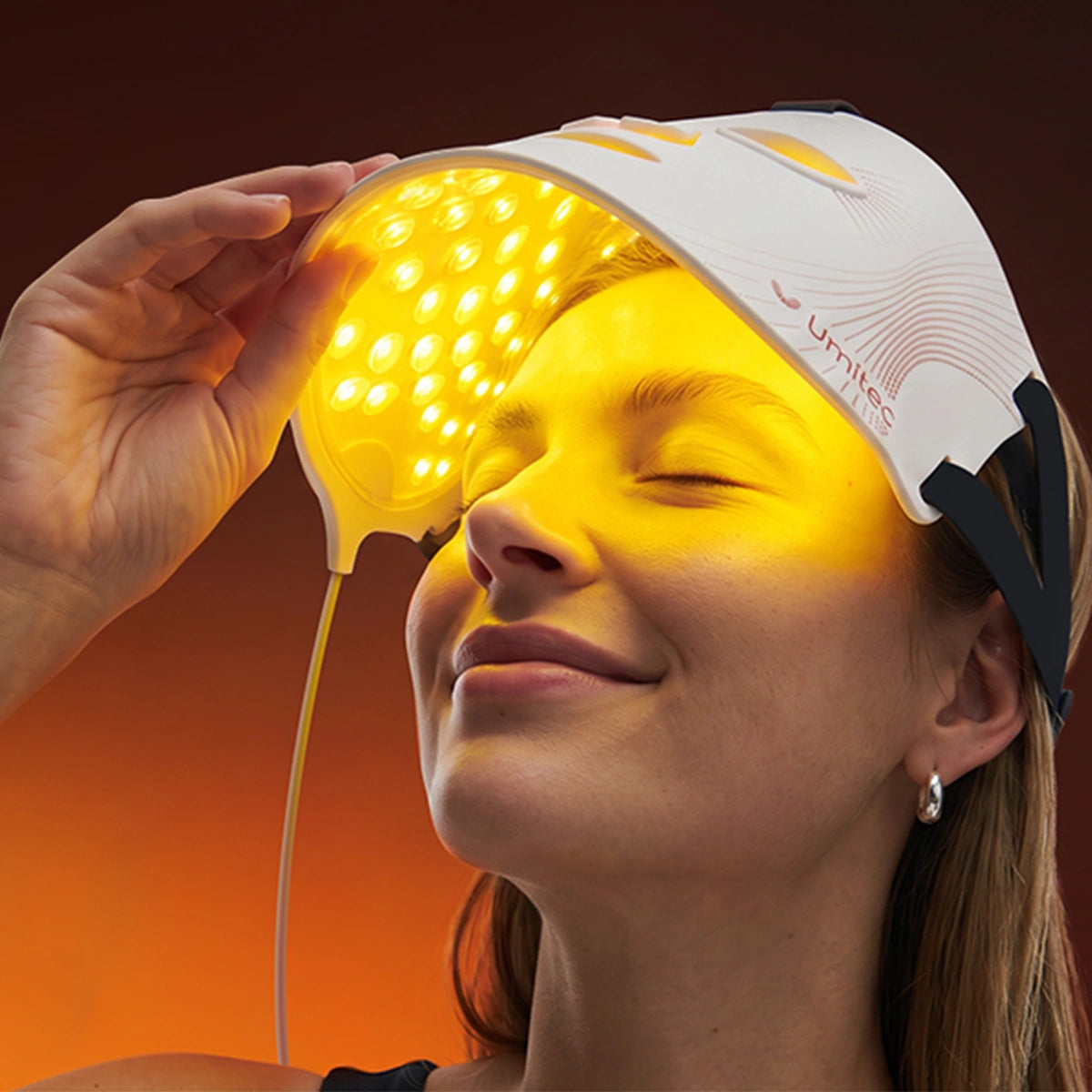
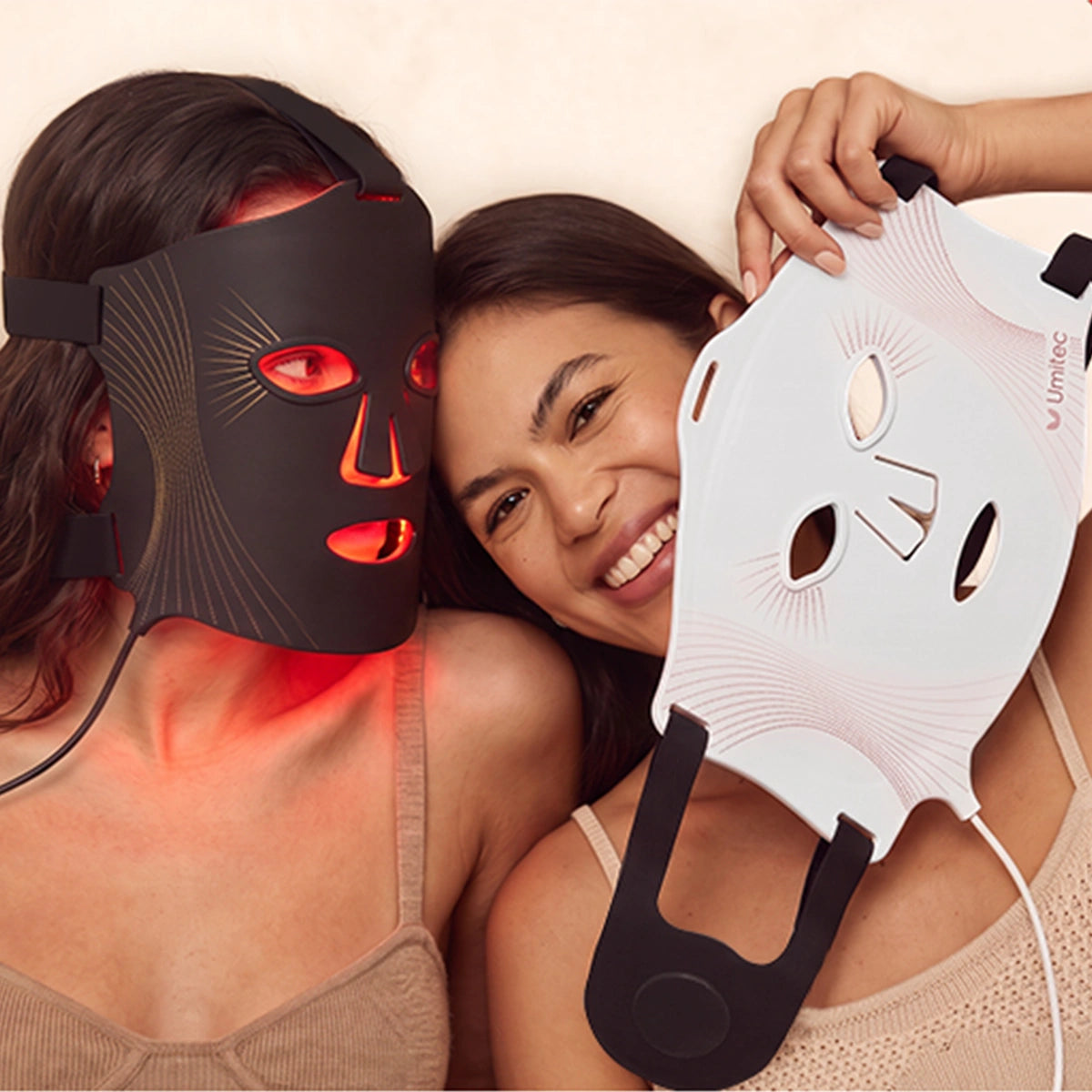
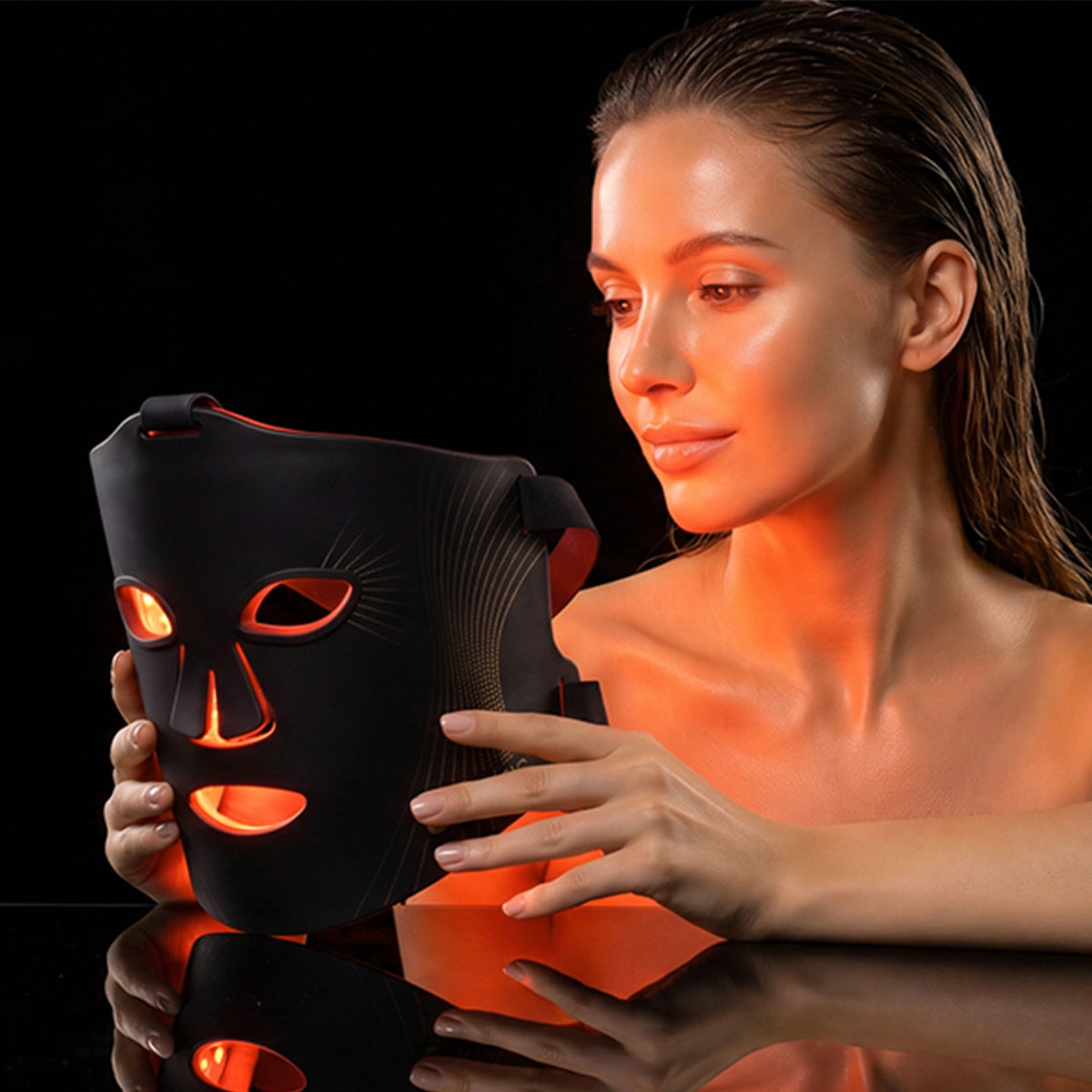
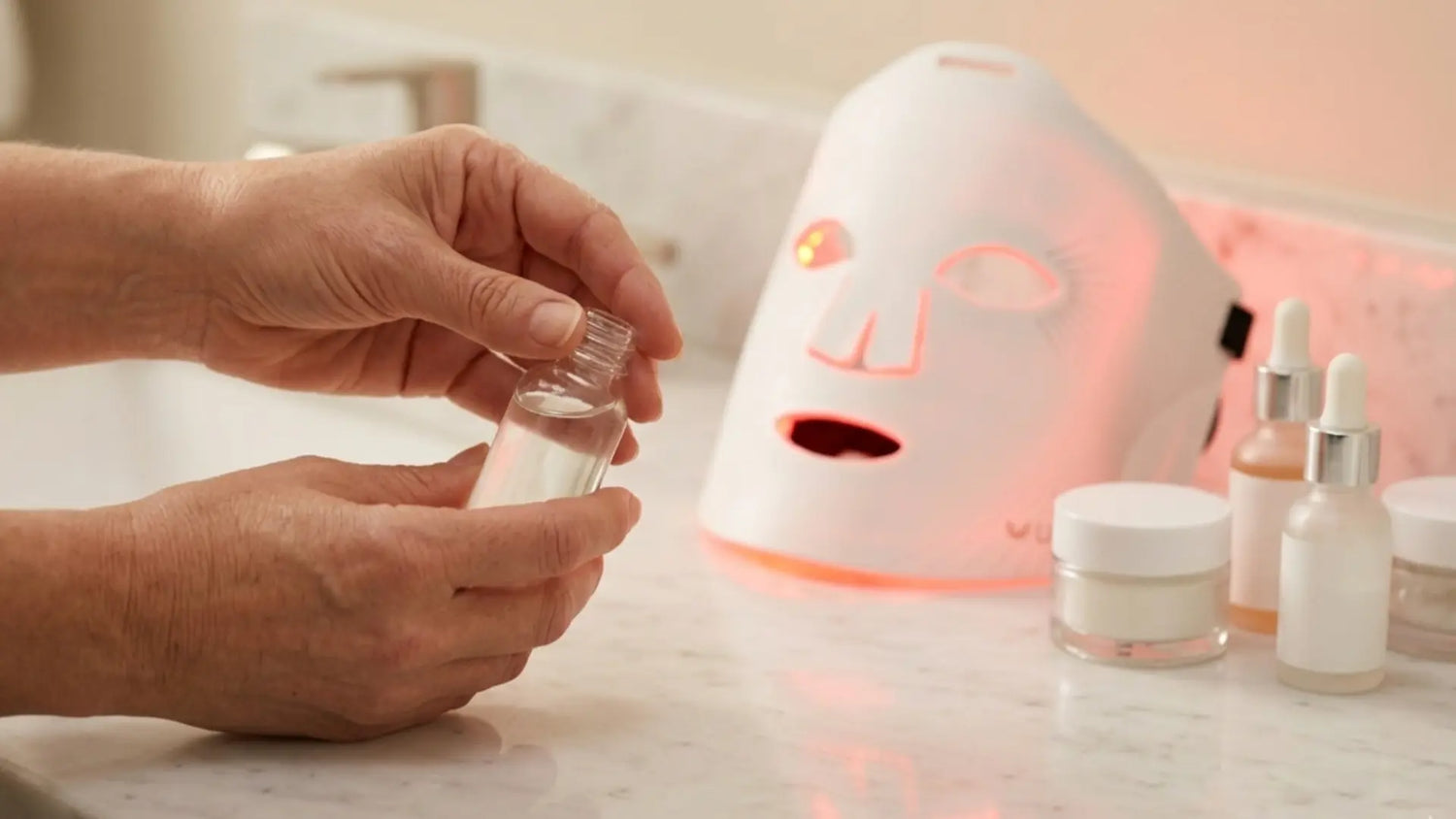
Pour les utilisateurs qui construisent ce type de routine autour d'une utilisation régulière des LED, le Masque Facial de Thérapie LED Umitec Série 2 est conçu précisément dans cette optique d'intégration. Ses quatre longueurs d'onde — bleu (415 nm) pour la gestion bactérienne, jaune (590 nm) pour le soutien de la barrière, rouge (630 nm) pour la stimulation du collagène et proche infrarouge (830 nm) pour une récupération tissulaire plus profonde — couvrent les principaux objectifs cutanés que la plupart des utilisateurs d'ingrédients actifs visent également avec leur rétinol et leur vitamine C. Utilisé deux à trois fois par semaine comme première étape d'une routine du soir, il fonctionne avec un protocole de soin actif existant plutôt que de nécessiter de le reconstruire.
La raison la plus courante pour laquelle les gens retardent l'ajout de la luminothérapie LED à une routine au rétinol ou à la vitamine C est l'incertitude quant à la compatibilité. Les preuves sont claires : il n'y a pas de conflit d'ingrédients ici, seulement une question de séquençage — et la réponse à cette question est constante. LED d'abord, actifs ensuite, et le reste de votre routine reste exactement tel quel.



Laisser un commentaire
Tous les commentaires sont modérés avant d'être publiés.
Ce site est protégé par hCaptcha, et la Politique de confidentialité et les Conditions de service de hCaptcha s’appliquent.