



It's not damage — it's evaporation. And the fix takes four minutes.
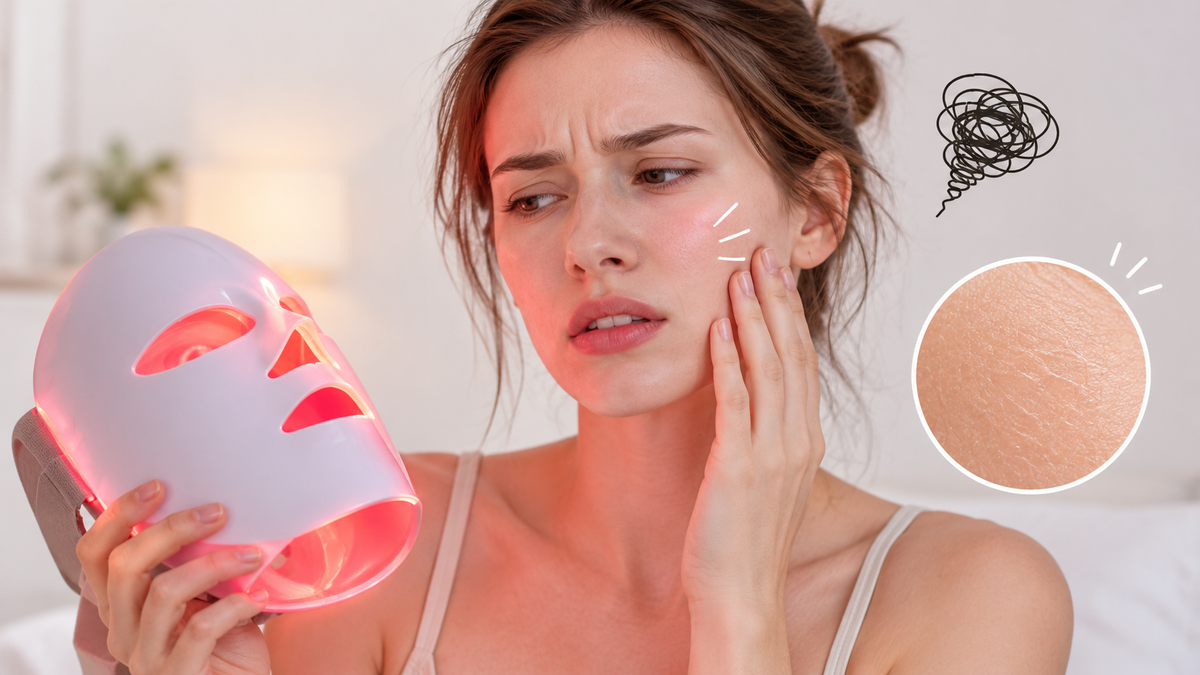
You take the mask off, lean into the mirror, and press a finger to your cheek. Tight. A little warm. Maybe a faint sting along the cheekbones that wasn't there ten minutes ago.
You check your skin in the light. Nothing looks red. Nothing looks damaged. But it feels — processed. Like your face just came back from somewhere and hasn't fully landed yet.
So the question writes itself: is this normal, or did I just dehydrate my face for fun?
Here's the honest answer: the tightness is normal. The sting should be mild and brief. And if you feel nothing at all? That's fine too — some skin just runs quiet.
The 30-second answer
Warmth and tightness that fade within an hour — normal. That's the light doing real work in real tissue.
Burning, welts, or redness that won't settle — too much. Stop, cool the skin, step down a level.
No sensation at all? Also fine. Skin runs quiet in some people — judge your progress by photos, not by feelings.
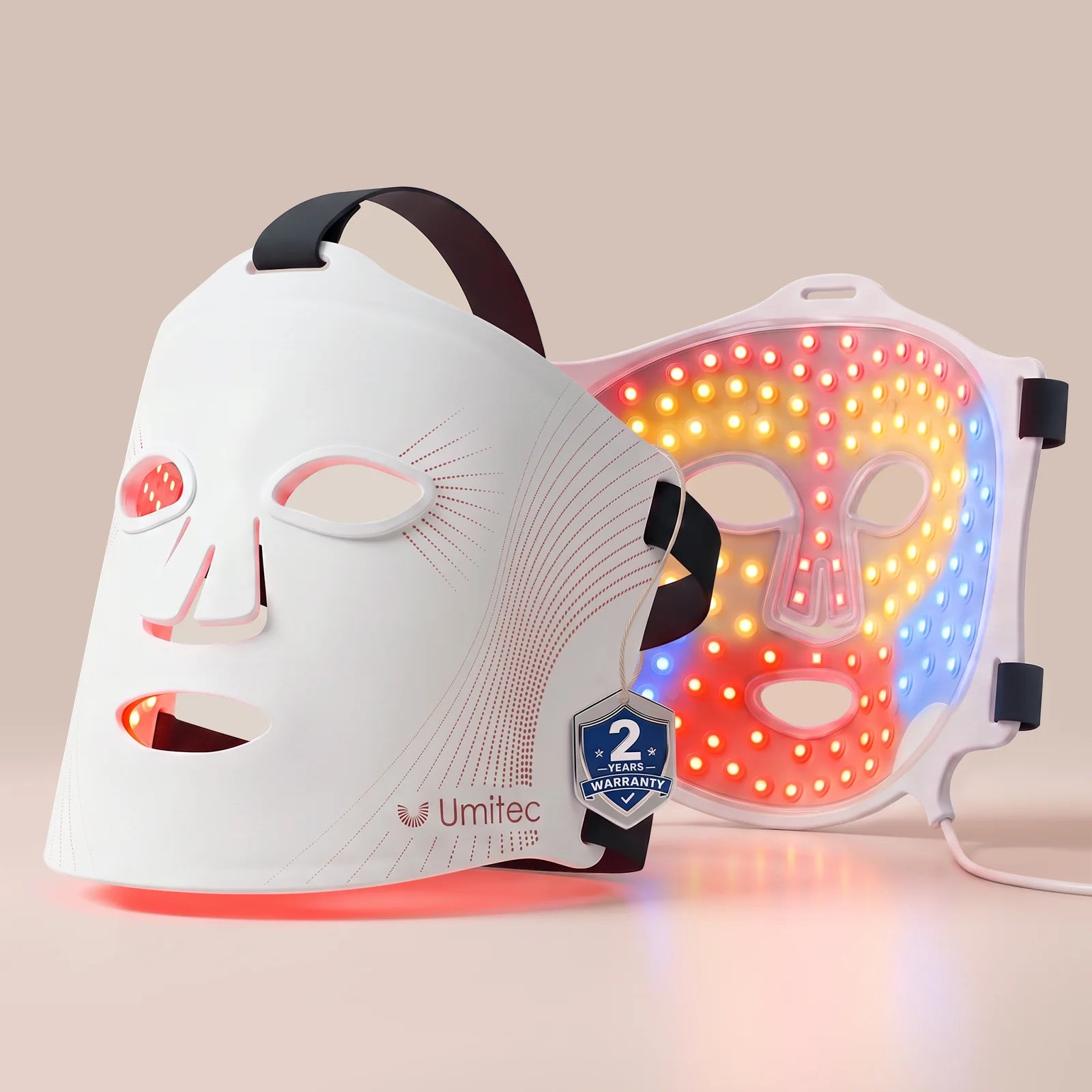
The mask this article is about: Umitec ZoneCraft™ LED Face Mask — $144.99, FDA-cleared →
What's actually happening in there
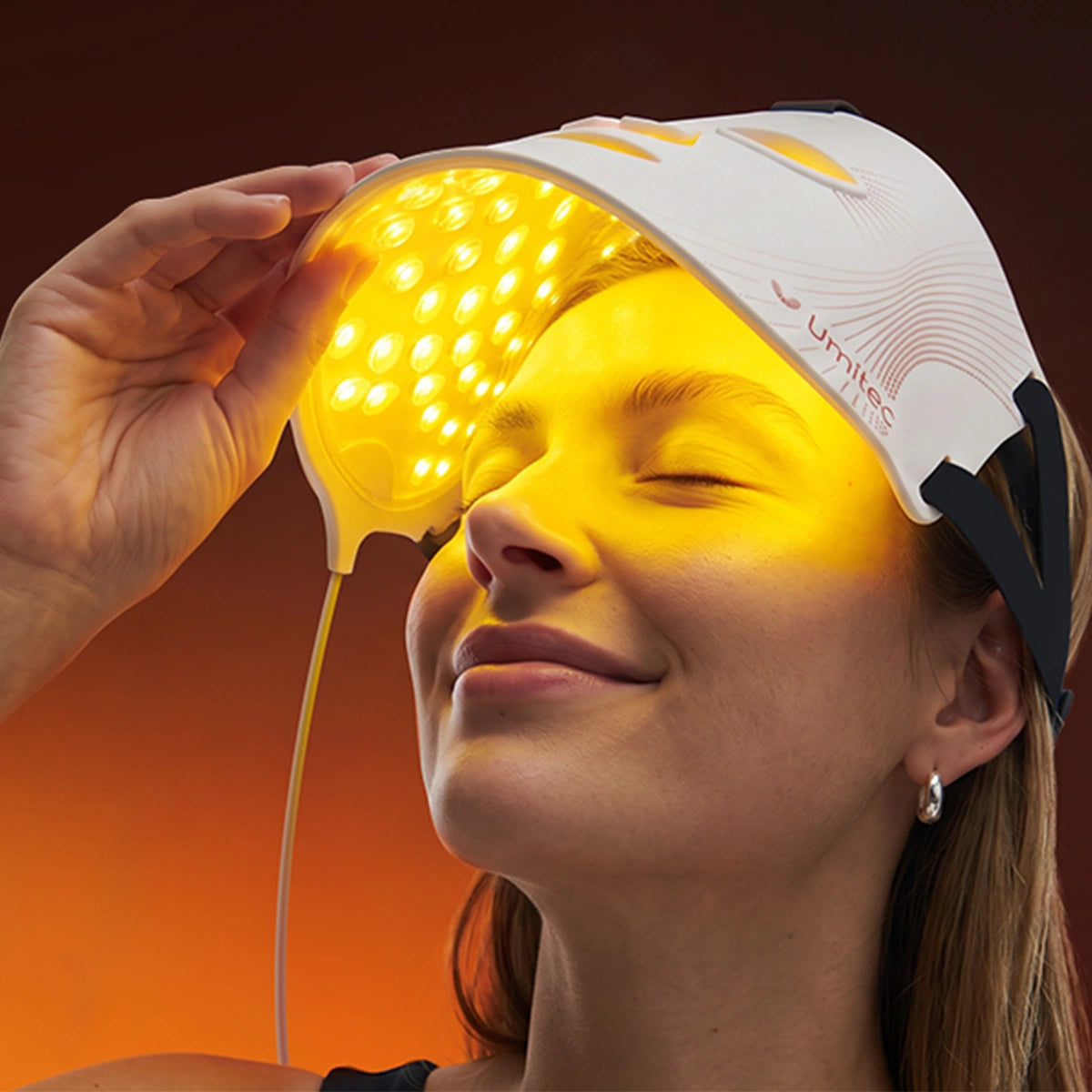
Your skin doesn't "drink" light the way a plant does. It absorbs it — at specific depths, into specific targets. And a share of that absorbed energy turns into a very gentle, very local heat. That's the photothermal effect, and it's not a side effect of LED therapy. It's part of how it works.
Here's the detail most articles skip: near-infrared is absorbed largely by the water inside your tissue. That's exactly why 830nm travels so deep — and it's also why Anti-aging nights (red + near-infrared) feel warmer on your cheeks than blue nights ever do. Blue stays in the top half-millimetre and barely warms anything. Red and near-infrared reach the dermis, where the water is.
Now stack two smaller things on top. You cleansed before the session — which stripped some of the lipids that hold water in. And a warmed surface loses moisture to the air faster than a cool one. Warm skin, freshly cleaned, gently heated: for the next little while, it's evaporating a bit faster than usual.
Short-term, the tightness is water leaving. Long-term, the opposite happens — the barrier itself gets stronger. But only if you put the water back.
That last part matters. A 2023 study on LED mask use tracked skin quality improving month over month with consistent sessions — structure and function getting better, not worse. The tight feeling is a snapshot of the first twenty minutes. The barrier repair is the trend line. One is not the other.
What you should feel — and what's fine to miss
Mild warmth is the most common report, and it's a reassuring one — confirmation that energy actually reached tissue. That's why Anti-aging nights (red + near-infrared) feel warmer than blue nights: blue stays near the surface and barely warms anything. A faint tightness afterwards belongs to the same story.
But here's the equally true half: some people feel almost nothing, and that's completely fine. Skin doesn't shout in everyone. Nerve sensitivity varies from face to face, and an absence of drama is not an absence of results — the light doesn't need your nerves' permission to work.
That's why we tell every customer the same thing — photograph your skin every four weeks, same light, same angle, no makeup. Sensation varies from person to person. Photos are the verdict.
The only thing worth troubleshooting is the trend line, not the feeling. If your monthly photos show no change after two or three months, check the basics: make sure the mask sits flush against your skin (light thins out fast across distance), and that you're using the mode that matches your goal.
The 4-minute after-light routine
This is the part that turns "weird tight feeling" into a non-event. It's short on purpose — you'll do it more often if it's easy:

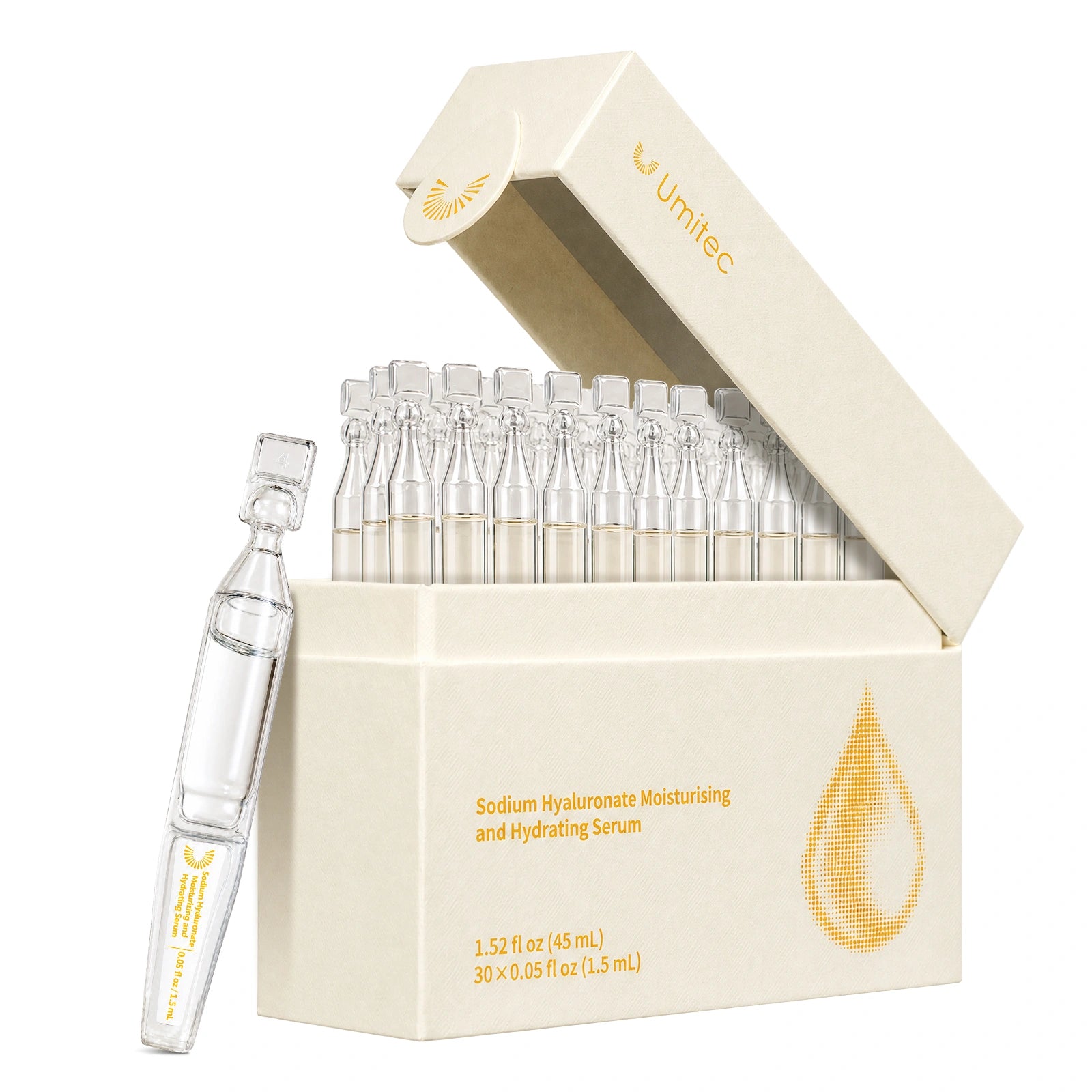
Minute 0–1: put water back. A hyaluronic serum or a plain hydrating essence on slightly damp skin — something thin that sinks in fast. Skin is most receptive right after a session: warm, clean, and asking for it. Ours comes in sealed 1.5ml ampoules, which is about one session's worth, so there's no guessing how much to use.
Minute 1–2: lock it in. A normal moisturizer on top, to seal the water you just applied. Serum without a seal is a puddle without a lid.
On thirsty nights, optional: a hydrating gel or sheet mask for 10–15 minutes — gentle formula only. No alcohol, no fragrance, no acids, no retinol hiding in the ingredient list. Ours carries 28ml of essence per sheet, built on hyaluronic acid, polyglutamic acid and panthenol — and the 10–15 minutes on the packet is exactly the window we're describing. And there's a rhythm to it: daily for the first five days if your skin feels tight, then two or three times a week, then once or twice once things settle. Hydration on a schedule, not on a panic.
Tonight's no-list: no acids, no retinol, no scrubs — they wait until tomorrow. And skip the hot shower right after a session; heat keeps pulling water out of skin that's already given up some.
Tomorrow morning: SPF, every day. If you're prone to melasma, a tinted sunscreen with iron oxides covers the visible-light part too.
The two we make for this exact step: the Hydrating Hyaluronate Acid Serum — $12.99 for five 1.5ml ampoules — and the Hyaluronic Acid Moisturizing Sheet Mask, $19.99 for five 28ml sheets. Step one and step three, in the order above.
One more thing people forget: the mask itself. Wipe the contact areas after each session — a soft, alcohol-free cloth — and store it flat. A mask caked with last night's serum and oil doesn't transmit light as cleanly, and yesterday's residue on tonight's skin is nobody's friend. We wrote the full cleaning routine here.
When dry is a warning, not a feature
There's a line between "worked" and "overdid it," and your skin draws it clearly:
- Normal: warmth during the session, tightness after, mild sensitivity that's gone within the hour, faint pinkness that fades by morning.
- Not normal: burning or stinging that lasts past an hour, welts, heat that feels sharp instead of gentle, redness still angry the next day, or any new patch or pigment change.
For the not-normal list: stop, note which mode and how long, and let your skin settle before judging. If it doesn't resolve, ask a professional — not the internet. And remember the trap that causes most of it: twenty minutes is not twice as good as ten. The timer exists because the dose was designed on purpose.
If your skin runs dry or sensitive anyway, you don't have to quit — you re-sequence. The yellow Smooth Mode exists for exactly this: calming, barrier-friendly, low drama. We covered it in the sensitive-skin guide, and the skin-type breakdown maps which mode fits which face.
Quick answers
Can I use retinol or acids on the same night? Not right after a session — let them wait until tomorrow, and build the pairing on purpose. We mapped the rhythm in LED light therapy and skin cycling.
I broke out after a blue-light session. Did I do something wrong? Probably not — a short purge-style response happens to some people. Here's what's normal and what isn't.
Can I use the mask while my acne is active? Yes — blue light is made for exactly that. The full playbook is in LED light therapy for acne-prone skin.
Where's everything else? The cleaning routine lives here, mode-by-mode matching in the skin-type breakdown, and the rest in our FAQs.
Warm is the point. Pain is not.
LED therapy isn't a massage, and it isn't a test of endurance. It's a measured dose of light that happens to warm the tissue it works on. Tight for twenty minutes, hydrated on purpose, calmer every week after — that's the whole deal.
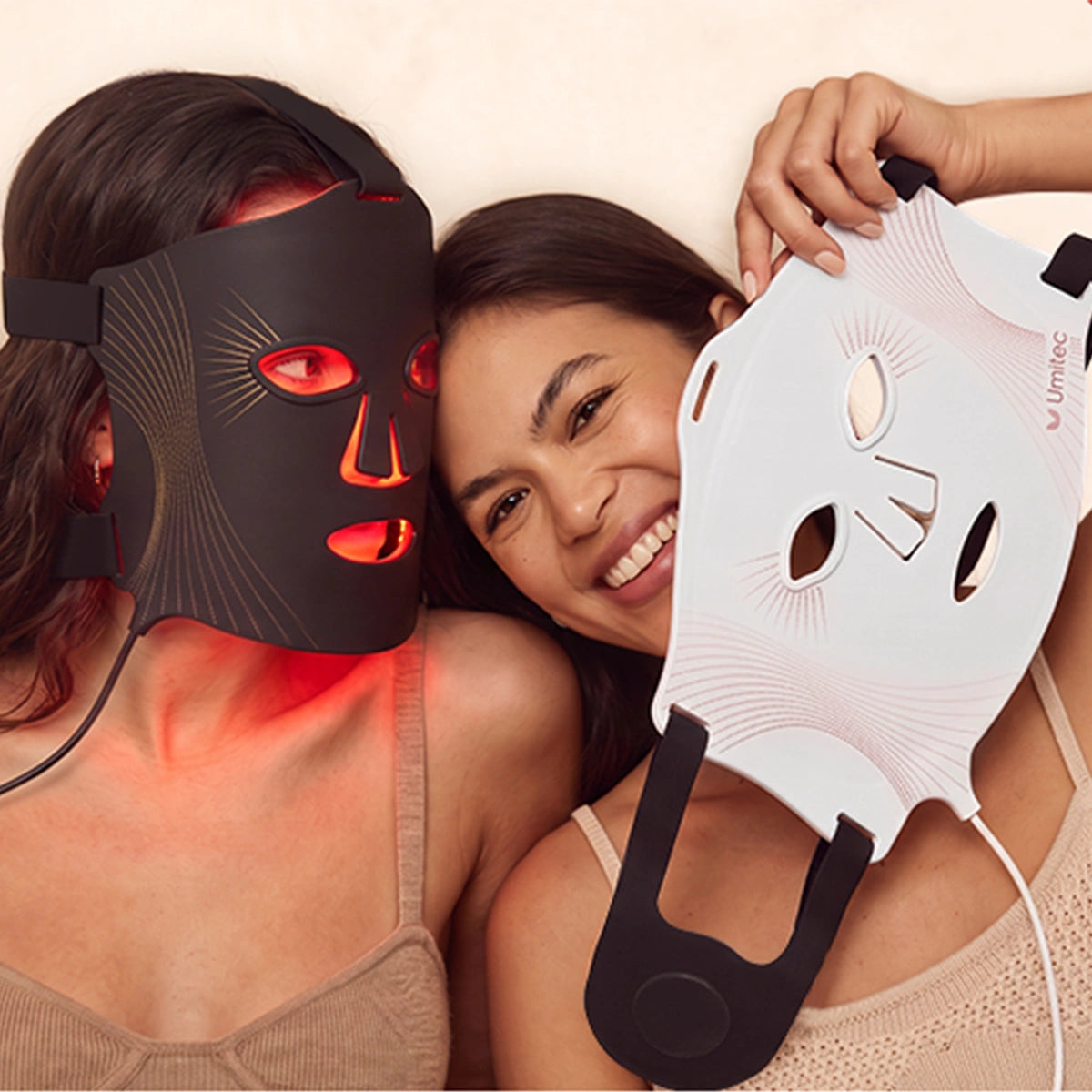
The Umitec ZoneCraft™ LED Face Mask delivers the dose with a built-in 10-minute timer, three intensity levels and four modes — so the "too much" line is drawn by the device, not by your discipline. FDA-cleared (510(k) K213056). $144.99 (from $199.99), rated 4.8 by 145 customers, 2-year warranty, free 5-day US & UK shipping, 30 days to change your mind.
Feel the difference — safely →
General information, not medical advice. Stop use and seek advice if you experience burning that doesn't settle, welts, persistent redness, eye discomfort or pigment changes. Not recommended if you're pregnant or breastfeeding, taking photosensitising medication, have open wounds or active skin infections, or are under 18 — see our FAQs or ask a dermatologist.

Leave a comment
This site is protected by hCaptcha and the hCaptcha Privacy Policy and Terms of Service apply.