



Eye zone · Ten minutes · What actually changed
Last spring I caught my reflection in a hotel bathroom and stopped. Fluorescent light, chin tipped down, and a thin crease under my left eye that stayed there after I stopped smiling. Not a wrinkle exactly. More like the skin had started to fold where it used to bounce back.
So at 11pm I did what anyone does: searched “LED eye mask”.
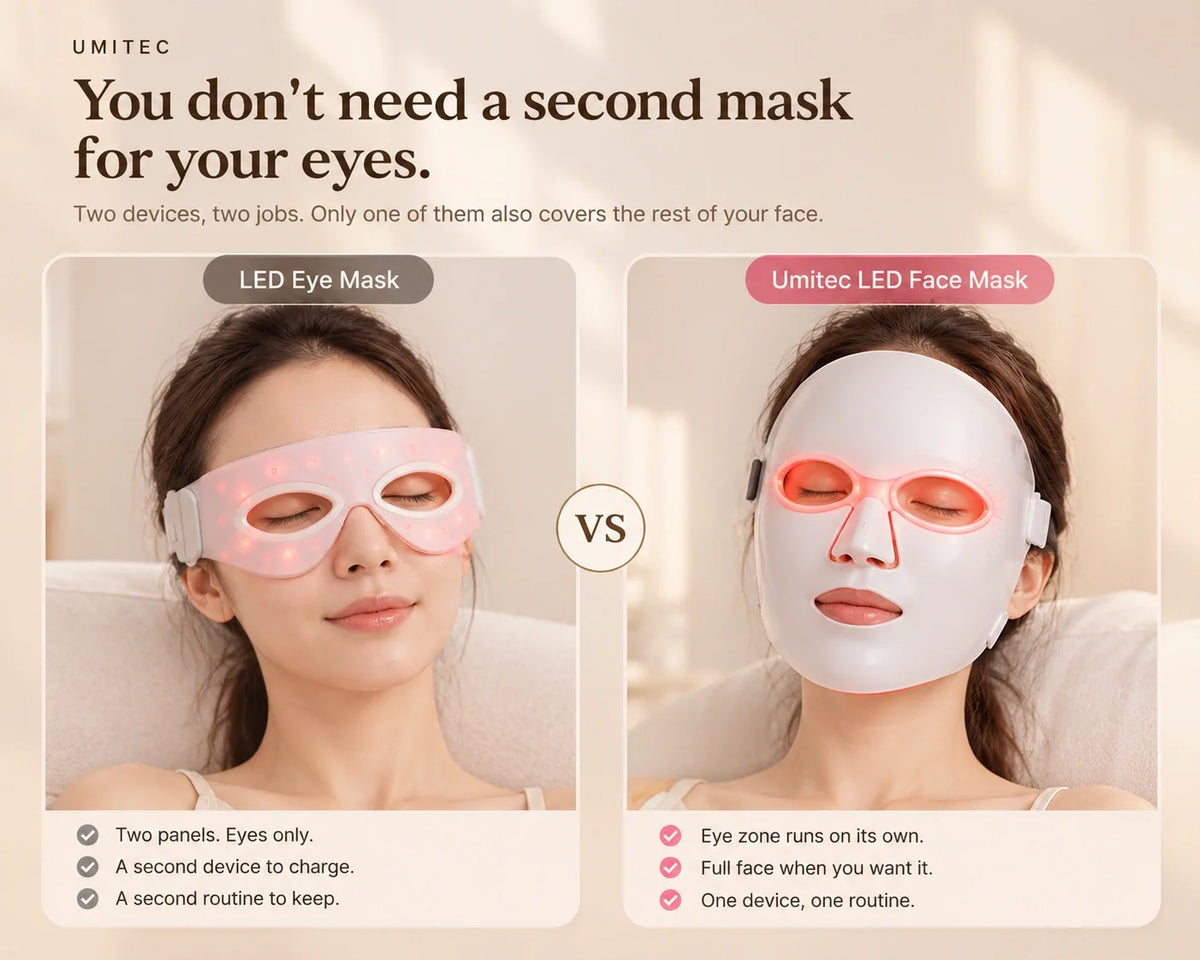
The results read like one company had written them. Two contoured panels, a strap, three to ten minutes, hands-free. Crow's feet, eleven lines, under-eye bags, dark circles. Somewhere between $95 and $335.
Two small panels and a strap, for the price of a flight. I nearly bought one — then remembered the mask in my cabinet already has an eye zone.
This is what six weeks of using that zone on its own taught me: what the eye-mask category actually sells, how I run an eye-only session, and the two things it didn't fix. I'll still tell you where the $250 eye mask is the smarter buy.
What an eye mask gets right (it isn't the LEDs)
It's the shape. A full-face mask is a compromise: a panel pulled over cheekbones, gaps at the nose, light spilling at the jaw. An eye mask is moulded to rest on the cheekbone and under the brow, so the LEDs hold a fixed distance from the thinnest skin on your face. That's why a three-minute session can still deliver a dose.
The specifications are nearly the same across the good ones. Red around 630–660nm, near-infrared around 830nm, a timer, and a session between three and ten minutes. CurrentBody's Eye Perfector runs four wavelengths in three minutes. Dr. Dennis Gross's EyeCare Max Pro runs 96 red LEDs in three. Omnilux's Eye Brightener runs red and near-infrared for ten. Nobody wins on the sheet — they're all doing the same two things to the same small area.
What they can't do is anything else. That's the trade: $95 to $335 for a device that treats two patches of skin, plus another charger in the drawer.
And the claims are not equally solid. Fine lines around the eyes have the strongest evidence in this category. Puffiness is often fluid — salt, sleep, allergies — and a cold spoon does a lot of that work. Dark circles can be pigment, visible vessels, or a hollow under the eye. Light can help the look of the first two a little. It won't fill a hollow, and no device at this price will.
The part I didn't expect: everything else goes dark

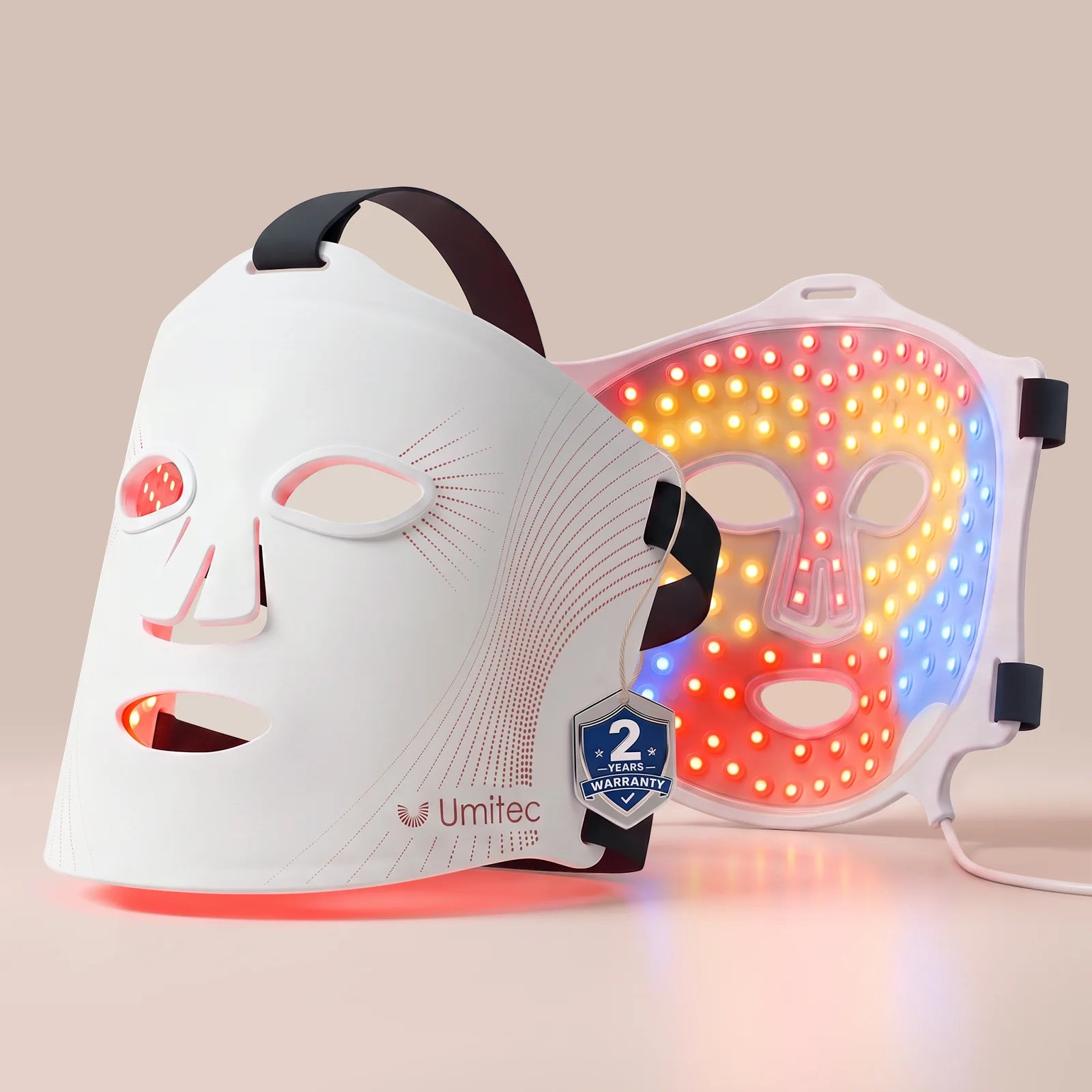
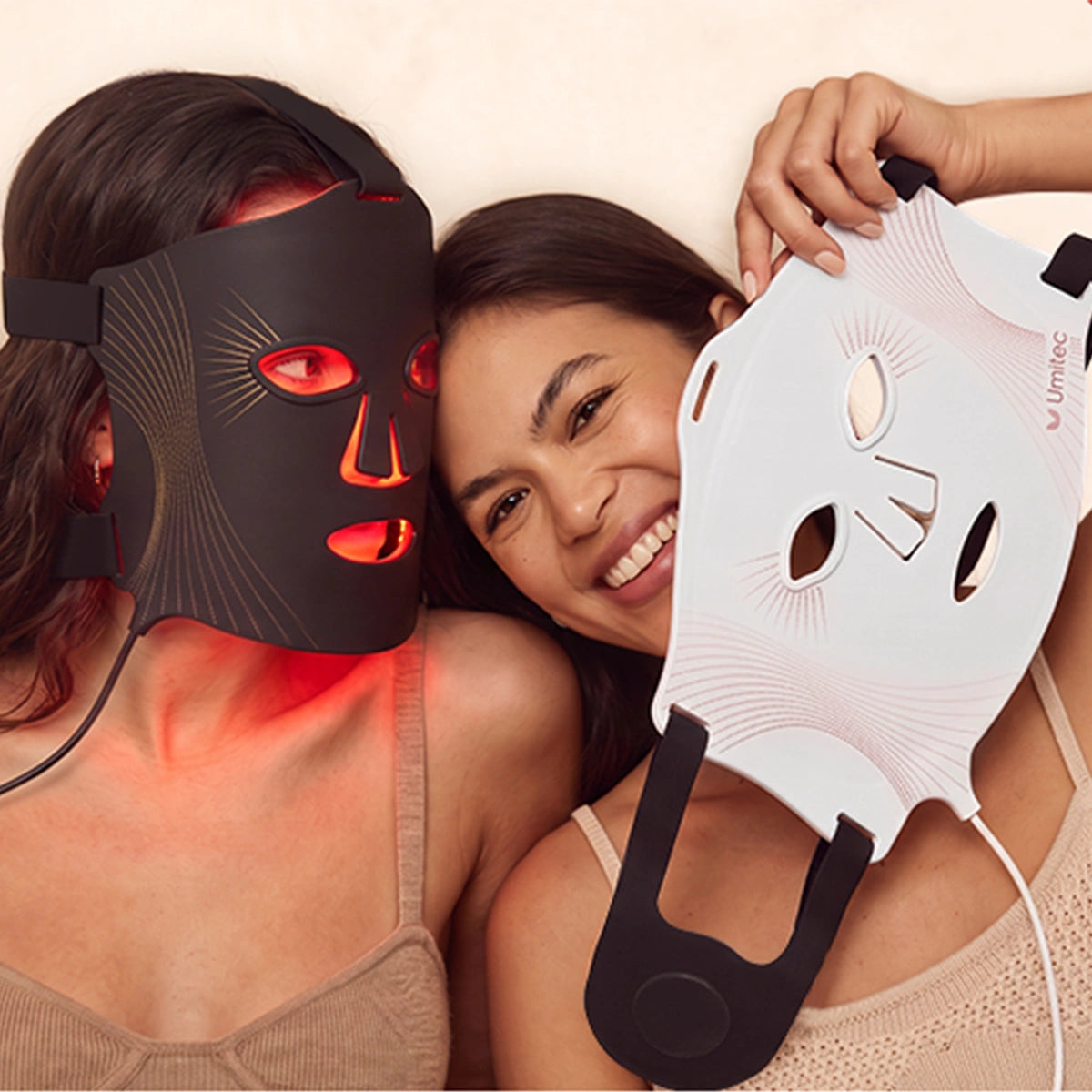
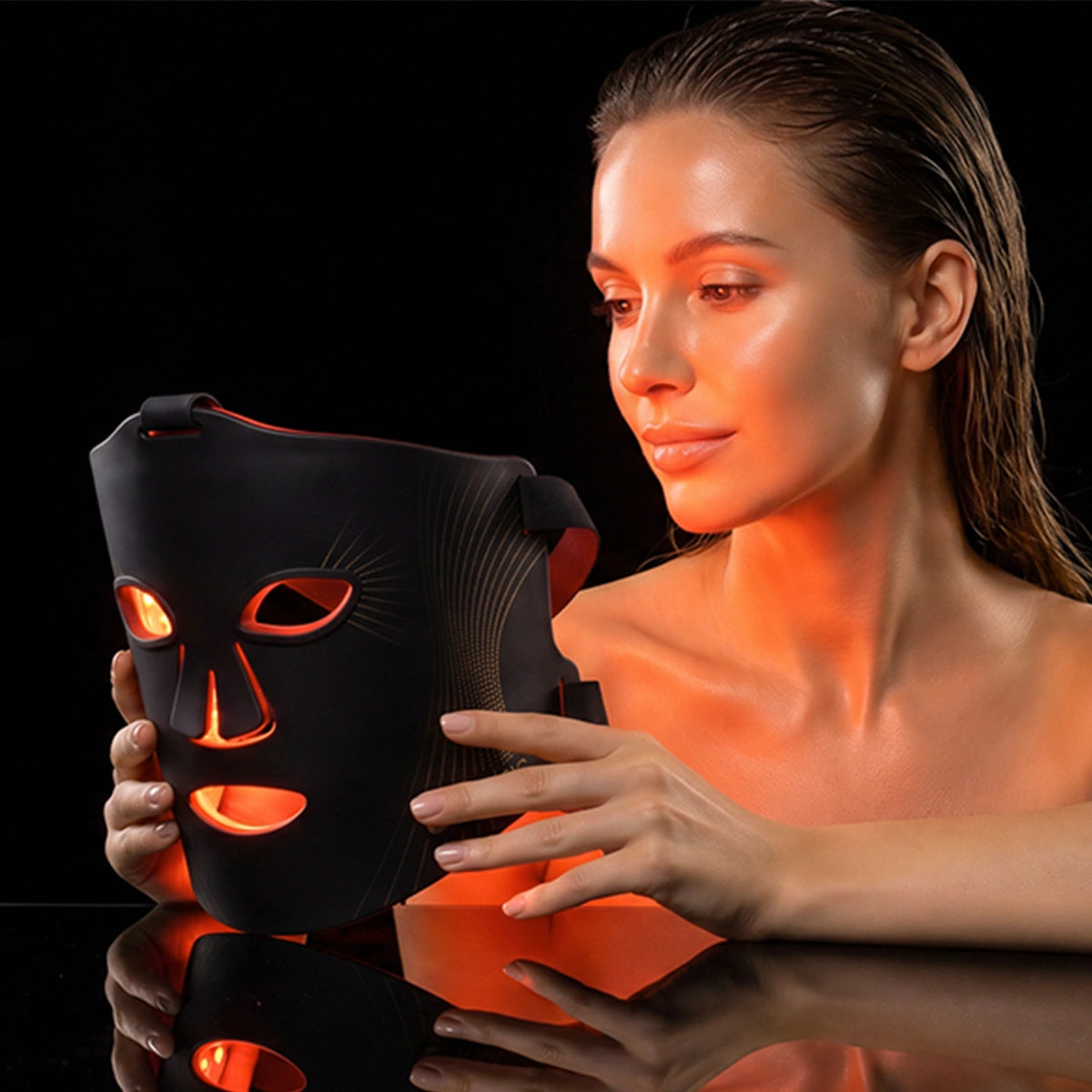
The ZoneCraft™ splits the face into four zones — forehead/T-zone, eye area, cheeks, mouth — and each one switches on or off on its own. Choose the eye zone and just the ring of LEDs around the eye openings fires. The rest of the mask stays dark. Same device, a fraction of the light, one target.
Three moments when that stopped being a specification and became the reason I kept going:
- My cheeks are irritable — too much retinol, cold wind, a patch of eczema — and I still want to treat my eyes without lighting up the skin that's complaining.
- Five minutes on one zone instead of ten on the whole face. Less total exposure, same target.
- One device on the shelf. Not a face mask and an eye mask and two chargers.
Wavelength matters here. The eye zone runs red, around 630nm — the wavelength with the periorbital wrinkle indication. Not blue. Blue is for blemishes and belongs on the T-zone and cheeks, nowhere near the eyes.
A mode is not a zone. A mode changes the colour everywhere; a zone changes where the light goes. Most masks ask which colour. This one also asks where. That's a different tool, not a worse one — but it's the reason the eye area can have a session of its own.
One mask or two? The money question
So far this reads like a case for the eye zone. Here is the other side, before you spend anything.
A dedicated eye mask wins four things honestly: it's built for one job, it's three minutes, it packs flat, and you never think about which zone. If the skin around your eyes is your only concern, and you want the smallest thing on your face, buy the small one. I would.
The case for a face mask with zones is one device instead of two. The ZoneCraft™ Series 3 is $144.99, less than most of the eye masks above, and it runs the eye zone plus three others. What you give up is the goggles form factor: five minutes on the eye zone still means wearing a face-sized mask. If that's the difference between doing it and not, the small one wins.
I'm not going to pretend a face mask is as convenient as a pair of goggles. It isn't. It's just more useful if your face has more than one problem.
How I do an eye-only session

Six steps. The first three are the ones people skip.
- Clean, dry skin. No acids, no retinol, no thick cream — the light should land on skin, not on a film of product. Contact lenses out.
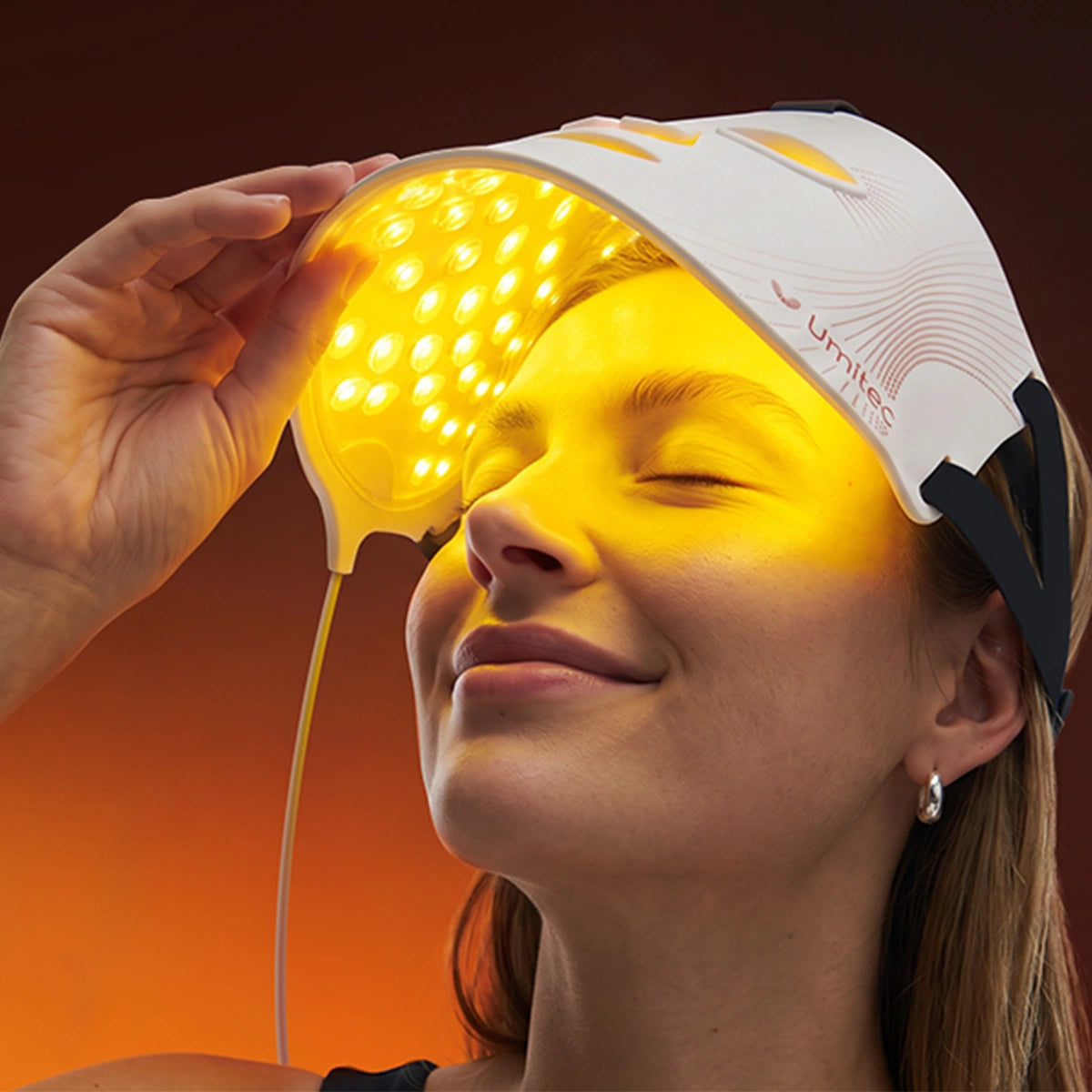
- Lift the eye pads out. They sit in the eye openings and block light during a full-face session, which is exactly what you want when the light is on your cheeks. For an eye-only session they come out, so the red light reaches the lids and the skin around them. If you're unsure, leave them in — the surrounding skin still gets light.
- Eye zone, red programme, low or medium to start. Five minutes. The manual gives 5–10 minutes, three to five times a week for this zone; I started at five and never felt the need to go longer.
- Eyes closed before the light starts, and closed the whole time. No peeking, no phone, no lifting the mask “just to check”. The red programme also carries near-infrared, which is invisible — “I can't see it” is not a reason to open your eyes.
- One pass, then moisturiser. Missed yesterday? You don't get to double today.
- Wipe the pads. They sit against skin and pick up moisturiser; the care guide covers it.
The stop rules are not negotiable: burning, pain, a bright spot that won't fade, colours looking wrong, or redness that persists — stop. If your vision or colour perception changes, see an eye doctor instead of adjusting the mask and carrying on. And if you have an eye condition, have had eye surgery, take a photosensitising medication, or are pregnant or breastfeeding, ask a clinician first. That's not small print. It's why the eye zone gets a shorter starting time than the rest of the face.
Six weeks in: what changed, what didn't
I'll be specific, because the before-and-afters in this category are doing a lot of work with lighting.
Weeks 1–2: nothing visible. Warm, oddly relaxing, slightly boring. I nearly stopped.
Weeks 3–4: the change showed up in makeup, not in the mirror. Concealer stopped gathering in the crease by mid-afternoon, and the skin under my eye felt less papery when I woke up.
Week 6: the crease is softer in daylight. It is still there. My dark circles haven't changed — mine are pigment plus thin skin, and no light is going to fix that. Puffiness is better on the mornings after a bad night's sleep, which I suspect is the ten minutes of lying still as much as the light.
What I stopped doing was the nightly ten-minute full-face session. Now it's five minutes on the eye zone four nights a week, plus a full-face session twice. Less light overall, and the routine I actually keep.
It's cosmetic, it's gradual, and results vary. If you need a visible difference in seven days, this isn't the thing — better to know that now than in week two.
Questions I get
Is light that close to your eyes safe?
That is what the device is designed for — with your eyes closed and the pads used as the manual says. The rules that matter: never look into the LEDs, keep your eyes shut for the whole session, and don't treat “I can't see the near-infrared” as proof it's off. If you have an eye condition or a history of retinal problems, ask first.
Will it fix dark circles?
Depends why they're dark. Pigment and surface tone can improve a little; a hollow or visible veins won't change. Be suspicious of any before-and-after where the lighting changed too.
Contacts?
Out. Every time.
Can I use it for dry eye?
No. This is a cosmetic device for the skin around the eyes, not a treatment for the eye itself. Gritty, watering, stinging eyes are an optometrist conversation.
How often?
Three to five times a week, five to ten minutes. Consistency beats a longer session; collagen doesn't reward bingeing.
If I were starting over, I'd buy the eye-zone mask before I bought a second device — the ZoneCraft™ is $144.99 — or take the mask with its serum and sheet mask in the exclusive bundles.
Prices and specifications were taken from public product pages in November 2026 and can change. The other brands named here have no relationship with this site. Nothing here is medical advice, and results vary — if you're pregnant or breastfeeding, on photosensitising medication, or under care for an eye condition, ask a clinician first. Study detail is on the clinical testing page; the FAQs cover the rest. Still deciding whether a mask is worth it at all? This is the honest version.


Hinterlasse einen Kommentar
Diese Website ist durch hCaptcha geschützt und es gelten die allgemeinen Geschäftsbedingungen und Datenschutzbestimmungen von hCaptcha.