


Vous cherchez un moyen efficace de réduire les rides et d'améliorer la santé globale de votre peau depuis le confort de votre maison ? La luminothérapie infrarouge, en particulier les appareils utilisant la technologie LED de qualité médicale, offre une solution prometteuse. Cet article explore en profondeur le fonctionnement de la lumière infrarouge pour les rides, la science qui soutient ses bienfaits, les longueurs d'onde idéales, les considérations de sécurité et des conseils pratiques pour des résultats optimaux. À la fin, vous comprendrez comment utiliser des appareils de luminothérapie multimode avancés comme les masques faciaux de thérapie LED pour rajeunir votre peau de manière efficace et sûre.
Qu'est-ce que la luminothérapie infrarouge et comment agit-elle sur les rides ?
La luminothérapie infrarouge est un traitement non invasif utilisant des longueurs d'onde spécifiques de lumière pour pénétrer la peau et stimuler l'activité cellulaire. Généralement, les longueurs d'onde varient de 700 à 1200 nanomètres (nm), invisibles à l'œil nu mais très efficaces pour les traitements cutanés. Lorsqu'elle est absorbée par les cellules de la peau, cette lumière pénètre les couches profondes, ciblant les mitochondries pour stimuler la production d'énergie et favoriser la réparation cutanée.
Cette stimulation conduit à une augmentation de la synthèse de collagène et d'élastine, protéines essentielles qui maintiennent la fermeté et l'élasticité de votre peau. Avec le temps, à mesure que la production de collagène augmente, les rides s'estompent et la texture de la peau s'améliore, ce qui donne une apparence plus lisse et plus jeune. Il est important de faire la distinction entre la lumière rouge (620-700 nm), qui affecte la surface et le derme supérieur, et la lumière infrarouge qui pénètre les couches plus profondes, améliorant la régénération cellulaire.
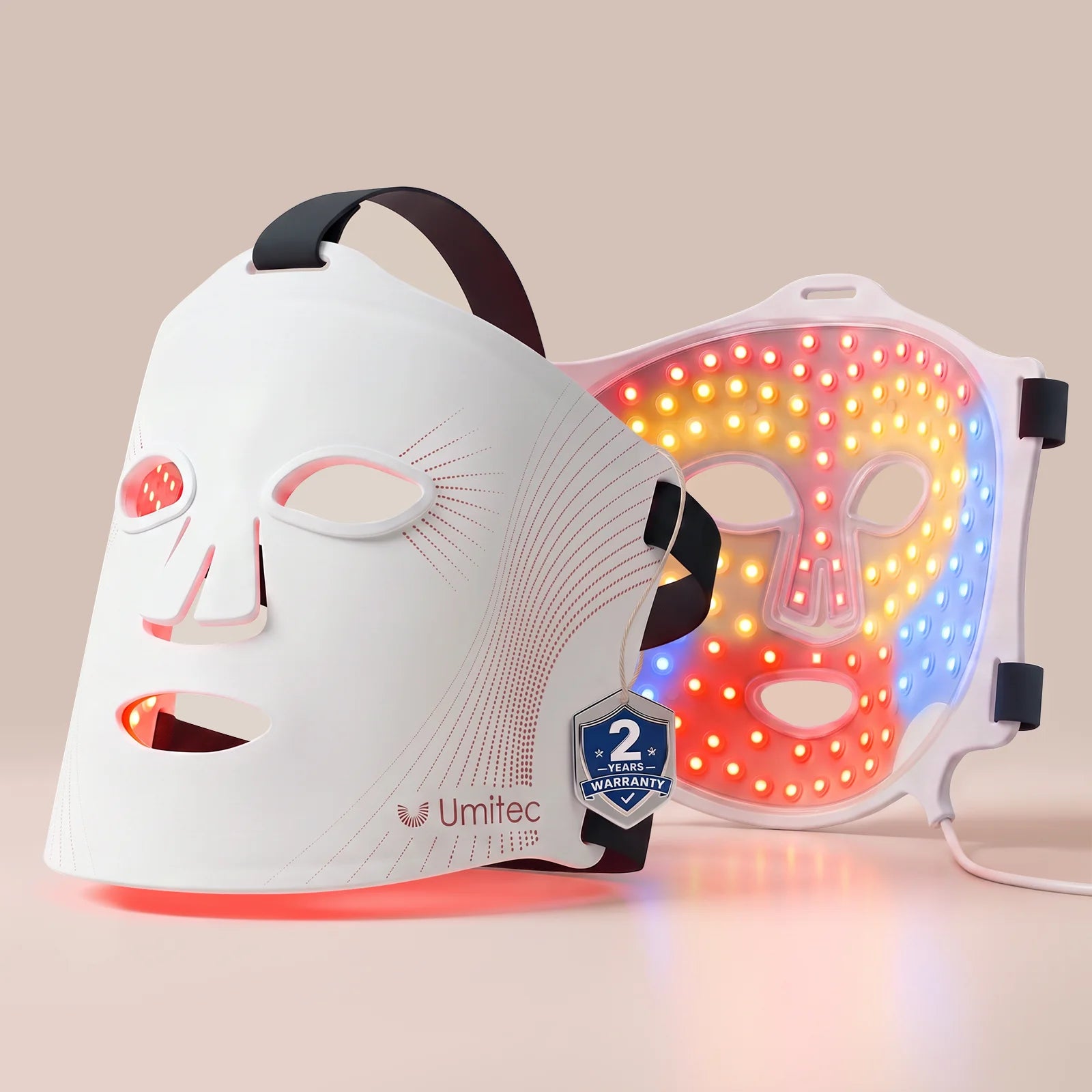
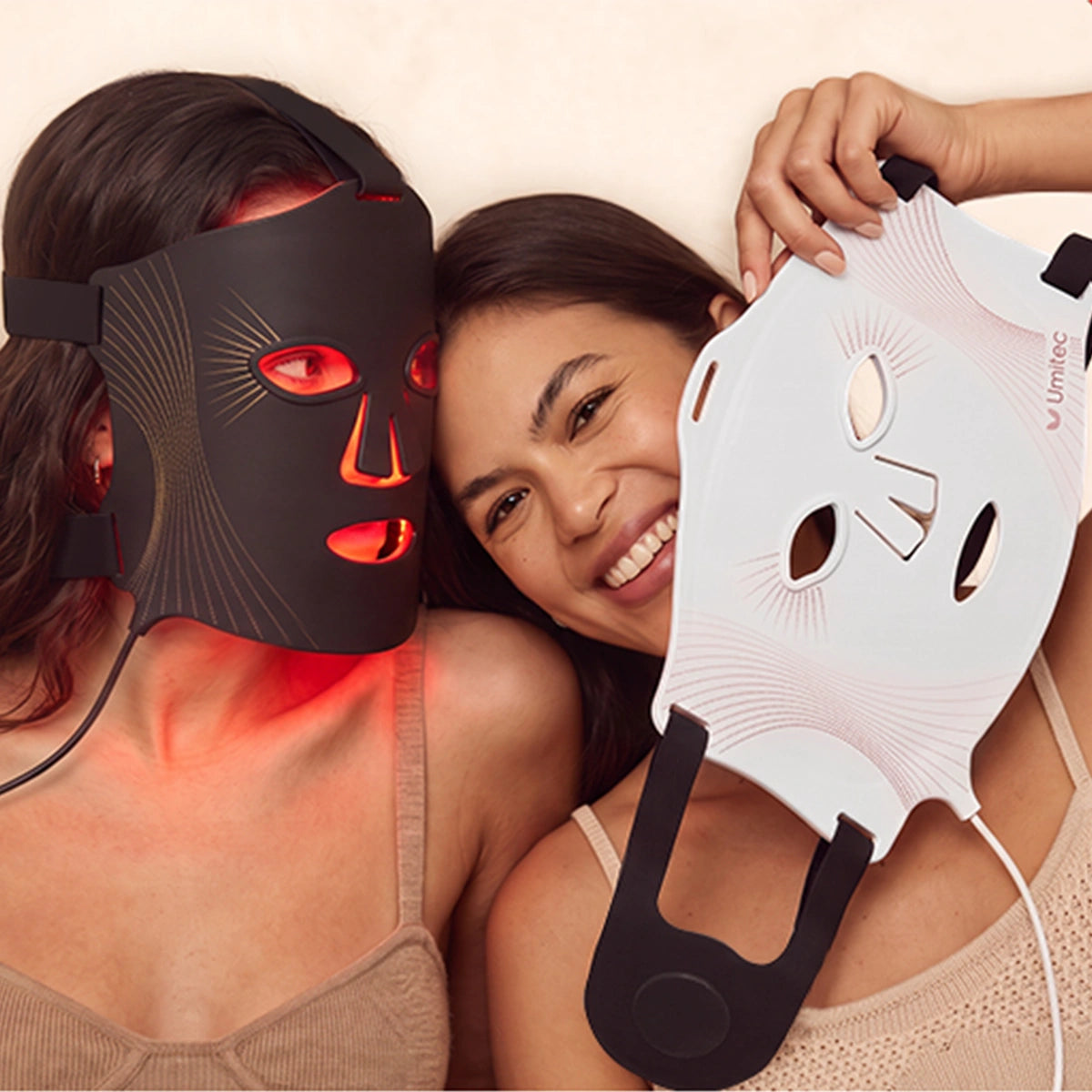
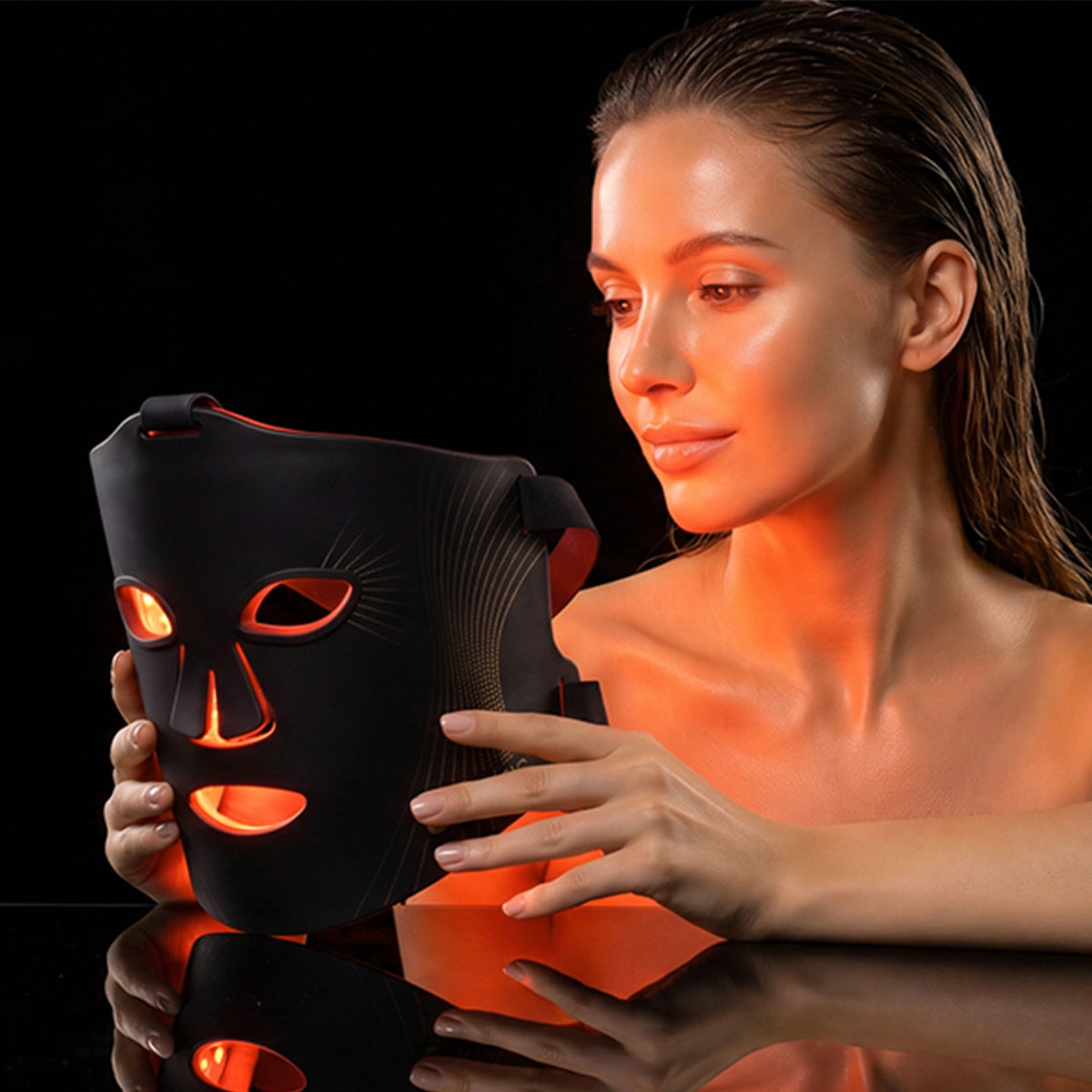
Pour les personnes cherchant à rajeunir leur peau à domicile, comprendre cette différence est essentiel pour choisir des traitements efficaces. Des produits avancés comme le Masque Facial LED Umitec Série 2 - Thérapie Cutanée Avancée utilisent à la fois la lumière rouge et la lumière proche infrarouge, combinant les bienfaits de la surface et des tissus profonds pour la réduction des rides.
La meilleure couleur et les meilleures longueurs d'onde de lumière infrarouge pour les rides
Le choix de la bonne longueur d'onde est crucial pour une amélioration notable des rides. Les preuves cliniques soutiennent que la lumière proche infrarouge, allant de 800 à 850 nm, offre la meilleure pénétration pour l'induction de collagène sous la surface de la peau. Pendant ce temps, la lumière rouge entre 620 et 700 nm stimule efficacement les couches superficielles de la peau et améliore le teint et la texture.
Comparativement, la lumière proche infrarouge atteint les tissus cutanés plus profonds, stimulant plus intensément l'activité des fibroblastes, ce qui est vital pour les effets anti-âge. La lumière rouge améliore principalement la fonction cellulaire dans l'épiderme et le derme supérieur, s'attaquant aux rougeurs et aux ridules.
Des études cliniques démontrent des résultats optimaux de réduction des rides lorsque les traitements combinent les deux longueurs d'onde, en utilisant des appareils multimodes qui permettent aux utilisateurs de cibler des zones spécifiques efficacement.
| Type de lumière | Gamme de longueurs d'onde (nm) | Pénétration cutanée | Principaux avantages |
|---|---|---|---|
| Lumière rouge | 620 - 700 | Surface à derme supérieur | Améliore la texture, le teint ; réduit les ridules |
| Lumière proche infrarouge | 800 - 850 | Derme plus profond | Stimule le collagène/l'élastine ; réduit les rides plus profondes |
Lors du choix d'un appareil, recherchez des spécifications de longueurs d'onde claires et ceux offrant des modes combinés pour des bienfaits cutanés complets. Le Masque Facial de Thérapie LED Umitec Série 2 | Design & Soin de Précision Zonal illustre une telle technologie, offrant une thérapie multi-longueurs d'onde fiable.
Preuves scientifiques et recherches sur la luminothérapie infrarouge pour les rides
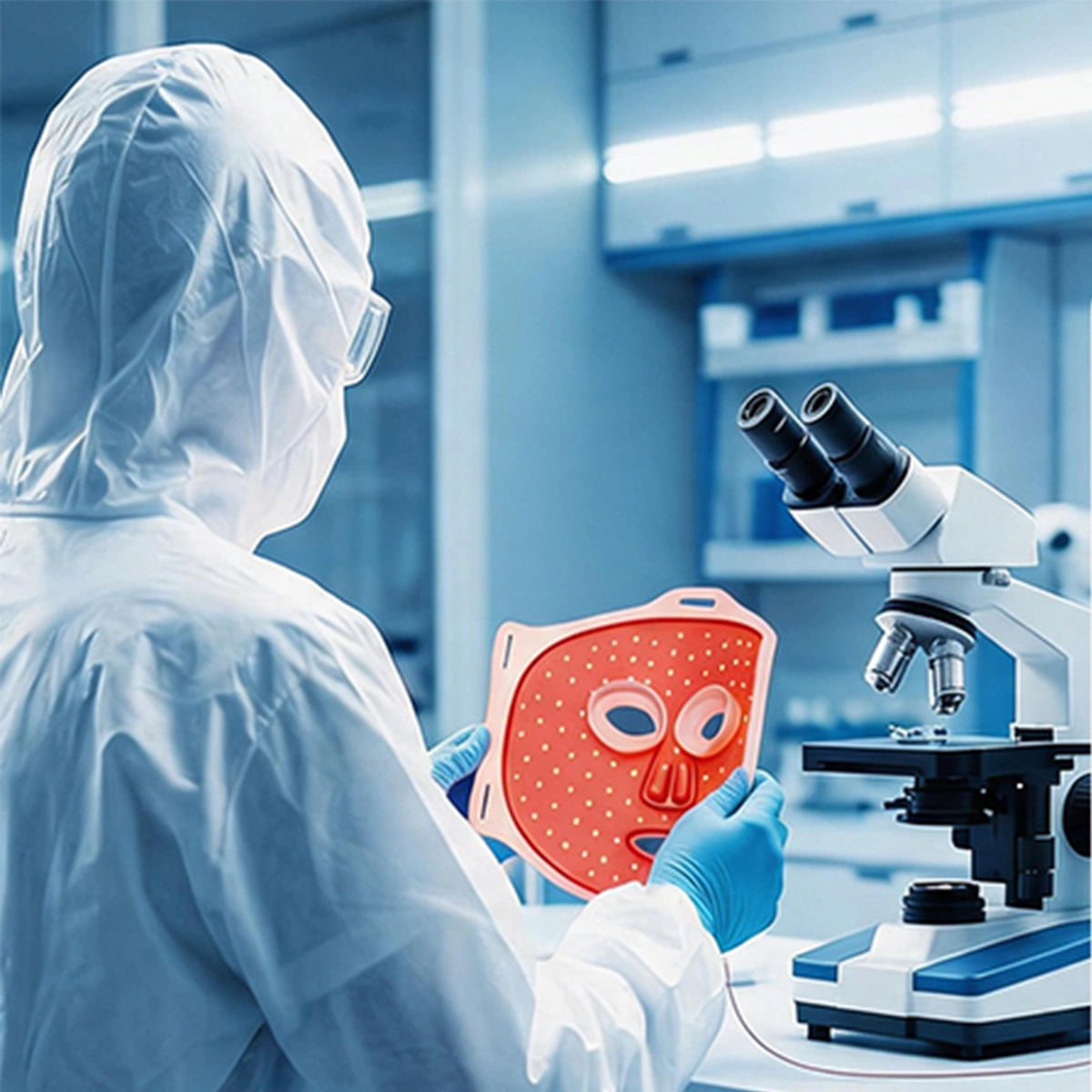
De nombreux essais cliniques valident l'efficacité de la luminothérapie infrarouge pour réduire les rides et améliorer l'élasticité de la peau. Des études montrent qu'après un traitement constant, la densité de collagène et les fibres d'élastine augmentent significativement, ce qui est directement corrélé à la réduction des rides et au raffermissement de la peau.
Par exemple, un essai randomisé contrôlé a démontré une amélioration visible des rides après 8 semaines de luminothérapie proche infrarouge, notant un métabolisme cellulaire et une épaisseur de peau améliorés. Des avantages à court et à long terme ont été observés, certains utilisateurs maintenant les résultats avec des séances d'entretien périodiques.
Cependant, certaines études reconnaissent des limitations telles que de petits échantillons ou une variation de la puissance de l'appareil. La recherche en cours vise à optimiser les protocoles de traitement et à évaluer de manière exhaustive la sécurité à long terme.
Combien de temps faut-il à la luminothérapie infrarouge pour réduire les rides ?
Les résultats de la luminothérapie infrarouge sont progressifs et dépendent de facteurs tels que le type de peau, la profondeur des rides et la puissance de l'appareil. Typiquement, des améliorations visibles apparaissent après 4 à 8 semaines de traitement constant, administré deux à trois fois par semaine.
Les rapports cliniques et les expériences des utilisateurs suggèrent que des durées de traitement de 10 à 20 minutes par séance optimisent la stimulation du collagène sans surstimulation. Des améliorations plus rapides peuvent se produire avec des appareils professionnels délivrant des intensités plus élevées, mais les traitements à domicile offrent des options plus sûres et plus pratiques avec des progrès constants.
La régularité est cruciale ; sauter des séances peut retarder les résultats. Le suivi de la réponse cutanée aide à adapter la fréquence pour des résultats optimaux.
Bienfaits de la luminothérapie infrarouge au-delà de la réduction des rides
Au-delà de l'atténuation des rides, la luminothérapie infrarouge améliore la santé globale de la peau. Elle améliore la texture et le teint en favorisant la circulation sanguine et en augmentant l'hydratation. Cette thérapie accélère la cicatrisation de la peau et réduit l'inflammation, ce qui est bénéfique pour les peaux sujettes à l'acné ou sensibles.
Une utilisation régulière peut ralentir les signes visibles du vieillissement en favorisant la réparation cellulaire et en réduisant le stress oxydatif. De plus, certains utilisateurs signalent une réduction des rougeurs et une amélioration de la clarté de la peau, répondant à des préoccupations au-delà de la simple réduction des rides.
Ces bienfaits multiples font de la luminothérapie infrarouge un choix attrayant pour ceux qui cherchent à maintenir une peau jeune et équilibrée.
Sécurité et effets secondaires potentiels de la luminothérapie infrarouge sur le visage
La luminothérapie infrarouge présente un profil de sécurité solide lorsqu'elle est utilisée correctement. Les effets secondaires courants sont rares mais peuvent inclure une rougeur temporaire, une légère sécheresse ou une légère irritation, qui se résolvent généralement rapidement. Aucun rayon UV nocif n'est impliqué, minimisant les risques de dommages cutanés.
Pour éviter les effets indésirables, il est important de respecter les temps de traitement recommandés et d'éviter la surexposition. Les personnes atteintes de conditions photosensibles ou utilisant des médicaments photosensibilisants devraient consulter un médecin avant de commencer la thérapie.
Une surveillance continue de la peau pendant le traitement est conseillée. Cessez l'utilisation et consultez un médecin si un gonflement inhabituel, des cloques ou une irritation prolongée se produisent.
Comment utiliser efficacement les appareils de luminothérapie infrarouge pour améliorer les rides
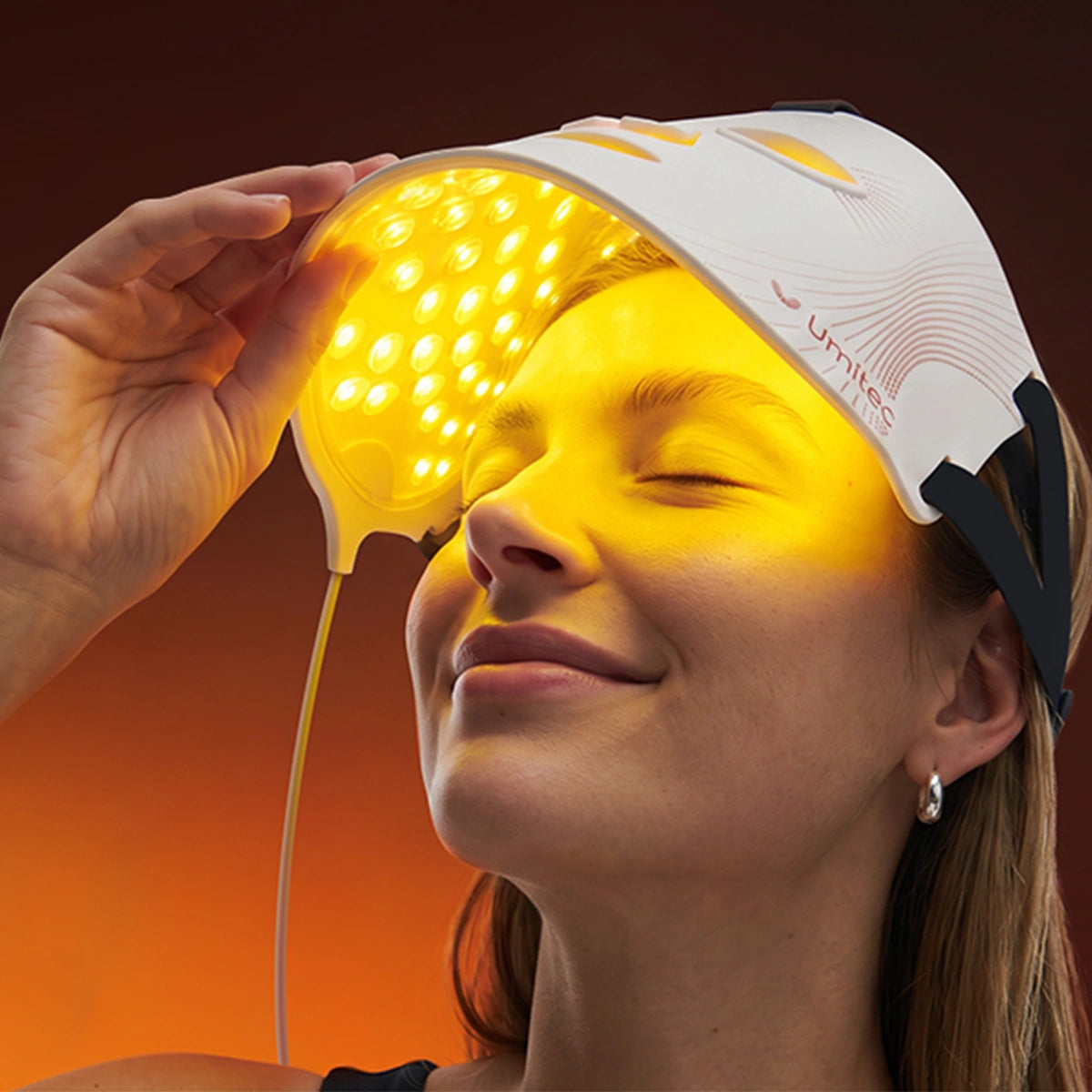
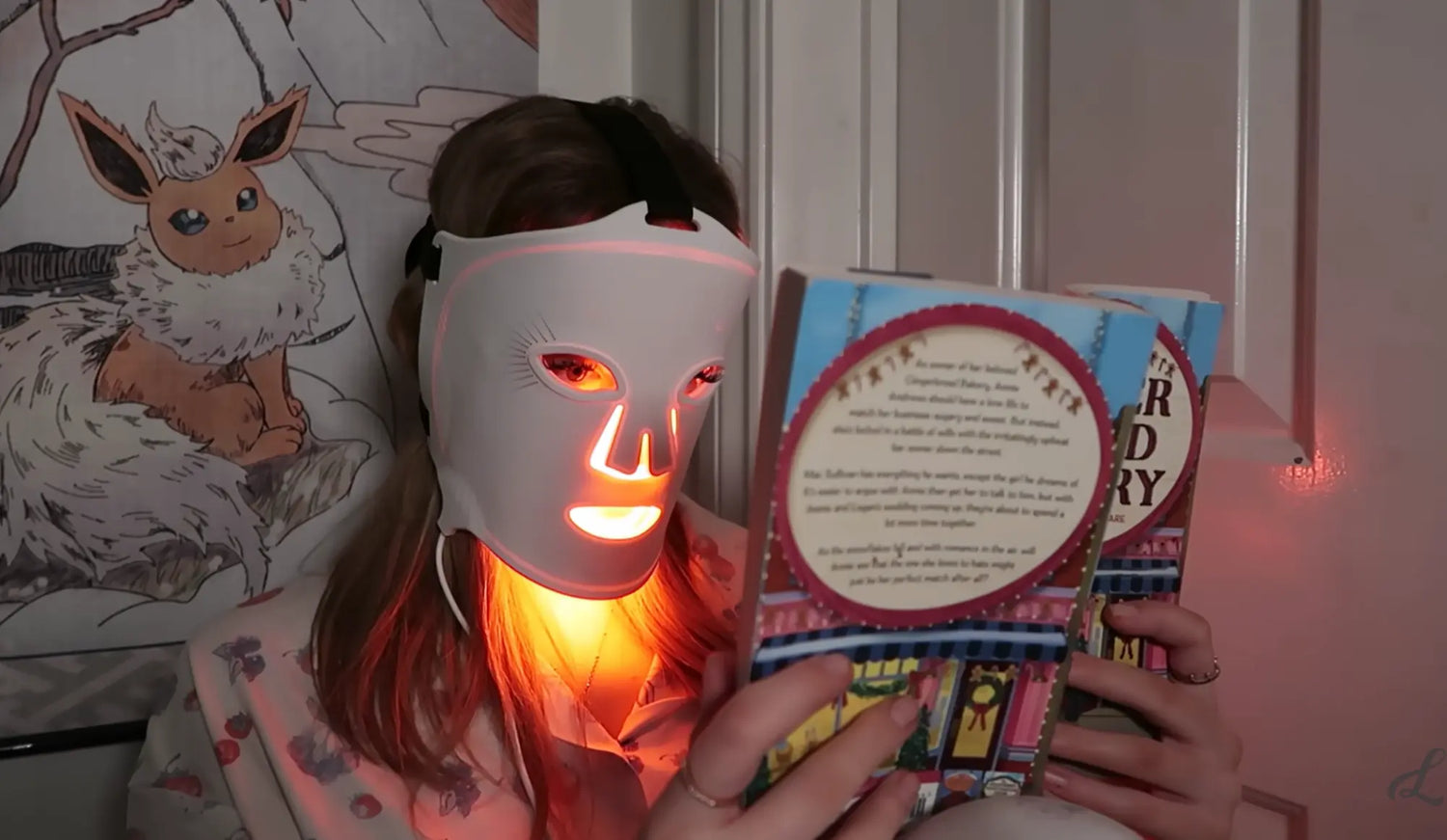
L'utilisation correcte des appareils de luminothérapie infrarouge maximise les bienfaits de réduction des rides. Commencez par nettoyer soigneusement votre visage. Placez l'appareil, tel qu'un masque facial de luminothérapie LED, confortablement sur votre peau pour assurer une exposition lumineuse uniforme.
Les séances durent généralement 10 à 20 minutes, deux à trois fois par semaine. Une utilisation constante pendant des mois est la clé d'améliorations durables. Les traitements professionnels utilisent souvent des sources lumineuses plus puissantes mais nécessitent des visites en clinique, tandis que les appareils à domicile offrent une commodité avec des progrès graduels.
L'entretien de votre appareil est essentiel. Nettoyez-le régulièrement comme conseillé pour garantir l'hygiène et des performances LED optimales. Par exemple, suivez les instructions détaillées dans Comment nettoyer et entretenir votre masque facial de thérapie LED en toute sécurité et.
Pour les meilleures pratiques d'utilisation, y compris le positionnement et la fréquence, consultez des guides tels que Comment utiliser un masque facial de luminothérapie LED pour des résultats optimaux - Umitec.
Foire aux questions sur la lumière infrarouge pour les rides
Quelle couleur infrarouge est la meilleure pour les rides ?
Les longueurs d'onde infrarouges les plus efficaces pour le traitement des rides se situent entre 800 et 850 nm (proche infrarouge), car elles pénètrent profondément pour stimuler la production de collagène. Les couleurs de lumière rouge (620-700 nm) les complètent en améliorant la santé et la texture de la surface de la peau. La combinaison des deux couleurs offre les meilleurs résultats.
La luminothérapie rouge aide-t-elle à faire disparaître les rides ?
Oui, la luminothérapie rouge aide à réduire les rides en stimulant la production de collagène et d'élastine. Bien qu'elle ne puisse pas effacer complètement les rides profondes, elle adoucit les ridules et améliore le teint de la peau, donnant un effet de rajeunissement visible avec une utilisation régulière.
Combien de temps faut-il à la luminothérapie rouge pour réduire les rides ?
La réduction visible des rides apparaît généralement après 4 à 8 semaines de traitement constant. Des facteurs tels que le type de peau, la fréquence du traitement et la qualité de l'appareil influencent la rapidité des résultats. La patience et la régularité sont essentielles pour des résultats efficaces.
Quels sont les effets secondaires de la lumière infrarouge sur le visage ?
Les effets secondaires sont rares mais peuvent inclure une rougeur temporaire, une légère irritation ou une sécheresse. Le respect des directives d'utilisation minimise les risques. Les personnes atteintes de maladies cutanées photosensibles doivent consulter un médecin avant de subir le traitement.



Laisser un commentaire
Tous les commentaires sont modérés avant d'être publiés.
Ce site est protégé par hCaptcha, et la Politique de confidentialité et les Conditions de service de hCaptcha s’appliquent.