



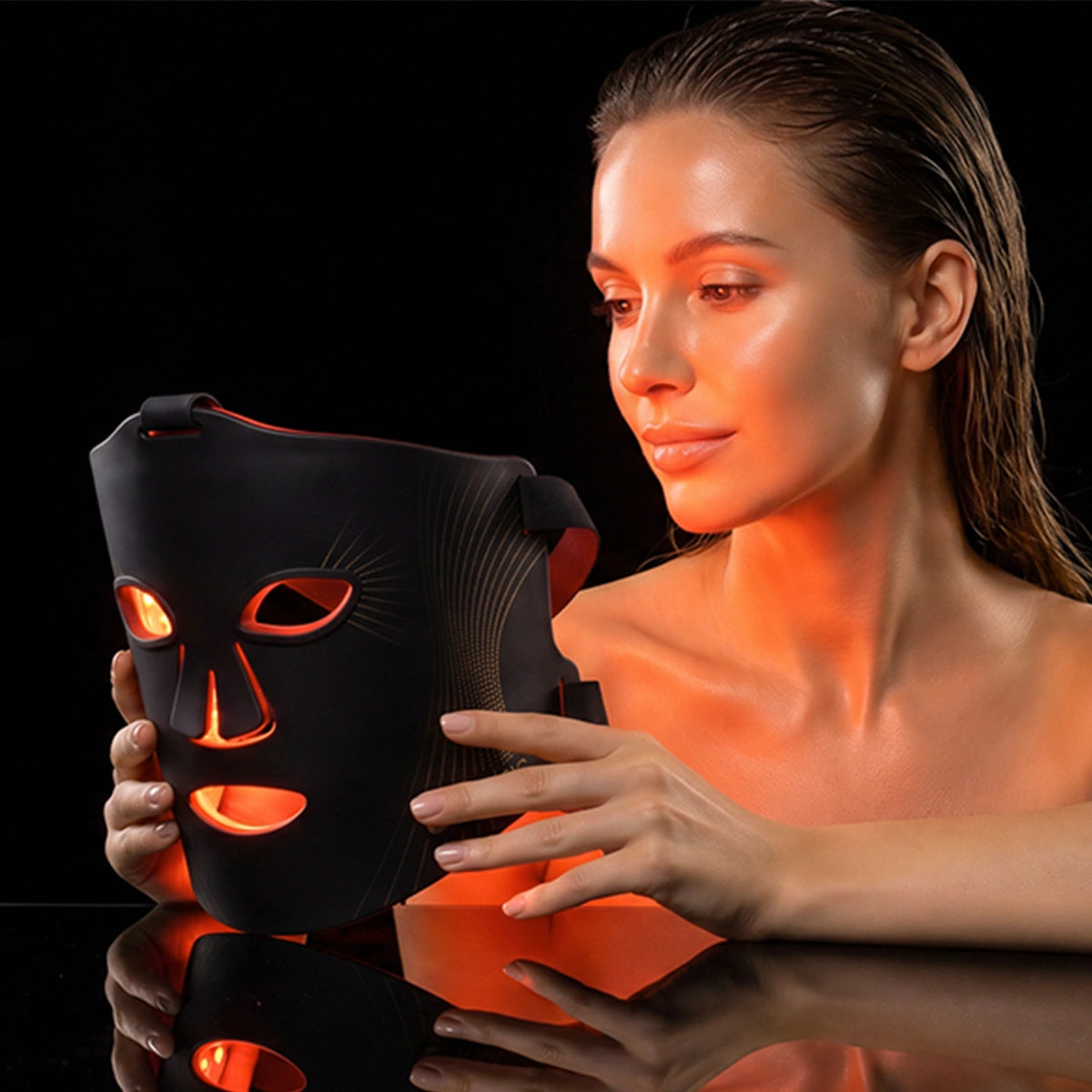
More coverage isn't more treatment. It's more exposure.
It's 10 p.m. You clip the mask on, press start, and let it wash your whole face in the same color it used last night. And the night before that. Full beam, full face, every session — because thorough feels responsible.
But here's the slightly annoying truth: a good part of that thoroughness is light your skin never asked for. And unlike a serum you can pat in anywhere, light that lands where nothing needs repairing doesn't get stored as bonus collagen. It's just exposure.
So let's flip the question. Not "how do I cover more face" but "how do I send less light, more precisely — and end up safer than the person doing more?"
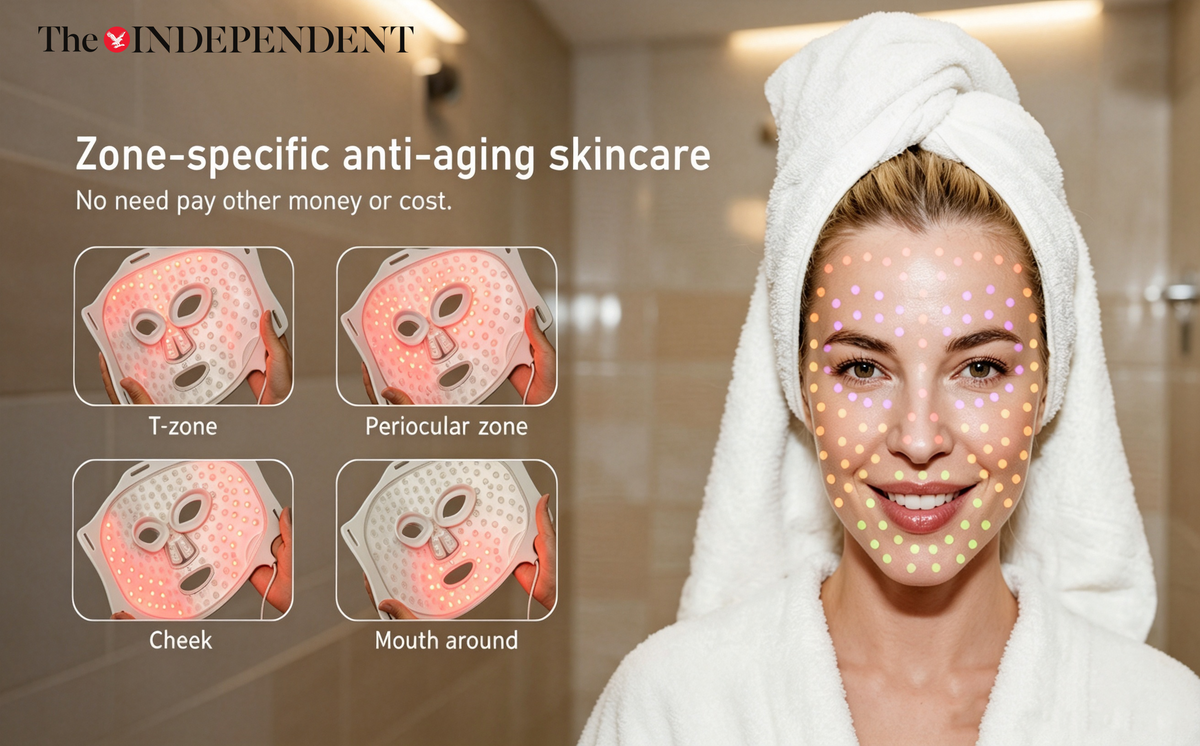
Short answer: full-face mode isn't a mistake — it's a tool for faces where the concern genuinely is everywhere. The safer habit is zoning: blue only where breakouts live, red + near-infrared where aging shows, yellow where skin runs reactive, and a lighter hand on the thinnest areas of all.
The 30-second answer
Full-face, every time — not dangerous, just imprecise. Zones with no concern receive exposure they can't use.
Zoned sessions — the safer default. Same dose where it counts, none where it doesn't.
"Less light" means less unnecessary exposure — never less dose than the plan calls for. Don't shrink the time; shrink the footprint.
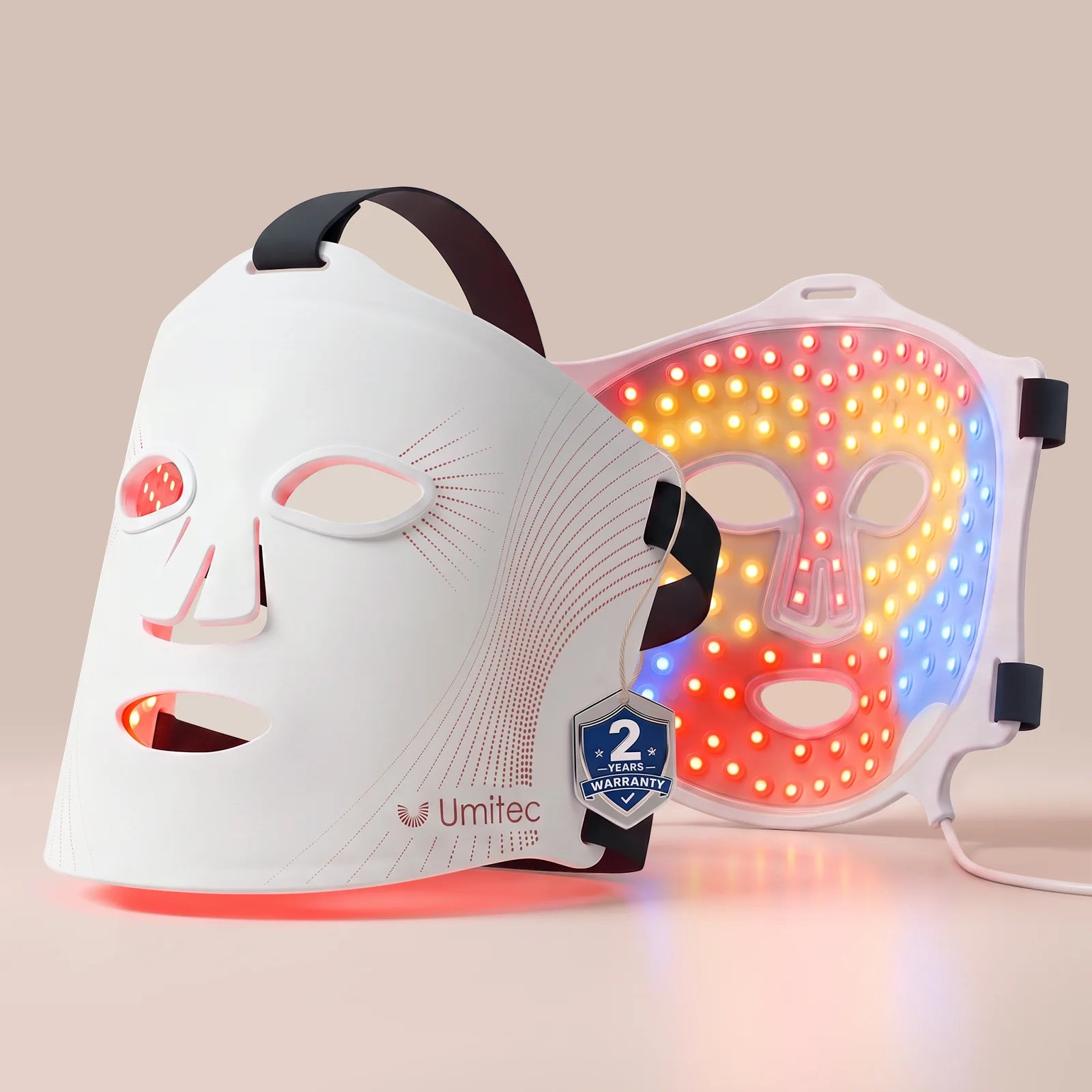
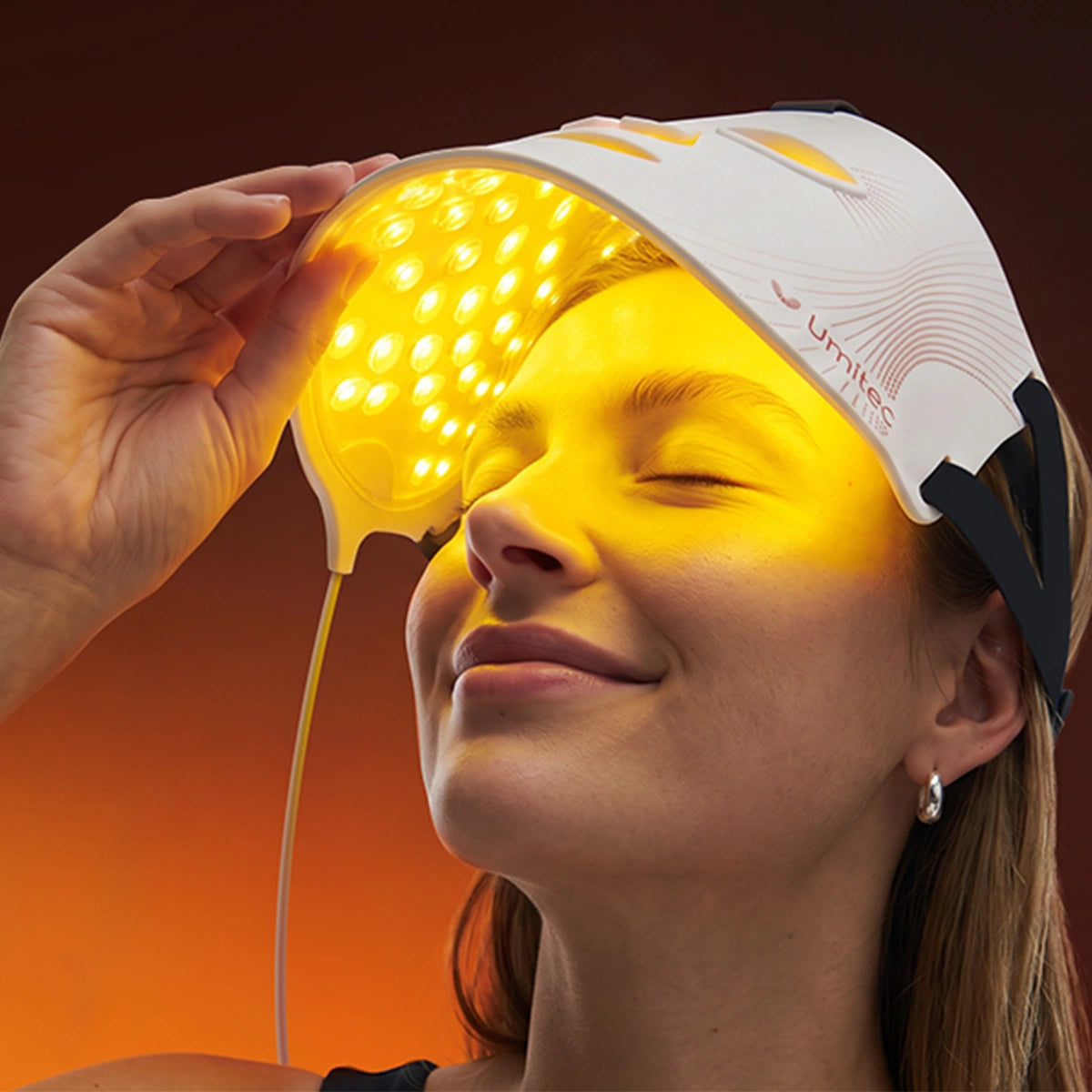
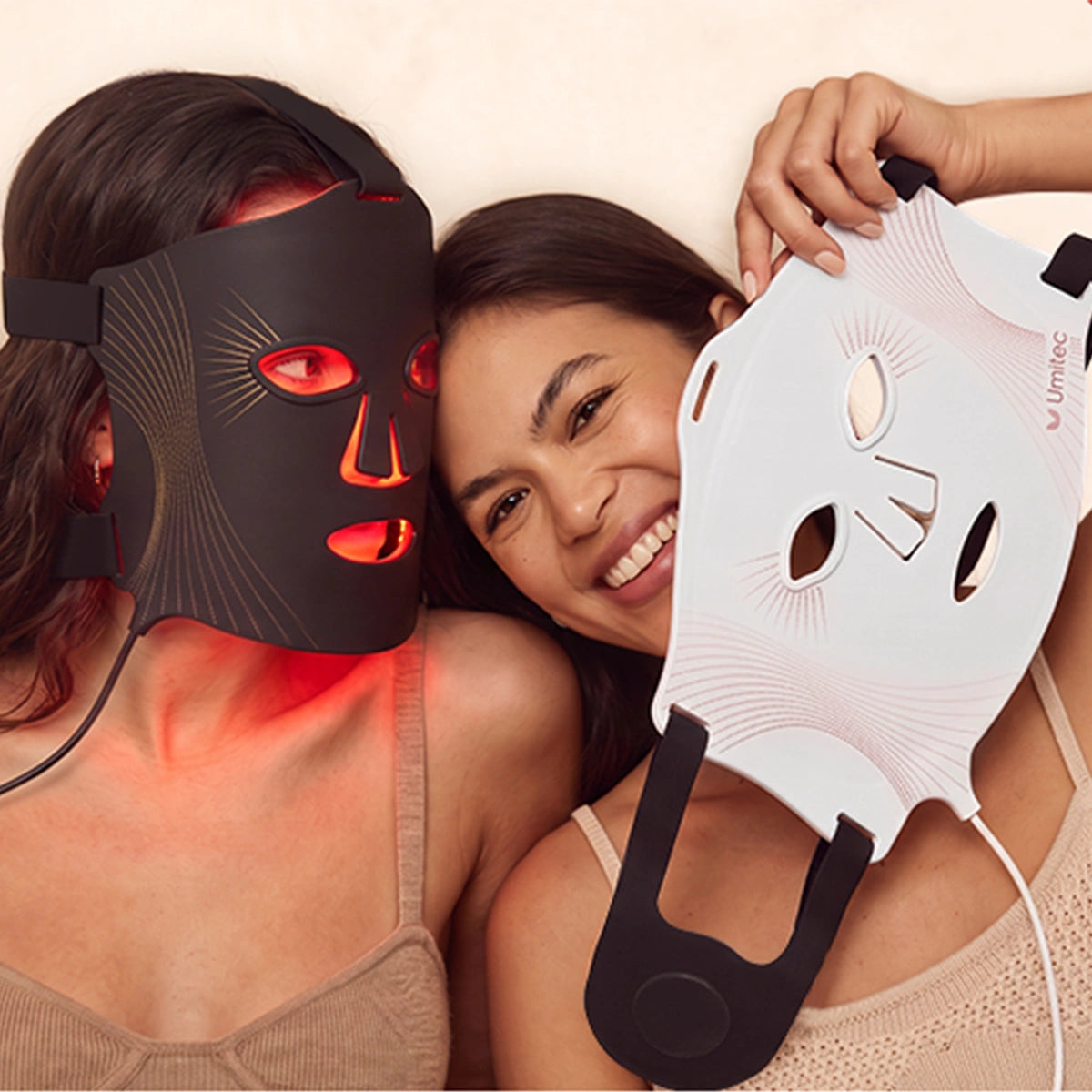
The mask this article is about: Umitec ZoneCraft™ LED Face Mask — four independent zones, so "less light" is a setting, not a compromise. $144.99 →
The variable everyone forgets: area
When people talk about dose, they usually mean intensity times time. Ten minutes at medium. Level two for eight weeks. But there's a third variable sitting quietly in the equation: area.
Your skin doesn't bank light. Whatever a zone receives, it has to process on its own terms — its thickness, its oils, its current workload. A clear cheek with nothing to repair doesn't turn surplus photons into extra firmness. It simply receives energy it had no use for.
Thorough feels responsible. But on a photon budget, uniform coverage is rarely the smartest allocation.
Why "less" is safer: the science of enough
Light-therapy research keeps running into the same curve: the biphasic dose response. Low-to-moderate doses nudge cells to work harder. Beyond a certain point, more light doesn't buy more result — the benefit plateaus, and with real excess it can dip back down.
That curve is the science behind "twenty minutes is not twice as good as ten." And it's the quiet logic of zoning: if surplus carries no reward, then the surplus your clear zones are receiving isn't a bonus — it's just exposure. Zoning doesn't shrink your treatment. It removes the part of it that was never doing anything.
The research points the same way
Zoning isn't a gimmick invented to fill a feature list. It's where the wavelength science already lives. Blue-light protocols were built around the oily, breakout-prone areas of the face; red and near-infrared studies target the dermis, where structure actually changes. And when researchers put the two together — blue and red in a single protocol — the measured result was roughly a 76% reduction in inflammatory lesions. A combined protocol like that is zone-aware by definition: different areas, different wavelengths, one face.
Our own numbers read the same way. In a 28-day instrumental study, consistent use measured skin elasticity up 15.94%, density up 12.87% and forehead wrinkles down 30.07% — and notice that last one: it was measured exactly where the light was aimed. Dose the zone, then measure the zone. That's the whole method, and the full testing summary lives here.
Blue light: send it where the breakouts live
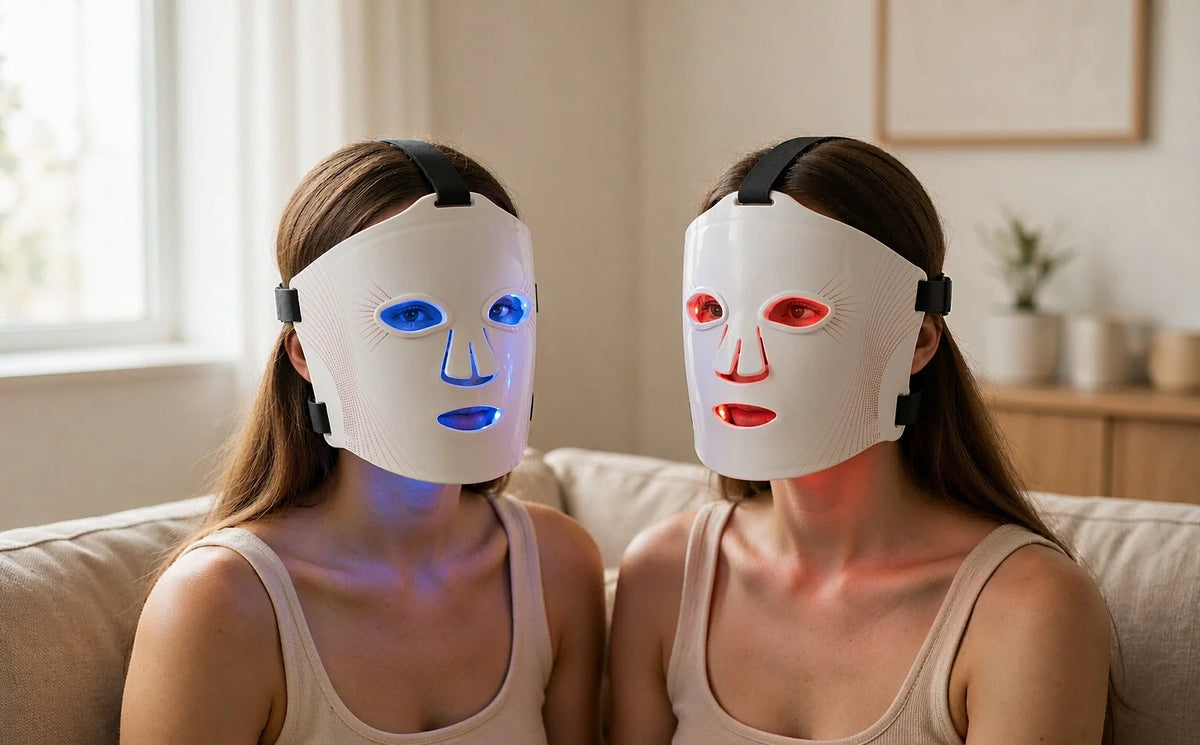
415nm blue works in the upper layers of the skin, targeting the bacteria involved in inflammatory breakouts. It's a precision tool pretending to be a floodlight.
If your breakouts live on your chin and forehead, those are the only places blue needs to be. Lighting your clear cheeks blue doesn't make them "preventively better" — it just widens the exposure for zero added benefit. The rule is simple: blue follows breakouts, not geography. The full blue-light playbook for acne-prone skin is here.
Thin skin deserves a lighter hand
Not all facial skin is equally thick. The eyelids and the skin around the mouth are the thinnest you have — light passes through them more easily, and there's less tissue doing the cushioning.
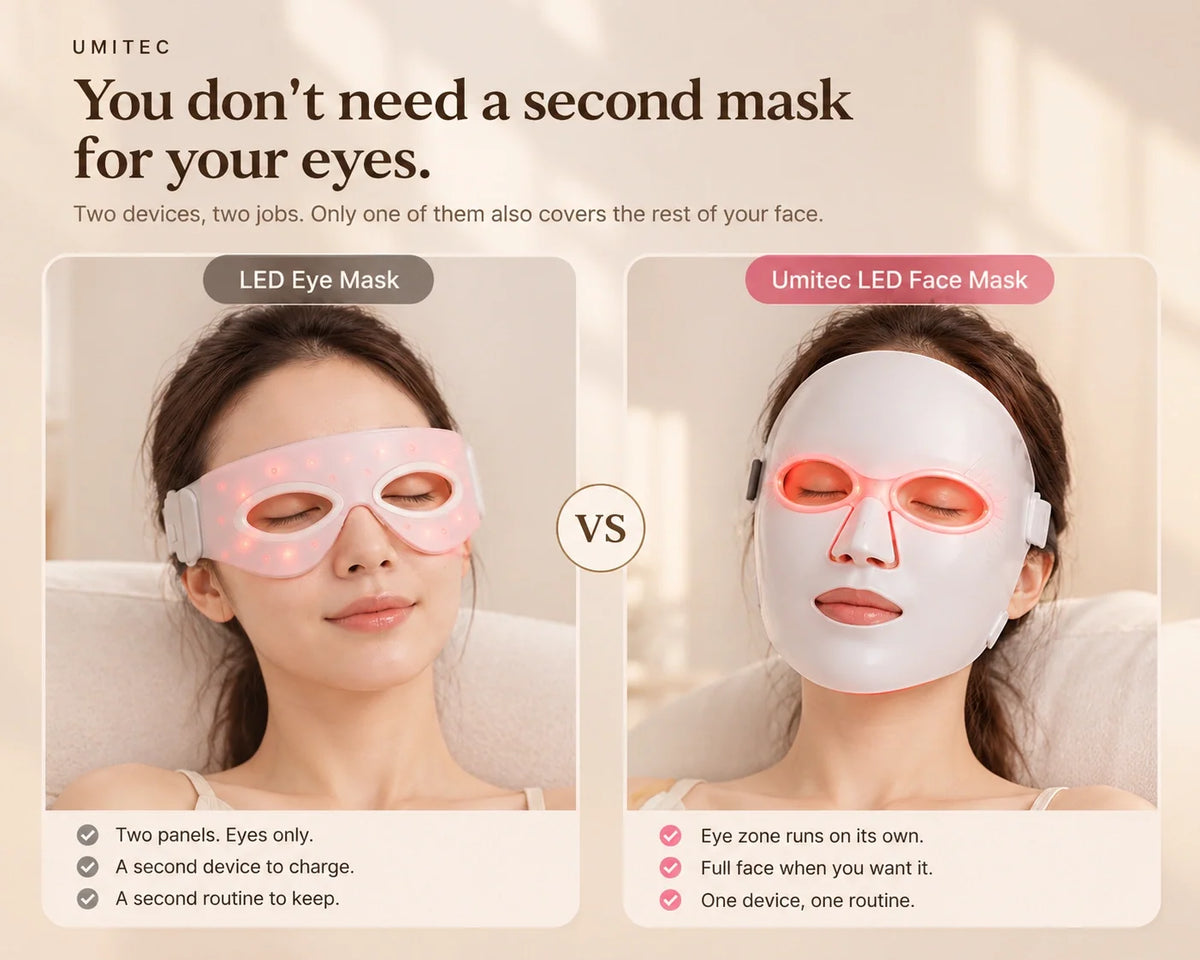
The eye area has an extra reason for a careful hand: eyes and bright, close-range light have a complicated relationship, and the feedback we take most seriously — fleeting bright spots in vision, dryness, headaches — comes from exactly that kind of setup. Zoning lets you give the eye area wavelengths that suit it (red + near-infrared for fine lines, or calming yellow — the sensitive-skin guide covers that one) instead of whatever your T-zone is getting. Eye safety in detail lives in our FAQs.
And if your skin is temporarily thinner for other reasons — after microneedling, or alongside toxin and filler work — the lighter-hand rule matters even more. We wrote that situation up here.
Your zone map
Here's the version you can run tonight:
| Zone | What usually lives there | The light it wants |
|---|---|---|
| T-zone (forehead + nose) | Oil, blackheads, breakouts | Blue |
| Cheeks | Fine lines, elasticity, redness | Red + near-infrared — yellow on reactive days |
| Eye area | Fine lines, crepiness | Red + near-infrared, gentle dose |
| Around the mouth | Dryness lines, uneven tone | Yellow + red |

Sound familiar? It should — it's the exact zoning our mask was designed around: T-zone blue, eye area red + near-infrared, cheeks yellow, lip area yellow + red. The full walk-through, matching each zone to your skin-aging pattern, lives in our skin-aging protocol guide, and the skin-type breakdown maps it by face.
When full-face is the right answer
To be clear: full-face mode isn't the reckless option. When the concern genuinely is everywhere — overall firmness, plus some redness, plus dullness — a full-face session (red + near-infrared + yellow) exists precisely for that. The only wrong way to use it is as a default: lighting everything, every night, without asking which zones actually asked for it.
When in doubt, let photos decide, not habit — photograph your skin every four weeks, same light, same angle, no makeup. A zone that hasn't changed in months doesn't need the same prescription forever.
Where "less" goes too far
One boundary, so the headline doesn't get misread: less exposure means less area, not less dose. Cutting ten minutes to five, or three-to-five sessions a week down to one, doesn't make your routine safer — it makes it weaker. The first three to five weeks ask for consistency, and the 10-minute timer already drew the safe ceiling for you. Safety comes from the right dose in the right places. Not from shrinking the whole plan.
Quick answers
Do I still need to think about eye protection? Zoning already keeps the brightest light off the eye area, but fit matters too: wear the mask as designed, don't stare into the LEDs, and check the FAQs if your eyes ever feel dry or uncomfortable.
Isn't zoning fiddly? No — it's the same 10-minute timer. What changes is which zones are on, and switching a zone takes seconds.
Where should I start? With your loudest concern. Then let the monthly photos — not daily impressions — tell you which zone's prescription to adjust.
I have a deeper skin tone or melasma history. Does any of this change? Yes — lighter hand, stricter photo check-ins, and a professional conversation first, because visible light can be part of the melasma story. Start with the skin-type breakdown and bring your photos.
Less light, done on purpose
An LED mask isn't a floodlight for your face, and "covering everything" isn't the mark of a serious routine. The serious version is smaller than that: the right wavelength, on the right zone, at a dose that was designed on purpose. Fewer photons, better placed — that's not doing less. That's doing it deliberately.
The Umitec ZoneCraft™ LED Face Mask is built for exactly this: four independent treatment zones, three intensity levels and a 10-minute timer — so the "less light, more sense" version of your routine is a setting, not a discipline problem. FDA-cleared (510(k) K213056). $144.99 (from $199.99), rated 4.8 by 145 customers, 2-year warranty, free 5-day US & UK shipping, 30 days to change your mind.
General information, not medical advice. Stop use and seek advice if you experience burning that doesn't settle, welts, persistent redness, eye discomfort or pigment changes. Not recommended if you're pregnant or breastfeeding, taking photosensitising medication, have open wounds or active skin infections, or are under 18 — see our FAQs or ask a dermatologist.

Laisser un commentaire
Ce site est protégé par hCaptcha, et la Politique de confidentialité et les Conditions de service de hCaptcha s’appliquent.